
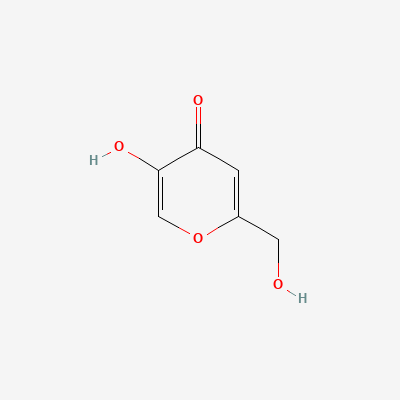
Kojic Acid
| Parámetro | Especificaciones |
|---|---|
| Nombre del producto | Kojic Acid |
| Número CAS | 501-30-4 |
| Fórmula molecular | C6H6O4 |
| Peso molecular | 142.11 g/mol |
| Apariencia | Polvo cristalino de color blanco a blanquecino |
| Ensayo (HPLC) | ≥99,01 TP3T |
| Punto de fusión | 152-155°C |
| Solubilidad | Soluble in water, ethanol; slightly soluble in ether |
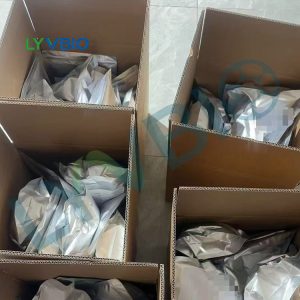
| Paquete | 25 kg fiber drum with double PE liner |
¿Necesitas ayuda? Póngase en contacto con nuestro equipo
Sinónimos: 5-Hydroxy-2-(hydroxymethyl)-4H-pyran-4-one, Kojic acid, 501-30-4, 5-Hydroxy-2-hydroxymethyl-4-pyrone, Kojic acid (natural), 2-Hydroxymethyl-5-hydroxy-γ-pyrone
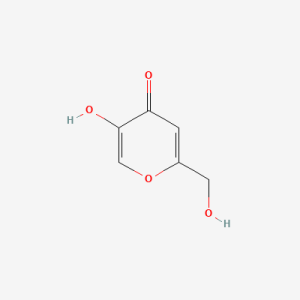
Kojic acid is a natural pyrone derivative produced by the fermentation of carbohydrate sources with Aspergillus oryzae. Its structure features a γ-pyrone ring with a hydroxyl group at C-5 and a hydroxymethyl group at C-2, enabling chelation of metal ions and interaction with enzymatic active sites. This mechanism underlies its primary function as a tyrosinase inhibitor, relevant to skin brightening and anti-pigmentation.
Commercially available as a white to off-white crystalline powder, kojic acid is standardized to ≥99.0% purity (HPLC). It is widely used in cosmetic, pharmaceutical, and research applications. In personal care, it is incorporated into serums, creams, and lotions targeting hyperpigmentation and uneven skin tone. In pharmaceuticals, it serves as a precursor for various synthetic intermediates.
Kojic acid (C6H6O4) has a molecular weight of 142.11 g/mol and a melting point of 152-155°C. It is soluble in water and ethanol, slightly soluble in ether, and exhibits strong UV absorption. The compound is stable under normal storage conditions but may chelate with metal ions, affecting formulation stability.
| Test Item | Especificaciones |
|---|---|
| Identificación | IR spectrum conforms to reference standard |
| Pérdida por secado | ≤0,51 TP3T |
| Residuo tras la combustión | ≤0,11 TP3T |
| Metales pesados | ≤10 ppm |
| Límites microbianos | Total aerobic count ≤1000 CFU/g; Yeast & Mold ≤100 CFU/g |
| Sustancias relacionadas | Total impurities ≤1.0% |
Our standard MOQ is 25 kg. For trial orders, we can accommodate smaller quantities; please contact us for details.
For stock items, delivery is 3-5 business days after order confirmation.
Yes, we provide a COA for each batch. Samples are available upon request; please contact our sales team for arrangements.
send us your specification for a quotation.
Room,5-0203, Unit 5, Beiyuanmen Street,Xi'an,Shaanxi,China
 English English
  Russian
 French
 Korean
 German
 Polish
 Japanese
 Spanish
 Italian
 Vietnamese