
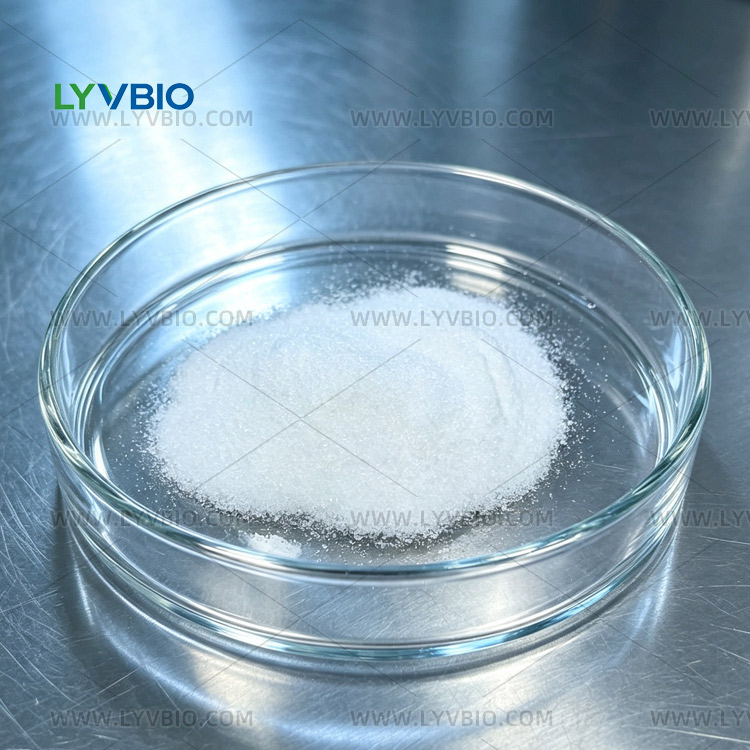


| Produktname | Kojic Acid |
|---|---|
| CAS-Nummer | 501-30-4 |
| Molekülformel | C6H6O4 |
| Molekulargewicht | 142.11 |
| Aussehen | Weißes bis cremefarbenes kristallines Pulver |
| Technische Daten | 99% |
| Analyse (HPLC) | ≥99,01 TP3T |
| Trocknungsverlust | ≤0,5% |
| Verbrennungsrückstand | ≤0,1% |
| Schwermetalle | ≤ 10 ppm |
| Löslichkeit | Soluble in water, ethanol, and acetone |
| Partikelgröße | 95% bis 80 Mesh |
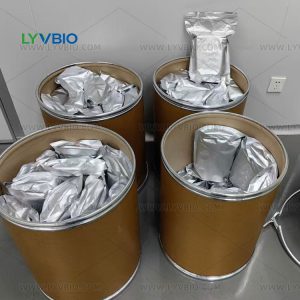
| Paket | 1 kg, 5 kg, 25 kg fiber drums |
| Technische Daten | 99% |
Brauchst du Hilfe? Kontaktieren Sie unser Team
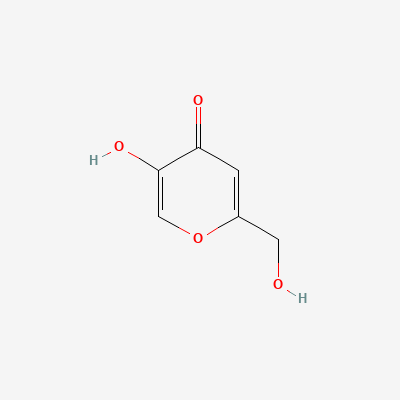
Synonyms: Kojic acid, 5-Hydroxy-2-(hydroxymethyl)-4H-pyran-4-one, 5-Hydroxy-2-(hydroxymethyl)-4-pyrone, Kojic Acid, 501-30-4
Kojic acid is a naturally occurring organic acid produced by various species of fungi, particularly Aspergillus and Penicillium, during fermentation. It is a white to off-white crystalline powder with a mild, characteristic odor. As a chelating agent and antioxidant, kojic acid is widely recognized for its ability to inhibit tyrosinase, an enzyme involved in melanin production, making it a key ingredient in skin-lightening and depigmentation products.
In the pharmaceutical and cosmetic industries, kojic acid is utilized in formulations for hyperpigmentation disorders, such as melasma and age spots. Its efficacy in brightening skin tone and its antioxidant properties have made it a popular alternative to hydroquinone. Additionally, it serves as a precursor in the synthesis of various chemicals and as a food additive to prevent enzymatic browning.
| Parameter | Technische Daten |
|---|---|
| Analyse (HPLC) | ≥99,01 TP3T |
| Aussehen | Weißes bis cremefarbenes kristallines Pulver |
| Schmelzpunkt | 152-155°C |
| Trocknungsverlust | ≤0,5% |
| Verbrennungsrückstand | ≤0,1% |
| Schwermetalle | ≤ 10 ppm |
| Löslichkeit | Clear solution in water (1 g/10 mL) |
 English English
  Russian
 French
 Korean
 German
 Polish
 Japanese
 Spanish
 Italian
 Vietnamese