
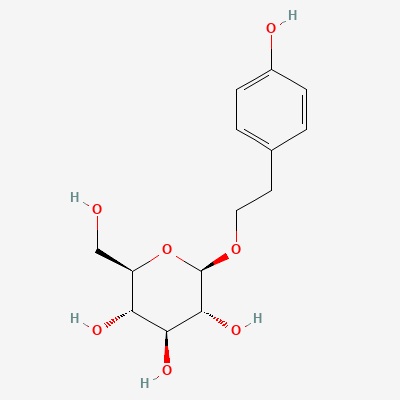
Salidroside
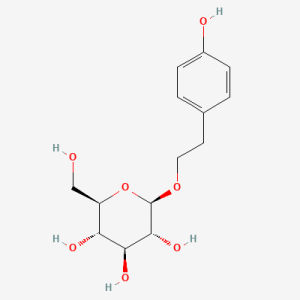
| Nom du produit | Salidroside |
|---|---|
| Numéro CAS | 10338-51-9 |
| Autres noms | Rhodioloside, Tyrosol glucoside |
| Formule moléculaire | C14H20O7 |
| Poids moléculaire | 300.30 g/mol |
| Apparence | Poudre cristalline blanche à blanc cassé |
| Essai (HPLC) | ≥98,01 TP3T |
| Solubilité | Soluble in water, ethanol, and methanol |
| Perte au séchage | ≤2.0% |
| Résidu au feu | ≤ 0,51 TP3T |
| Métaux lourds | ≤ 10 ppm |
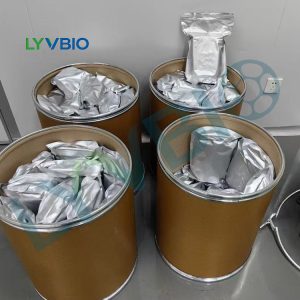
| Colis | 25 kg net weight in fiber drums with double polyethylene liners |
Besoin d'aide ? Contacter notre équipe
Synonymes : Rhodioloside, Tyrosol glucoside, Salidroside, (4-Hydroxyphenyl)methyl β-D-glucopyranoside, 4-Hydroxyphenethyl β-D-glucopyranoside, Rhodiola rosea extract
Salidroside is a phenylpropanoid glycoside and the primary bioactive marker in Rhodiola rosea, a high-altitude perennial plant long valued in traditional medicine across Scandinavia, Siberia, and the mountainous regions of Asia. For centuries, Rhodiola rosea—often called golden root or Arctic root—has been used to combat fatigue, enhance physical endurance, and support mental clarity under stressful conditions. Salidroside, along with its aglycone tyrosol, represents the chemical foundation of these traditional applications and has become a focal point for modern research into adaptogenic and neuroprotective compounds.
Structurally, salidroside consists of a tyrosol moiety (4-hydroxyphenethyl alcohol) linked to a glucose unit via a β-glycosidic bond. This glycosylation enhances its water solubility and influences its pharmacokinetic profile compared to the aglycone. In the plant, salidroside accumulates in the rhizomes and roots, often in concentrations ranging from 0.5% to 2% in dried material, depending on species, harvest time, and growing conditions. Its presence is frequently used to standardize Rhodiola extracts, ensuring consistent biological activity across batches.
Beyond its role as a marker compound, salidroside has attracted significant attention in the nutraceutical, pharmaceutical, and cosmetic industries. It is incorporated into dietary supplements aimed at stress management and cognitive performance, as well as into skincare formulations targeting oxidative stress and inflammation. The compound is also a subject of ongoing clinical and preclinical studies exploring its mechanisms in cellular energy metabolism, neuroprotection, and cardiovascular health.
| Paramètre | Spécifications |
|---|---|
| Essai (HPLC) | ≥98,01 TP3T |
| Identification | NMR, MS conforms to structure |
| Perte au séchage | ≤2.0% |
| Résidu au feu | ≤ 0,51 TP3T |
| Métaux lourds | ≤ 10 ppm |
| Limites microbiologiques | Nombre total de bactéries aérobies ≤ 1 000 UFC/g ; levures et moisissures ≤ 100 UFC/g ; absence d'E. coli |
Room,5-0203, Unit 5, Beiyuanmen Street,Xi'an,Shaanxi,China
 English English
 Russian
 French
 Korean
 German
 Polish
 Japanese
 Spanish
 Italian
 Vietnamese