

| Product Name | Ergothioneine |
|---|---|
| CAS Number | 497-30-3 |
| Molecular Formula | C₉H₁₅N₃O₂S |
| Molecular Weight | 229.30 g/mol |
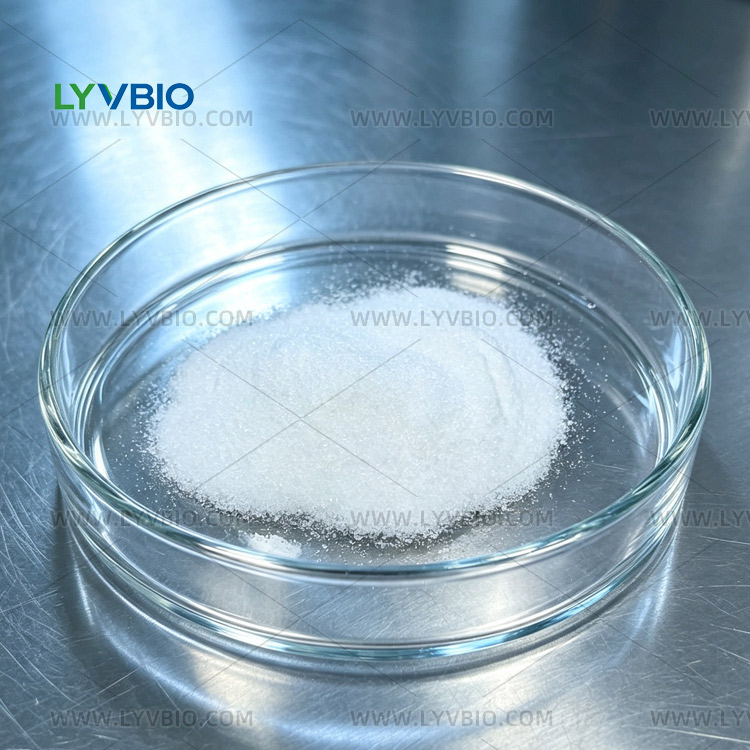
| Appearance | White to off-white crystalline powder |
| Assay (HPLC) | ≥ 98.0% – 99.5% (per grade) |
| Loss on Drying | ≤ 0.5% |
| Residue on Ignition | ≤ 0.1% |
| Heavy Metals | ≤ 10 ppm |
| Melting Point | 260 – 270°C (decomposes) |
| Specific Rotation | +120° to +130° |
| Storage | Store in a cool, dry place, protected from light |
| Solubility | Soluble in water, DMSO; slightly soluble in ethanol |
Need help? Contact our team

Synonyms: Ergothioneine, L-Ergothioneine, Ergothioneine (EGT), (S)-α-Carboxy-2,3-dihydro-N,N,N-trimethyl-2-thioxo-1H-imidazole-4-ethanaminium inner salt, Thiohistidine betaine, 2-Mercaptohistidine trimethylbetaine, EGT, L-(+)-Ergothioneine
Ergothioneine (EGT) is a naturally occurring amino acid derivative and a potent antioxidant with unique properties. It is synthesized by certain fungi, actinomycetes, and cyanobacteria, and is accumulated in the human body through dietary sources, particularly mushrooms (especially shiitake and oyster mushrooms), black beans, and organ meats. Humans cannot synthesize ergothioneine endogenously, making it a conditionally essential nutrient.
Ergothioneine is distinguished from other antioxidants by its specific transporter, OCTN1 (SLC22A4) , which actively transports EGT into cells, enabling its accumulation at high concentrations in tissues exposed to high oxidative stress, including the liver, kidney, red blood cells, and the lens and retina of the eye. This targeted accumulation, combined with its powerful free radical scavenging activity and its ability to chelate metal ions, provides robust protection against cellular oxidative damage.
Ergothioneine is widely used in dietary supplements, functional foods, cosmetic formulations, and research applications targeting healthy aging, neurological health, skin protection, and cardiovascular support.
Source: Fermentation (using Lentinula edodes, Agaricus bisporus, or recombinant microorganisms) or synthetic production
Standardization: ≥98.0% – 99.5% ergothioneine (HPLC)
Forms: White to off-white crystalline powder
Applications: Dietary supplements, functional foods, cosmetics, research reagents
 English English
  Russian
 French
 Korean
 German
 Polish
 Japanese
 Spanish
 Italian
 Vietnamese