
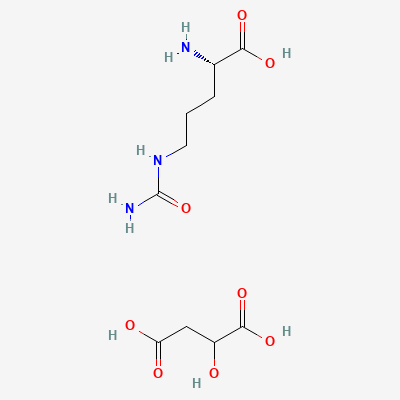
시트룰린 말레이트
| 제품명 | 시트룰린 말레이트 |
|---|---|
| CAS 번호 | 54940-97-5 |
| 동의어 | L-Citrulline DL-Malate, Citrulline Malate 2:1, L-Citrulline malate |
| 분자식 | C10H19N3O8 |
| 분자량 | 309.27 g/mol |
| 외관 | 흰색에서 미백색의 결정성 분말 |
| Assay | ≥98.0% (HPLC) |
| 건조 손실 | ≤0.5% |
| 중금속 | ≤10 ppm |
| 용해도 | 물에 녹는다 |
| 패키지 | 25 kg fiber drum with double PE liner |
도움이 필요하신가요? 저희 팀에 문의해 주세요
동의어: L-Citrulline DL-Malate, Citrulline Malate 2:1, L-Citrulline malate
Citrulline Malate has become a go-to ingredient for formulators targeting nitric oxide support and athletic endurance. Its popularity stems from a simple fact: it delivers more usable L-citrulline to the bloodstream than L-citrulline alone, thanks to the malate component that feeds the Krebs cycle. Sports nutrition brands, pre-workout manufacturers, and clinical nutrition companies have all adopted it as a core active.
Chemically, it is a 1:1 salt of L-citrulline and DL-malic acid, though commercial grades often use a 2:1 ratio (two citrulline to one malate) to maximize the citrulline payload. L-Citrulline itself is a non-protein amino acid first isolated from watermelon, while malic acid is a dicarboxylic acid found in apples and other fruits. The combination is not just additive—malate replenishes tricarboxylic acid cycle intermediates, which can enhance energy production during exercise.
LyvBio supplies Citrulline Malate in a highly purified, crystalline form standardized to ≥98% assay by HPLC. Our material is manufactured via enzymatic conversion and salt formation, followed by crystallization and drying. It is non-GMO, allergen-free, and suitable for vegan and vegetarian formulations.
Citrulline Malate consists of L-citrulline and DL-malic acid in a defined molar ratio. The most common commercial form is 2:1 (L-citrulline:DL-malic acid), which provides approximately 65% L-citrulline by weight. This ratio is favored because it allows for higher citrulline dosing without exceeding label claims or causing gastrointestinal discomfort.
The malate portion is not a filler—it plays an active role in cellular energy metabolism. Malate is a key intermediate in the malate-aspartate shuttle and the Krebs cycle, helping to sustain ATP production under anaerobic conditions. Together, the two components work synergistically to support nitric oxide synthesis, ammonia clearance, and muscular endurance.
| 매개변수 | 사양 |
|---|---|
| 분석법 (HPLC) | ≥98.0% |
| 외관 | 흰색에서 미백색의 결정성 분말 |
| 건조 손실 | ≤0.5% |
| 중금속 | ≤10 ppm |
| Total Plate Count | ≤1000 CFU/g |
| 효모 및 곰팡이 | ≤100 CFU/g |
| E. coli / Salmonella | Negative |
 English English
 Russian
 French
 Korean
 German
 Polish
 Japanese
 Spanish
 Italian
 Vietnamese