

Cytidine
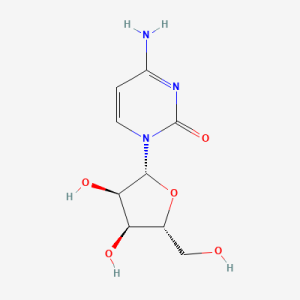
| Nom du produit | Cytidine |
|---|---|
| Numéro CAS | 65-43-3 |
| Synonymes | 4-Amino-1-β-D-ribofuranosyl-2(1H)-pyrimidinone; Cytosine riboside; 1-β-D-Ribofuranosylcytosine; Cytosine-1-β-D-ribofuranoside |
| Formule moléculaire | C9H13N3O5 |
| Poids moléculaire | 243.22 g/mol |
| Apparence | Poudre cristalline blanche à blanc cassé |
| Essai (HPLC) | ≥98,01 TP3T |
| Point de fusion | 210–220°C (dec.) |
| Solubilité | Soluble in water (50 mg/mL), slightly soluble in ethanol |
| Perte au séchage | ≤ 0,51 TP3T |
| Résidu au feu | ≤ 0,11 TP3T |
| Métaux lourds | ≤ 10 ppm |
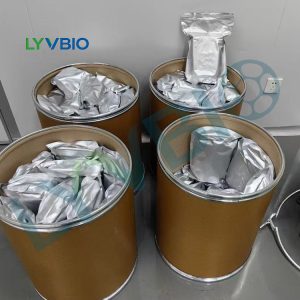
| Colis | 25 kg fiber drum with double polyethylene liners |
Besoin d'aide ? Contacter notre équipe
Synonymes : 4-Amino-1-β-D-ribofuranosyl-2(1H)-pyrimidinone; Cytosine riboside; 1-β-D-Ribofuranosylcytosine; Cytosine-1-β-D-ribofuranoside
Cytidine, also known as cytosine riboside, is a pyrimidine nucleoside that pairs a cytosine base with a ribose sugar through a β-N1-glycosidic linkage. It occurs naturally in all living organisms as a core building block of RNA, and its phosphorylated forms—CMP, CDP, and CTP—drive nucleic acid synthesis and energy transfer in cellular metabolism. While it is not a botanical extract, cytidine has been isolated from yeast and animal tissues for decades as a research reagent, and more recently it has become a commercial raw material for pharmaceutical and nutraceutical applications.
From a chemical standpoint, cytidine is a white crystalline solid with a molecular weight of 243.22 g/mol. Its structure is defined by the cytosine ring attached to D-ribose, which gives it a distinct UV absorption maximum around 270 nm in neutral solution. This property is routinely used for identification and purity assessment in QC laboratories. The compound is highly polar and freely soluble in water, making it suitable for injectable formulations and cell culture media after sterile filtration. It is also a precursor to cytarabine and other pyrimidine analogues, which keeps demand steady from the pharmaceutical sector.
In the nutraceutical space, cytidine is often formulated as citicoline (CDP-choline) or combined with uridine and choline to support cognitive health. Clinical research has explored its role in membrane phospholipid synthesis and neurotransmitter regulation, particularly in populations with age-related cognitive decline. For B2B buyers, the key considerations are assay consistency, residual solvents, and microbial quality—especially when the material is destined for oral solid dosage or parenteral use.
LyvBio supplies cytidine under strict quality control, with full documentation to support regulatory filings in the US, EU, and Asia. Our production follows a fermentation-based route that avoids animal-derived raw materials, addressing the growing demand for non-animal origin nucleosides. Whether you are developing a generic drug, a dietary supplement, or a biochemical reagent, we can provide a grade that matches your specification.
| Paramètre | Spécifications |
|---|---|
| Essai (HPLC) | ≥98,01 TP3T |
| Identification | IR and UV spectra conform to reference standard |
| Perte au séchage | ≤ 0,51 TP3T |
| Résidu au feu | ≤ 0,11 TP3T |
| Métaux lourds | ≤ 10 ppm |
| Limites microbiologiques | Nombre total de bactéries aérobies ≤ 1 000 UFC/g ; levures et moisissures ≤ 100 UFC/g ; absence d'E. coli |
| Solvants résiduels | Meets ICH Q3C requirements |
Room,5-0203, Unit 5, Beiyuanmen Street,Xi'an,Shaanxi,China
 English English
 Russian
 French
 Korean
 German
 Polish
 Japanese
 Spanish
 Italian
 Vietnamese