
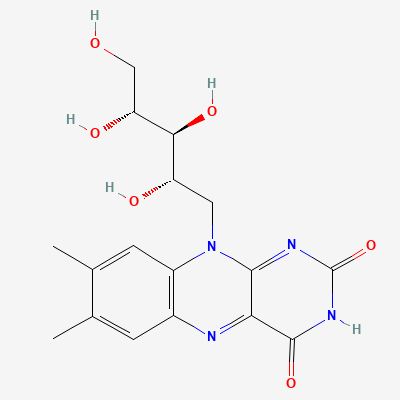
Riboflavin
| Tên sản phẩm | Riboflavin |
|---|---|
| Số CAS | 83-88-5 |
| Công thức phân tử | C17H20N4O6 |
| Trọng lượng phân tử | 376.37 g/mol |
| Hình thức | Orange to yellow crystalline powder |
| Assay | 98.0% – 102.0% (dried basis) |
| Độ hòa tan | Slightly soluble in water; practically insoluble in ethanol; soluble in dilute alkali |
| Mất mát khi sấy khô | ≤ 1.5% |
| Hàm lượng tro sau khi đốt | ≤ 0,1% |
| Kim loại nặng | ≤ 10 ppm |
| Gói | 25 kg fiber drum with double polyethylene liner |
Cần trợ giúp? Liên hệ với đội ngũ của chúng tôi
Synonyms: Vitamin B2, Lactoflavin, 7,8-Dimethyl-10-ribitylisoalloxazine, Riboflavine, E101, Vitamin G
Riboflavin, also known as vitamin B2, is a water-soluble, yellow-orange fluorescent compound that belongs to the flavin family. It was first isolated in the 1930s from milk whey, hence the name lactoflavin, and has since become an essential micronutrient in human and animal nutrition. As a precursor to the coenzymes flavin mononucleotide (FMN) and flavin adenine dinucleotide (FAD), riboflavin plays a central role in cellular energy production and redox reactions.
Chemically, riboflavin is a substituted isoalloxazine ring linked to a ribitol side chain. This structure allows it to function as a versatile electron carrier in biological systems. Unlike many vitamins, the human body cannot synthesize riboflavin, making dietary or supplemental intake necessary. It is found naturally in a variety of foods, including dairy products, eggs, lean meats, and green vegetables, but commercial production relies on fermentation or chemical synthesis to meet global demand.
In the pharmaceutical and food industries, riboflavin is standardized to high purity, typically 98.0% to 102.0% on a dried basis. It is widely used in multivitamin preparations, infant formulas, energy drinks, and animal feed premixes. Its photostability and distinctive color also make it useful as a natural food colorant (E101), particularly in products where a yellow hue is desired. For research and industrial applications, riboflavin serves as a key component in cell culture media and biochemical assays.
| Tham số | Thông số kỹ thuật |
|---|---|
| Phương pháp phân tích (HPLC) | 98.0% – 102.0% |
| Xác định | IR and UV spectra match reference standard |
| Mất mát khi sấy khô | ≤ 1.5% |
| Hàm lượng tro sau khi đốt | ≤ 0,1% |
| Kim loại nặng | ≤ 10 ppm |
| Giới hạn vi sinh vật | Total aerobic count ≤ 1000 CFU/g; Yeast & Mold ≤ 100 CFU/g; E. coli absent |
Room,5-0203, Unit 5, Beiyuanmen Street,Xi'an,Shaanxi,China
 English English
 Russian
 French
 Korean
 German
 Polish
 Japanese
 Spanish
 Italian
 Vietnamese