
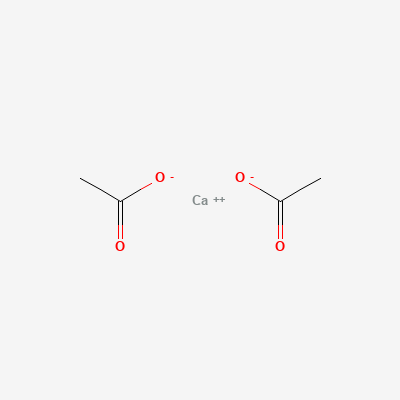
Calcium acetate
| Tên sản phẩm | Calcium Acetate |
|---|---|
| Số CAS | 62-54-4 |
| Các tên gọi khác | Calcium diacetate; Acetic acid calcium salt; Lime acetate; Calcium ethanoate |
| Công thức phân tử | C4H6CaO4 (anhydrous); C4H6CaO4·H2O (monohydrate) |
| Trọng lượng phân tử | 158.17 g/mol (anhydrous); 176.18 g/mol (monohydrate) |
| Hình thức | White crystalline powder or granules; hygroscopic |
| Assay | 99.0%–100.5% (on dried basis, complexometric titration) |
| Mất mát khi sấy khô | ≤ 7.0% (monohydrate); ≤ 1.0% (anhydrous) |
| Kim loại nặng | ≤ 10 ppm |
| Độ hòa tan | Freely soluble in water (approx. 37 g/100 mL at 20°C); slightly soluble in methanol; practically insoluble in ethanol and acetone |
| pH (5% solution) | 6.5 – 8.5 |
| Kích thước hạt | Typical 40–100 mesh (customizable) |
| Gói | 25 kg net multi-wall paper bags with PE liner; 500 kg / 1000 kg jumbo bags |
Cần trợ giúp? Liên hệ với đội ngũ của chúng tôi
Synonyms: Calcium diacetate, Acetic acid calcium salt, Lime acetate, Calcium ethanoate, Brown acetate
Calcium acetate has become a workhorse in both pharmaceutical and food formulations, driven by two converging trends: the need for effective phosphate binders in an aging CKD population, and the demand for clean-label, shelf-stable calcium fortification in processed foods. Unlike many niche actives, its dual functionality keeps it in steady demand across multiple industries, from renal care to bakery.
Chemically, it is the calcium salt of acetic acid, available in anhydrous and monohydrate forms. The monohydrate is the standard for pharmaceutical use, while the anhydrous grade is often chosen for food and technical applications where moisture control matters. It is produced by reacting acetic acid with calcium carbonate or calcium hydroxide, followed by crystallization and drying.
LyvBio supplies Calcium Acetate in USP/EP/BP grades, with tight control on assay, moisture, and heavy metals. Our material is routinely tested for residual acetic acid and particle size distribution, ensuring consistent performance in direct compression, wet granulation, and blending operations. Whether you are formulating a phosphate binder or a calcium-fortified beverage, our calcium acetate delivers reliable, reproducible results.
Calcium Acetate consists of calcium ions and acetate groups in a 1:2 molar ratio. The monohydrate form contains one molecule of water per formula unit, which influences its solubility and flow properties. The anhydrous form is more hygroscopic and is typically used where low moisture is critical, such as in dry blends or oil-based suspensions.
Both forms are white, odorless powders with a slightly bitter taste. They are freely soluble in water, forming a clear, colorless solution. The pH of a 5% aqueous solution is typically between 6.5 and 8.5, making it compatible with a wide range of excipients and active ingredients.
| Tham số | Thông số kỹ thuật |
|---|---|
| Assay | 99.0%–100.5% |
| Mất mát khi sấy khô | ≤ 7.0% (monohydrate) |
| Kim loại nặng | ≤ 10 ppm |
| Arsenic | ≤ 3 ppm |
| Lead | ≤ 2 ppm |
| Giới hạn vi sinh vật | Total aerobic count ≤ 1000 CFU/g; Yeast & Mold ≤ 100 CFU/g; E. coli absent |
Room,5-0203, Unit 5, Beiyuanmen Street,Xi'an,Shaanxi,China
 English English
 Russian
 French
 Korean
 German
 Polish
 Japanese
 Spanish
 Italian
 Vietnamese