
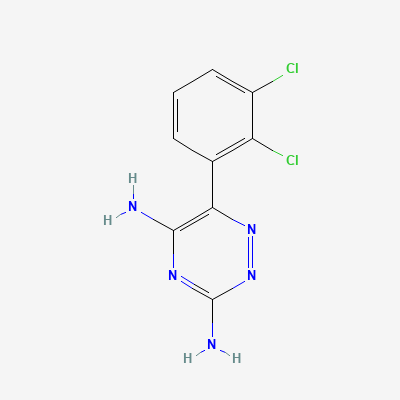
Lamotrigine
| Nazwa produktu | Lamotrigine |
|---|---|
| Numer CAS | 84057-84-1 |
| Wzór cząsteczkowy | C9H7Cl2N5 |
| Masa cząsteczkowa | 256.09 g/mol |
| Wygląd | Biały lub prawie biały krystaliczny proszek |
| Oznaczenie (HPLC) | 98.0% – 102.0% |
| Temperatura topnienia | 216–218 °C |
| Rozpuszczalność | Sparingly soluble in water; soluble in dimethyl sulfoxide, dimethylformamide |
| Opakowanie | Beczka na włókna o pojemności 25 kg z podwójną wkładką z polietylenu |
Potrzebujesz pomocy? Skontaktuj się z naszym zespołem
Synonimy: 3,5-Diamino-6-(2,3-dichlorophenyl)-1,2,4-triazine, Lamictal, LTG, BW-430C, 6-(2,3-Dichlorophenyl)-1,2,4-triazine-3,5-diamine
Lamotrigine is a phenyltriazine derivative that has carved out a distinct place in the anticonvulsant and mood-stabilizer markets since its approval in the 1990s. Unlike older antiepileptics that emerged from serendipitous screening, lamotrigine was designed to inhibit glutamate release—a mechanism that translates into broad-spectrum efficacy across partial and generalized seizures. For procurement teams, it represents a reliable, well-characterized API with steady demand from both generic and branded formulators.
From a chemical standpoint, lamotrigine is a small molecule (C9H7Cl2N5) with a dichlorophenyl ring attached to a diaminotriazine core. This structure gives it moderate lipophilicity and a low aqueous solubility, which formulators often address through salt formation or particle-size engineering. The compound is chemically stable under normal storage conditions, though it is light-sensitive and should be protected from prolonged exposure to strong UV light.
Manufacturing lamotrigine at commercial scale typically involves a multi-step synthesis starting from 2,3-dichlorobenzoyl chloride or related precursors. The critical quality attributes—assay, related substances, and residual solvents—are tightly controlled to meet pharmacopeial monographs (USP, EP, BP). Our material is produced under cGMP conditions and is available with full regulatory support, including DMF and CEP where applicable.
While lamotrigine is best known for epilepsy, its use in bipolar disorder—particularly for delaying depressive episodes—has expanded its clinical footprint. This dual indication keeps demand stable across multiple therapeutic categories, making it a strategic API for companies serving both neurology and psychiatry markets.
| Parametr | Specyfikacja |
|---|---|
| Assay (HPLC, dried basis) | 98.0% – 102.0% |
| Identyfikacja | IR, UV conforms to reference standard |
| Strata przy suszeniu | ≤ 0,5% |
| Popiół po spaleniu | ≤ 0,11 TP3T |
| Metale ciężkie | ≤ 20 ppm |
| Substancje pokrewne | Total impurities ≤ 0.5%; each unspecified ≤ 0.1% |
| Pozostałości rozpuszczalników | Meets USP / EP 5.4 requirements |
Room,5-0203, Unit 5, Beiyuanmen Street,Xi'an,Shaanxi,China
 English English
 Russian
 French
 Korean
 German
 Polish
 Japanese
 Spanish
 Italian
 Vietnamese