
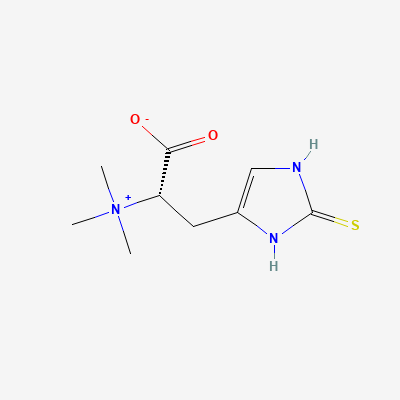
Ergothioneine
| 제품명 | Ergothioneine |
|---|---|
| CAS 번호 | 497-30-3 |
| 다른 이름 | L-Ergothioneine, EGT, 2-Thio-L-histidine betaine, Thioneine |
| 분자식 | C9H15N3O2S |
| 분자량 | 229.30 g/mol |
| 외관 | 흰색에서 미백색의 결정성 분말 |
| 분석법 (HPLC) | ≥98.0% |
| 용해도 | Soluble in water (approx. 10 mg/mL), slightly soluble in ethanol, practically insoluble in non-polar solvents |
| 건조 손실 | ≤1.0% |
| 소각 잔류물 | ≤0.1% |
| 중금속 | ≤10 ppm |
| 패키지 | 1 kg, 5 kg, 25 kg fiber drums with double polyethylene liners |
도움이 필요하신가요? 저희 팀에 문의해 주세요
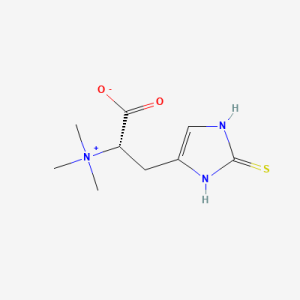
동의어: L-Ergothioneine, EGT, 2-Thio-L-histidine betaine, Thioneine, (S)-α-carboxy-2,3-dihydro-N,N,N-trimethyl-2-thioxo-1H-imidazole-4-ethanaminium inner salt
Ergothioneine is a naturally occurring amino acid derivative of histidine, distinguished by a thione group at the 2-position of the imidazole ring and a trimethylammonium betaine moiety. This unique structure confers exceptional antioxidant stability, as the sulfur atom exists predominantly as a thione rather than a thiol, making it resistant to autoxidation and metal-catalyzed degradation. The compound acts as a potent scavenger of hydroxyl radicals, hypochlorous acid, and peroxynitrite, and its redox potential is such that it can be regenerated by glutathione, providing sustained cytoprotection.
First isolated from ergot fungus in 1909, ergothioneine is synthesized exclusively by certain bacteria and fungi, and it accumulates in higher organisms through dietary intake. It is found in high concentrations in mushrooms, particularly oyster mushrooms and shiitake, as well as in oat bran and some fermented foods. For commercial use, ergothioneine is produced via fermentation using engineered strains of Escherichia coli or Mycobacterium smegmatis, followed by purification to yield high-purity crystalline material. It is available in food-grade and pharmaceutical-grade qualities, with assay typically ≥98% by HPLC.
In the B2B arena, ergothioneine has gained traction as a functional ingredient in anti-aging and mitochondrial health formulations, as well as in topical skincare products targeting oxidative stress. Its stability and water solubility make it suitable for a range of dosage forms, including capsules, tablets, and serums. Research interest continues to grow around its role as a cytoprotectant and its potential to modulate cellular stress responses, driving demand from nutraceutical and cosmetic manufacturers seeking a differentiated antioxidant.
Ergothioneine exists as a zwitterion at physiological pH, with the carboxylic acid deprotonated and the trimethylammonium group bearing a positive charge. The thione tautomer predominates, giving the molecule a characteristic UV absorption maximum at 257 nm. It is highly stable in aqueous solution under acidic to neutral conditions, but degrades slowly under strongly alkaline conditions or in the presence of strong oxidizing agents. The compound is hygroscopic and should be stored in a cool, dry place away from light.
| 매개변수 | 사양 |
|---|---|
| 분석법 (HPLC) | ≥98.0% |
| 외관 | 흰색에서 미백색의 결정성 분말 |
| 식별 | IR, HPLC retention time conforms to reference |
| 건조 손실 | ≤1.0% |
| 소각 잔류물 | ≤0.1% |
| 중금속 | ≤10 ppm |
| Microbiological | Total aerobic count ≤1000 CFU/g, Yeast & Mold ≤100 CFU/g, E. coli absent |
 English English
 Russian
 French
 Korean
 German
 Polish
 Japanese
 Spanish
 Italian
 Vietnamese