
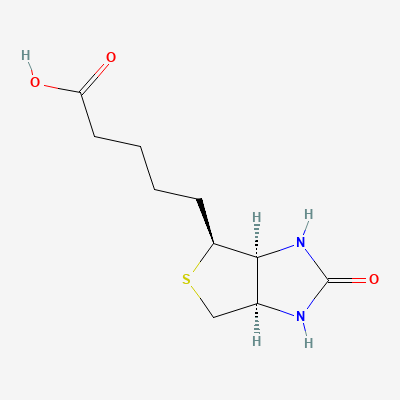
D-Biotin
| 제품명 | D-Biotin |
|---|---|
| 다른 이름 | Vitamin B7, Vitamin H, Coenzyme R |
| CAS 번호 | 58-85-5 |
| 분자식 | C10H16N2O3S |
| 분자량 | 244.31 g/mol |
| 외관 | 흰색에서 미백색의 결정성 분말 |
| 분석법 (HPLC) | ≥98.5% |
| 건조 손실 | ≤1.0% |
| 소각 잔류물 | ≤0.1% |
| 중금속 | ≤10 ppm |
| 용해도 | Slightly soluble in water; soluble in ethanol |
| 패키지 | 25 kg fiber drum |
도움이 필요하신가요? 저희 팀에 문의해 주세요
Synonyms: Vitamin B7, Vitamin H, Coenzyme R, Biotin, cis-Hexahydro-2-oxo-1H-thieno[3,4-d]imidazole-4-valeric acid
D-Biotin is a water-soluble B-complex vitamin that functions as a covalently bound cofactor for carboxylase enzymes. Its structure features a tetrahydroimidizalone ring fused with a tetrahydrothiophene ring bearing a valeric acid side chain, enabling ATP-dependent activation and attachment to carboxylase apoenzymes. This unique architecture allows biotin to shuttle activated carboxyl groups in essential metabolic pathways, including gluconeogenesis, fatty acid synthesis, and amino acid catabolism.
While biotin occurs naturally in foods such as eggs, nuts, and legumes, commercial D-Biotin is produced through multi-step chemical synthesis. LyvBio supplies high-purity D-Biotin conforming to USP/EP standards, with assay typically ≥98.5% by HPLC. Our product is a white crystalline powder, practically odorless, and is available in various particle sizes to suit different formulation needs.
D-Biotin is widely used in pharmaceutical preparations, dietary supplements, and cosmetic products. In the pharmaceutical industry, it is included in multivitamin injections and oral formulations for the prevention and treatment of biotin deficiency. In personal care, it is a key ingredient in hair and nail care products due to its role in keratin infrastructure. Additionally, biotin is employed as a research reagent in biochemical assays, particularly in biotinylation and affinity purification techniques.
D-Biotin (C10H16N2O3S) has a molecular weight of 244.31 g/mol. It is a white to off-white crystalline powder, slightly soluble in water (about 0.2 mg/mL at 25°C) and soluble in ethanol. The molecule contains a ureido ring (imidazolidone) fused to a tetrahydrothiophene ring, with a valeric acid side chain. The carboxylic acid group is essential for its biological activity, allowing conjugation to enzymes and proteins. Biotin is stable under normal storage conditions but should be protected from light and moisture.
| 매개변수 | 사양 |
|---|---|
| 분석법 (HPLC) | 98.5% – 101.0% |
| 외관 | 흰색에서 미백색의 결정성 분말 |
| 식별 | IR, HPLC retention time conforms to reference |
| 건조 손실 | ≤1.0% |
| 소각 잔류물 | ≤0.1% |
| 중금속 | ≤10 ppm |
| 관련 물질 | Total impurities ≤1.0% |
 English English
 Russian
 French
 Korean
 German
 Polish
 Japanese
 Spanish
 Italian
 Vietnamese