
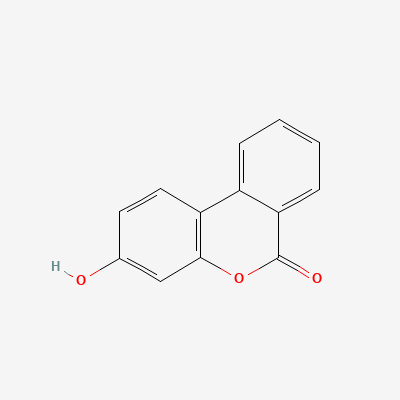
Urolitina B
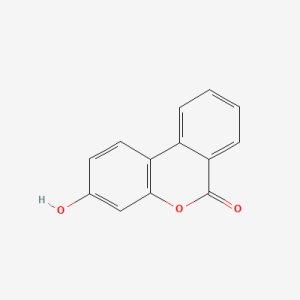
| Nome del prodotto | Urolitina B |
|---|---|
| Numero CAS | 1139-83-9 |
| Formula molecolare | C13H8O3 |
| Peso molecolare | 212.20 g/mol |
| Aspetto | Off-white to light yellow crystalline powder |
| Analisi (HPLC) | ≥98.0% |
| Punto di fusione | 278-280°C |
| Solubilità | Soluble in DMSO, ethanol; slightly soluble in water |
| Perdita per essiccazione | ≤0.5% |
| Residuo di combustione | ≤0.1% |
| Metalli pesanti | ≤10 ppm |
| Confezione | 1 kg, 5 kg, 25 kg drums |
Hai bisogno di aiuto? Contatta il nostro team
Sinonimi: 3-Hydroxy-6H-dibenzo[b,d]pyran-6-one, 3-Hydroxyurolithin B, 3-Hydroxy-6H-benzo[c]chromen-6-one, 3-Hydroxy-6H-dibenzo[b,d]pyran-6-one, Urolithin B
Urolithin B is a gut microbiota-derived metabolite of ellagitannins, a class of hydrolyzable tannins found in pomegranates, walnuts, and berries. It belongs to the urolithin family, which are dibenzo[b,d]pyran-6-one derivatives formed through the sequential action of intestinal bacteria on ellagic acid. Urolithin B is one of the major urolithins detected in human plasma and urine after consumption of ellagitannin-rich foods, alongside urolithin A. While urolithin A has gained significant attention for its mitophagy-inducing properties, urolithin B is increasingly recognized for its distinct biological activities, particularly in muscle physiology and inflammation modulation.
From a chemical perspective, urolithin B (C13H8O3) is a hydroxylated dibenzo-pyranone with a molecular weight of 212.20 g/mol. It differs from urolithin A by the absence of a hydroxyl group at the 8-position, which influences its solubility, metabolic stability, and interaction with biological targets. This structural distinction underpins its unique pharmacological profile, including its ability to modulate androgen receptor signaling and inhibit NF-κB activation. Urolithin B is typically produced via chemical synthesis or through biotransformation of ellagic acid using microbial cultures, ensuring high purity and consistent supply for research and product development.
In the nutritional and pharmaceutical industries, urolithin B is explored for its potential in muscle health, anti-inflammatory applications, and as a reference standard for analytical methods. It is available at high purity grades (≥98% by HPLC) and is used in preclinical studies, dietary supplement formulations, and as a biomarker for gut microbial metabolism of polyphenols.
| Parametro | Specifiche |
|---|---|
| Analisi (HPLC) | ≥98.0% |
| Identificazione | NMR, MS conforms to structure |
| Perdita per essiccazione | ≤0.5% |
| Residuo di combustione | ≤0.1% |
| Metalli pesanti | ≤10 ppm |
| Limiti microbiologici | Conta aerobica totale ≤ 1000 UFC/g; lieviti e muffe ≤ 100 UFC/g; assenza di E. coli |
Room,5-0203, Unit 5, Beiyuanmen Street,Xi'an,Shaanxi,China
 English English
 Russian
 French
 Korean
 German
 Polish
 Japanese
 Spanish
 Italian
 Vietnamese