
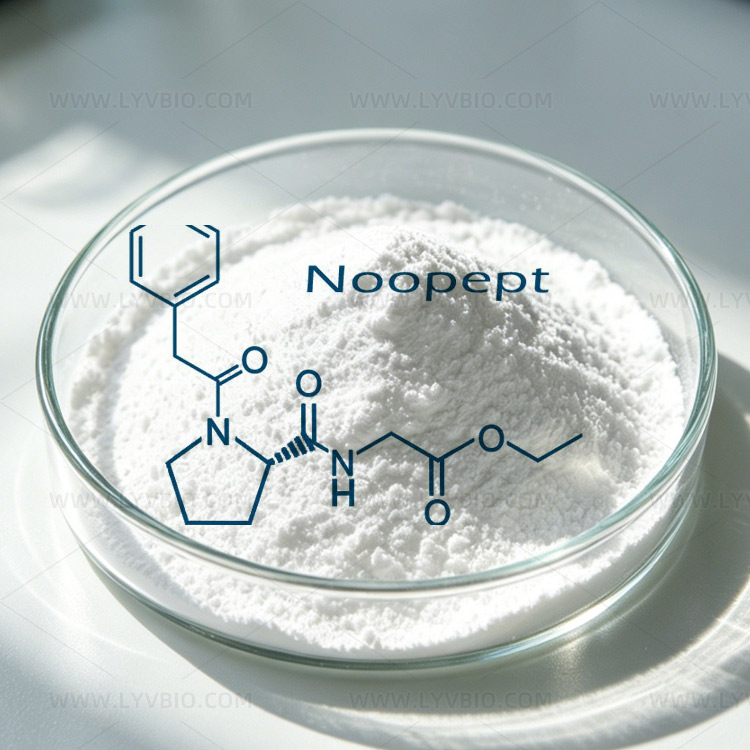
| Nome del prodotto | Noopept |
| Altri nomi | GVS-111; estere etilico dell'N-fenilacetil-L-prolilglicina |
| Numero CAS | 157115-85-0 |
| Formula molecolare | C₁₇H₂₂N₂O₄ |
| Peso molecolare | 334,37 g/mol |
| Aspetto | Polvere cristallina di colore da bianco a bianco sporco |
| Analisi (HPLC) | ≥ 99,01 TP3T |
| Punto di fusione | 95–98 °C |
| Perdita per essiccazione | ≤ 0,51 TP3T |
| Residuo di combustione | ≤ 0,11 TP3T |
| Metalli pesanti | ≤ 10 ppm |
Hai bisogno di aiuto? Contatta il nostro team
Noopept (codice di sviluppo GVS-111) è un composto nootropico dipeptidico sviluppato in Russia negli anni ’90 come nuovo potenziatore cognitivo dotato di proprietà neuroprotettive. Dal punto di vista strutturale, si tratta di un derivato del cicloprolil-glicina che presenta alcune somiglianze farmacologiche con i racetam (in particolare il piracetam), ma con una potenza significativamente superiore — stimata pari a circa 1.000 volte più potente del piracetam.
Legenda: A differenza della maggior parte dei nootropi, che richiedono settimane prima di manifestare i propri effetti, Noopept ha dimostrato un’azione rapida nei modelli di ricerca. Esso presenta sia che migliora le capacità cognitive e neuroprotettivo proprietà, tra cui la protezione contro lo stress ossidativo, l’eccitotossicità e il danno da ischemia-riperfusione. Il Noopept aumenta inoltre i livelli del fattore neurotrofico derivato dal cervello (BDNF) e del fattore di crescita nervoso (NGF) nell’ippocampo.
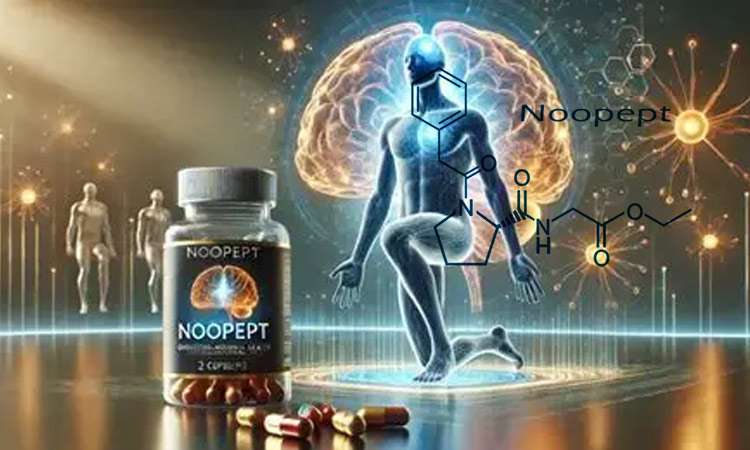
Il Noopept esercita i propri effetti attraverso molteplici vie, distinguendosi così dai classici racetam:
| Percorso | Meccanismo | Risultati della ricerca |
|---|---|---|
| Aumento dell'espressione di BDNF/NGF | Aumenta i livelli del fattore neurotrofico derivato dal cervello e del fattore di crescita nervoso nell’ippocampo | Favorisce la plasticità sinaptica e la neurogenesi |
| Modulazione del recettore AMPA/kainato | Modulazione allosterica positiva (simile a quella dei racetam) | Potenzia la trasmissione glutamatergica |
| Neuroprotezione | Riduce lo stress ossidativo, inibisce la perossidazione lipidica, protegge dall'eccitotossicità | Modelli preclinici di ischemia e trauma cranico |
| Sistema colinergico | Può favorire il rilascio di acetilcolina (in modo indiretto) | Sostegno alla memoria e all'apprendimento |
| Antinfiammatorio | Riduce la neuroinfiammazione (fase preclinica) | Neuroprotezione |
È stato dimostrato che il Noopept protegge dalla neurodegenerazione in modelli animali del morbo di Alzheimer, del morbo di Parkinson e dell’ischemia cerebrale. Riduce la tossicità dell'amiloide-β e potrebbe avere un potenziale di modifica del decorso della malattia (solo in fase preclinica).
LyvBio S.r.l. è un fornitore certificato GMP di Noopept (GVS-111) ad alta purezza destinato ad applicazioni di ricerca e sviluppo.
Capacità di fornitura:
Analisi (HPLC): ≥99,01 TP3T
Modulo: Polvere cristallina
Capacità mensile: oltre 20 kg
Quantità all'ingrosso: da 1 g a 10 kg
Tempi di consegna: 3–5 giorni (campioni), 10–15 giorni (grandi quantità)
Documentazione: COA, scheda di sicurezza (MSDS), HNMR, cromatogramma HPLC, dati di stabilità
Garanzia di qualità:
Purezza determinata mediante HPLC con rilevamento UV
Solventi residui analizzati (conforme alla norma USP )
Metalli pesanti analizzati (ICP-MS)
Conferma strutturale (NMR su richiesta)
📧 Per informazioni: info@lyvbio.com
| Parametro | Specifiche | Metodo di prova |
|---|---|---|
| Analisi (HPLC) | ≥ 99,01 TP3T | HPLC-UV (210 nm) |
| Aspetto | Polvere cristallina di colore da bianco a bianco sporco | Visivo |
| Identificazione | Tempo di ritenzione HPLC, NMR (su richiesta) | HPLC / NMR |
| Punto di fusione | 95–98 °C | USP |
| Perdita per essiccazione | ≤ 0,51 TP3T | USP |
| Residuo di combustione | ≤ 0,11 TP3T | USP |
| Metalli pesanti | Pb ≤ 10 ppm; As ≤ 2 ppm; Cd ≤ 1 ppm; Hg ≤ 0,1 ppm | ICP-MS |
| Sostanze correlate | Impurità singola ≤ 0,51 TP3T; Totale ≤ 1,01 TP3T | HPLC-UV |
| Solventi residui | Scopri la norma USP | GC |
| Dimensione delle particelle | Da 95% a 80 mesh | Analisi granulometrica |
D: Il Noopept è uguale al Piracetam?
A: No. Il Noopept è un derivato dipeptidico con una struttura chimica diversa, una potenza significativamente superiore (~1.000 volte) e meccanismi d'azione distinti (tra cui la sovraregolazione di BDNF/NGF). Non è un racetam, sebbene presenti alcune somiglianze farmacologiche.
D: Noopept è approvato dalla FDA?
A: No. Il Noopept non è approvato dalla FDA per uso medico negli Stati Uniti. È disponibile come sostanza chimica di ricerca esclusivamente per uso di laboratorio. In Russia è stato utilizzato come farmaco soggetto a prescrizione medica.
D: Qual è la differenza tra Noopept e gli altri nootropi?
A: Il Noopept si distingue per la sua capacità di aumentare i livelli di BDNF e NGF nell’ippocampo, una proprietà che i classici racetam non possiedono. È inoltre significativamente più potente (dosaggio in microgrammi rispetto a quello in milligrammi).
D: Qual è il principale metabolita attivo del Noopept?
A: Cicloprolilglicina (CPG). Il Noopept viene rapidamente metabolizzato in CPG, sostanza che si ritiene contribuisca in modo significativo ai suoi effetti farmacologici.
D: Il Noopept ha proprietà neuroprotettive?
A: Sì. Gli studi preclinici hanno dimostrato effetti neuroprotettivi in modelli di ictus, trauma cranico, eccitotossicità e neurodegenerazione (modelli di Alzheimer e Parkinson).
D: Qual è l'intervallo di dosi efficaci negli studi sugli animali?
A: Gli studi pubblicati riportano effetti di potenziamento cognitivo e neuroprotettivi a dosi comprese tra 0,1 e 1 mg/kg (per via orale) nei roditori — circa 1.000 volte più potenti del piracetam.
D: Esistono studi clinici sull’uomo relativi al Noopept?
A: In Russia, dove il Noopept è autorizzato come nootropico soggetto a prescrizione medica, sono stati condotti studi limitati sull'uomo.
Per informazioni: info@lyvbio.com
 English English
  Russian
 French
 Korean
 German
 Polish
 Japanese
 Spanish
 Italian
 Vietnamese