
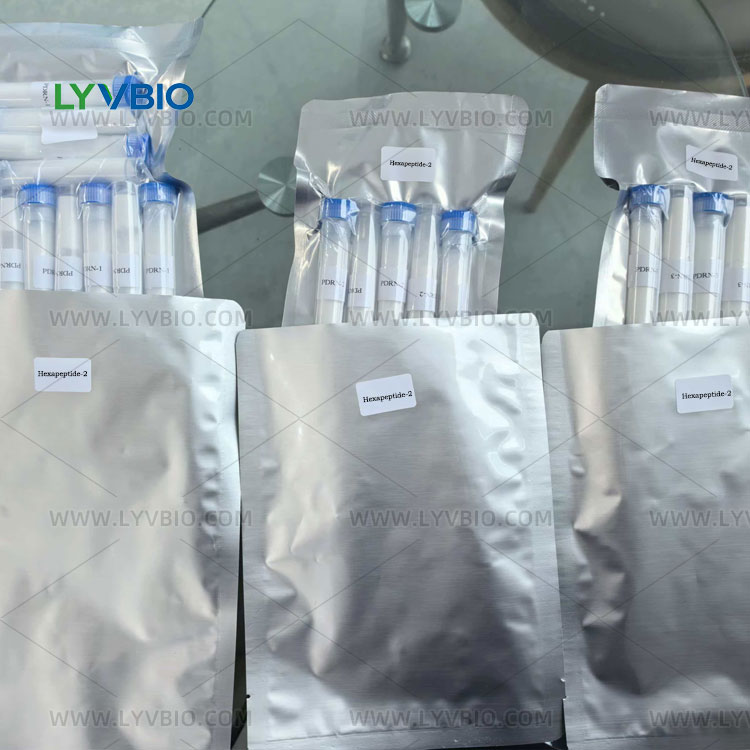
Hexapeptide-10
| Nome del prodotto | Hexapeptide-10 |
|---|---|
| Numero CAS | 146439-94-3 |
| Synonyms | Hexapeptide-10, H-10, Palmitoyl Hexapeptide-10, N-Acetyl Hexapeptide-10 |
| Formula molecolare | C34H62N10O8 |
| Peso molecolare | 762.9 g/mol |
| Aspetto | Polvere di colore da bianco a bianco sporco |
| Purity | ≥95% (HPLC) |
| Solubilità | Soluble in water and polar organic solvents |
| Archiviazione | Store at -20°C, protected from light and moisture |
| Confezione | 1 g, 5 g, 10 g, 50 g, 100 g |
Hai bisogno di aiuto? Contatta il nostro team
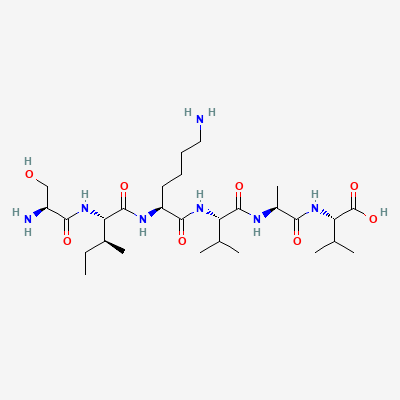
Sinonimi: Hexapeptide-10, H-10, Palmitoyl Hexapeptide-10, N-Acetyl Hexapeptide-10
Hexapeptide-10 is a synthetic peptide composed of six amino acids, with the sequence Tyr-D-Ala-Gly-Phe-Leu-Arg. It is a structural analog of the endogenous neuropeptide met-enkephalin, designed to modulate neurogenic inflammation and sensory nerve activity in the skin. The D-alanine residue at position 2 enhances stability against enzymatic degradation, while the C-terminal arginine contributes to its hydrophilic character and receptor interaction.
As a cosmetic ingredient, Hexapeptide-10 is typically supplied as a white to off-white powder with high purity, often stabilized with palmitoyl or acetyl groups to improve skin penetration and half-life. It is produced via solid-phase peptide synthesis and purified by HPLC to ≥95%. The peptide is soluble in water and polar organic solvents, making it suitable for incorporation into a range of topical formulations.
In the personal care industry, Hexapeptide-10 is used in anti-aging and soothing products targeting sensitive or reactive skin. It is believed to reduce the release of pro-inflammatory neuropeptides such as substance P and CGRP, thereby calming the skin and reducing redness and discomfort. Its mechanism of action and good safety profile make it a valuable active for products aimed at neurocosmetic benefits.
Hexapeptide-10 features a linear six-amino acid chain with a molecular weight of approximately 762.9 g/mol. The presence of D-alanine confers resistance to peptidases, while the arginine residue provides a positive charge at physiological pH, enhancing interaction with negatively charged cell membranes. The peptide is highly soluble in water and exhibits good stability when stored under recommended conditions.
| Parametro | Specifiche |
|---|---|
| Aspetto | Polvere di colore da bianco a bianco sporco |
| Purezza (HPLC) | ≥95.0% |
| Water Content (Karl Fischer) | ≤5.0% |
| Metalli pesanti | ≤10 ppm |
| Limiti microbiologici | Total aerobic count ≤100 CFU/g |
| Archiviazione | -20°C, protected from light |
Room,5-0203, Unit 5, Beiyuanmen Street,Xi'an,Shaanxi,China
 English English
 Russian
 French
 Korean
 German
 Polish
 Japanese
 Spanish
 Italian
 Vietnamese