
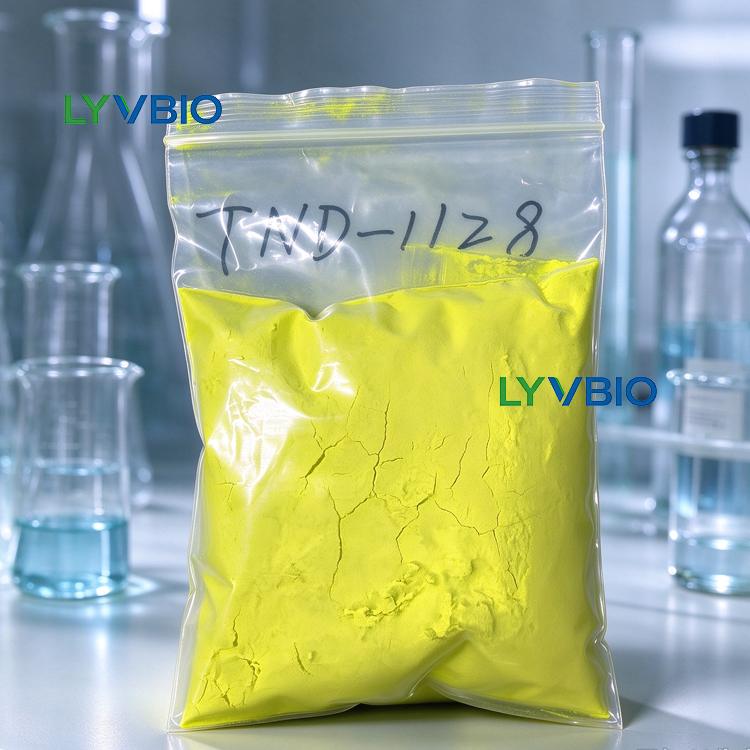
Deazaflavina (TND-1128)
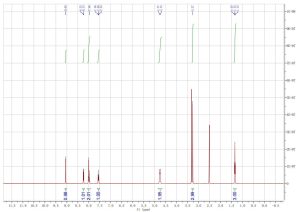
| Nome del prodotto | Deazaflavin |
| Other Name | TND-1128 |
| Numero CAS | 59997-14-7 |
| Formula molecolare | C₁₂H₉N₃O₂ |
| Peso molecolare | 227.22 g/mol |
| Aspetto | Yellow to orange crystalline powder |
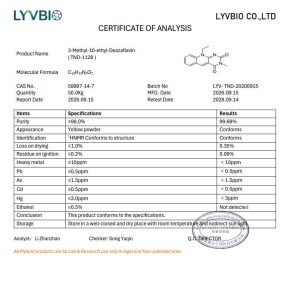
| Purezza (HPLC) | ≥ 98,01 TP3T |
| Perdita per essiccazione | ≤ 0,51 TP3T |
Hai bisogno di aiuto? Contatta il nostro team
Deazaflavin (TND-1128) is a synthetic flavin analog belonging to the 5-deazaflavin family, characterized by the replacement of the nitrogen atom at position 5 of the isoalloxazine ring with a carbon atom. This structural modification fundamentally alters the redox chemistry of the molecule.
Sinonimi: Deazaflavin, 5-Deazaflavin, TND-1128, Pyrimido[4,5-b]quinoline-2,4(1H,3H)-dione, NSC 106042, Denitrifying flavin, Deazoflavin, 1H,2H,3H,4H-Pyrimido[4,5-b]quinoline-2,4-dione
Relationship to other deazaflavins:
| Composto | N. CAS. | Position 5 | Key Difference |
|---|---|---|---|
| 5-Deazaflavina | 26908-38-3 | Carbon (C) | C at position 5, H at N3? |
| Deazaflavin (TND-1128) | 59997-14-7 | Carbon (C) | Different substitution pattern |
| Natural flavin (riboflavin) | 83-88-5 | Nitrogen (N) | Natural cofactor |
| F420 cofactor | Various | Carbon (C) | Natural deazaflavin (archaea/mycobacteria) |
Unlike natural flavins (riboflavin, FMN, FAD), deazaflavin analogs cannot form the N5-C4a adduct intermediate that is critical for many flavin-catalyzed reactions. This property makes deazaflavins valuable mechanistic probes for studying flavoprotein function.
| Parametro | Specifiche | Metodo di prova |
|---|---|---|
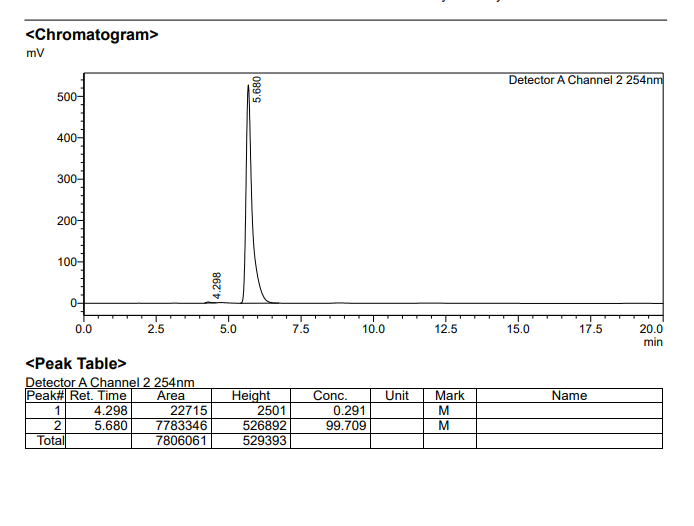
| Analisi (HPLC) | ≥ 98,01 TP3T | HPLC-UV |
| Aspetto | Yellow to orange crystalline powder | Visivo |
| Perdita per essiccazione | ≤ 0,51 TP3T | USP |
| Single Impurity | ≤ 0,51 TP3T | HPLC-UV |
| Total Impurities | ≤ 2.0% | HPLC-UV |
| Solventi residui | Scopri la norma USP | GC |
| Parametro | Deazaflavin (TND-1128) | Riboflavin (B2) | FMN | FAD |
|---|---|---|---|---|
| Position 5 heteroatom | Carbon | Nitrogen | Nitrogen | Nitrogen |
| N5-C4a adduct formation | Cannot form | Can form | Can form | Can form |
| Reduction potential | More negative (~ -0.65 V) | ~ -0.30 V | ~ -0.32 V | ~ -0.32 V |
| Oxygen reactivity | Ridotto | Alto | Alto | Alto |
| Natural occurrence | Synthetic (analog of F420) | Natural | Natural | Natural |
| Primary application | Mechanistic probe | Supplement | Research | Research |
LyvBio S.r.l. is a supplier of high-purity Deazaflavin (TND-1128) for research and development applications.
Capacità di fornitura:
Purezza: ≥98,01 TP3T (HPLC)
Quantità all'ingrosso: 50g-200g
Tempi di consegna: 3-5 business days (stock items)
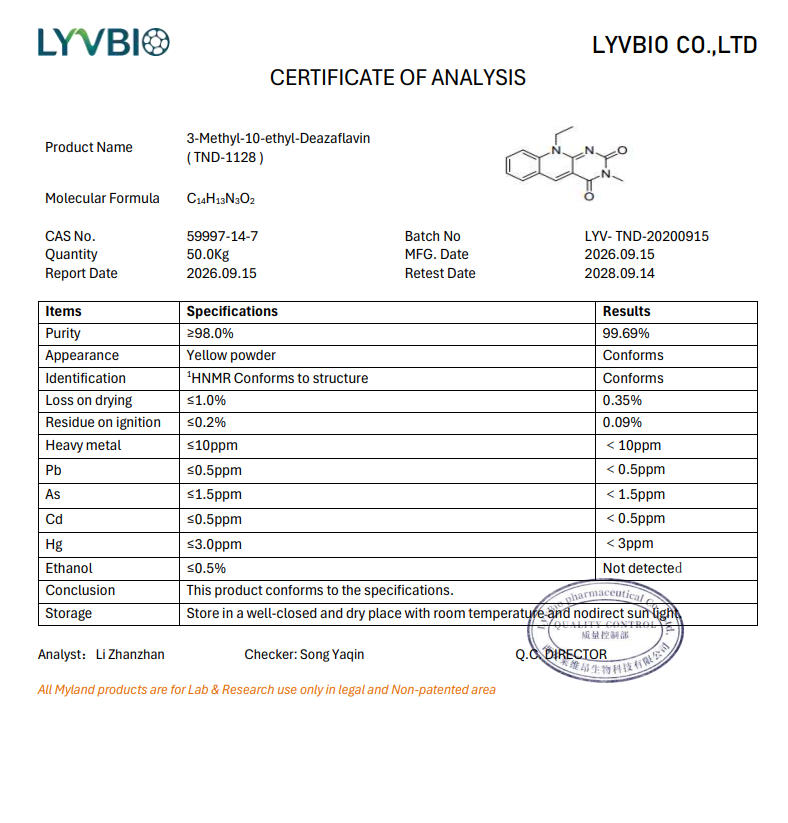
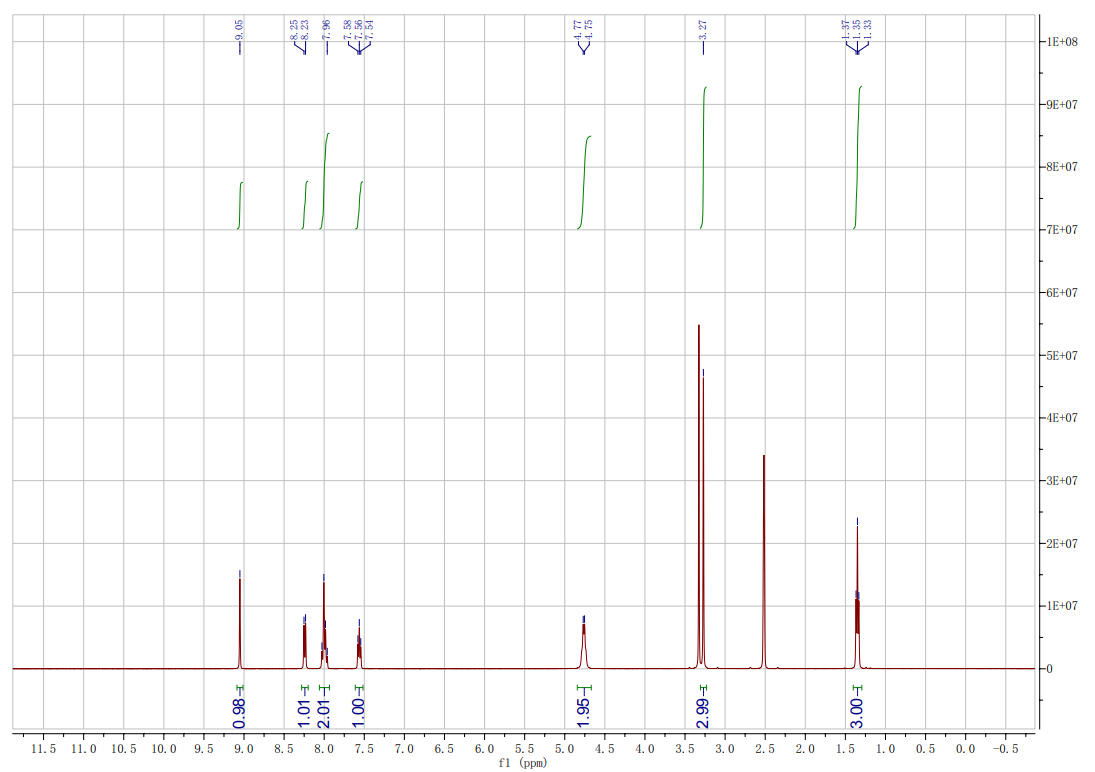
Documentazione: COA, MSDS, HPLC chromatogram
Fonte: Synthetic chemical synthesis
Standardizzazione: ≥98.0% deazaflavin (HPLC)
Moduli: Yellow to light yellow crystalline powder
Applicazioni: Biochemical research, pharmaceutical analysis, enzyme mechanism studies
Q: What is the difference between deazaflavin and natural flavins?
A: Deazaflavin has a carbon atom at position 5 instead of nitrogen, which alters its redox potential and electron transfer properties, making it useful as a mechanistic probe.
Q: What is TND-1128?
A: TND-1128 is a research compound identifier used for deazaflavin in pharmacological screening and impurity profiling, particularly as a Vecabrutinib impurity reference.
Q: Is deazaflavin suitable for in vitro studies?
A: Yes, deazaflavin is soluble in DMSO and DMF, making it suitable for in vitro biochemical and enzymatic assays.
Q: What documentation is provided?
A: We provide COA, HPLC chromatogram, and NMR with every shipment. Additional documents are available upon request.
Q: Is deazaflavin suitable for long-term storage?
A: Yes, when stored in a cool, dry place, protected from light, deazaflavin is stable for at least 24 months.
Room,5-0203, Unit 5, Beiyuanmen Street,Xi'an,Shaanxi,China
 English English
 Russian
 French
 Korean
 German
 Polish
 Japanese
 Spanish
 Italian
 Vietnamese