
Tétrapeptide-12 de myristoyle
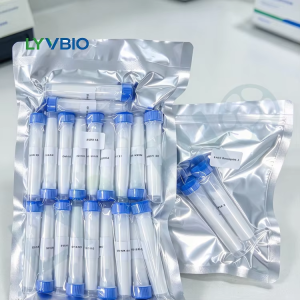
| Nom du produit | Tétrapeptide-12 de myristoyle |
|---|---|
| Numéro CAS | 959610-54-9 |
| Apparence | Poudre blanche à blanc cassé |
| Caractéristiques techniques | ≥98% (HPLC) |
| Formule moléculaire | C35H63N7O7 |
| Poids moléculaire | 693.9 g/mol |
| Solubilité | Soluble in water, ethanol, and propylene glycol |
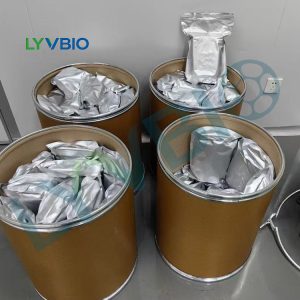
| Colis | 1 kg, 5 kg, 10 kg (net weight in aluminum foil bags or fiber drums) |
Besoin d'aide ? Contacter notre équipe
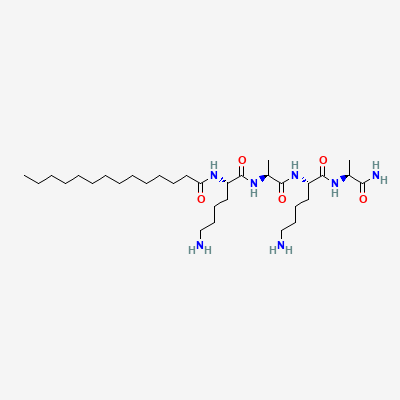
Synonyms: Myristoyl Tetrapeptide-12, N-Myristoyl Tetrapeptide-12, Myristoyl Tetrapeptide-12 (INCI), CAS 959610-54-9
Myristoyl Tetrapeptide-12 is a synthetic lipopeptide consisting of a tetrapeptide backbone acylated with myristic acid at the N-terminus. The sequence—typically comprising glycine, histidine, and lysine residues—is designed to mimic the active site of human parathyroid hormone-related protein (PTHrP), a natural regulator of melanogenesis. This modification enhances lipophilicity and skin penetration, making it a valuable active in cosmetic formulations aimed at pigmentation control.
Since its introduction, Myristoyl Tetrapeptide-12 has gained attention as a non-hydroquinone alternative for hyperpigmentation. It operates by interfering with tyrosinase activity and melanocyte-stimulating hormone (MSH) signaling, thereby reducing melanin synthesis. Unlike conventional whitening agents, it does not cause cytotoxicity to melanocytes, offering a gentler approach to skin lightening.
The peptide is produced via solid-phase peptide synthesis, followed by myristoylation and high-performance liquid chromatography (HPLC) purification. It is supplied as a white to off-white powder, standardized to ≥98% purity, and is compatible with a wide range of cosmetic delivery systems, including emulsions, serums, and gels.
| Paramètre | Spécifications |
|---|---|
| Essai (HPLC) | ≥98,01 TP3T |
| Identification | Conforms to structure |
| Apparence | Poudre blanche à blanc cassé |
| Perte au séchage | ≤5,01 TP3T |
| Résidu au feu | ≤ 1,01 TP3T |
| Métaux lourds | ≤ 10 ppm |
| Limites microbiologiques | Nombre total de bactéries aérobies ≤ 1 000 UFC/g ; levures et moisissures ≤ 100 UFC/g ; absence d'E. coli |
Room,5-0203, Unit 5, Beiyuanmen Street,Xi'an,Shaanxi,China
 English English
 Russian
 French
 Korean
 German
 Polish
 Japanese
 Spanish
 Italian
 Vietnamese