

Glycocholic Acid

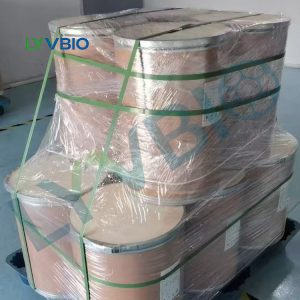
| Nom du produit | Glycocholic Acid |
|---|---|
| Numéro CAS | 475-31-0 |
| Autres noms | Glycocholic acid, 3α,7α,12α-Trihydroxy-5β-cholan-24-oylglycine |
| Formule moléculaire | C26H43NO6 |
| Poids moléculaire | 465.63 g/mol |
| Apparence | Poudre cristalline blanche à blanc cassé |
| Essai (HPLC) | ≥98,01 TP3T |
| Perte au séchage | ≤2.0% |
| Résidu au feu | ≤ 0,51 TP3T |
| Métaux lourds | ≤ 10 ppm |
| Solubilité | Soluble in ethanol, methanol; slightly soluble in water |
| Colis | 25 kg fiber drum with double polyethylene liners |
Besoin d'aide ? Contacter notre équipe
Synonymes : Glycocholic acid, 3α,7α,12α-Trihydroxy-5β-cholan-24-oylglycine, Cholylglycine, Glycine cholate, N-Choloylglycine
Glycocholic acid is a primary bile acid that is conjugated with glycine, representing one of the major bile salts in human bile. It is synthesized in the liver from cholic acid and glycine, and plays a critical role in the emulsification and absorption of dietary fats and fat-soluble vitamins in the small intestine. Beyond its physiological functions, glycocholic acid is a valuable compound in pharmaceutical and biochemical research, particularly in studies of bile acid metabolism, liver function, and drug delivery systems.
Chemically, glycocholic acid belongs to the class of steroid acids, featuring a cholane skeleton with three hydroxyl groups at positions 3, 7, and 12, and a side chain conjugated to glycine via an amide bond. This conjugation increases its water solubility compared to unconjugated bile acids, which is essential for its biological activity. The presence of the glycine moiety also allows for specific interactions with bile acid transporters and receptors, making it a key molecule in enterohepatic circulation.
In the pharmaceutical industry, glycocholic acid is used as a reference standard for analytical methods, as an intermediate in the synthesis of other bile acid derivatives, and as a component in drug formulations to enhance the solubility and permeability of poorly absorbable drugs. Its high purity and well-defined properties make it a preferred choice for researchers and manufacturers aiming for consistent and reliable results.
| Paramètre | Spécifications |
|---|---|
| Essai (HPLC) | ≥98,01 TP3T |
| Identification | IR, NMR conforms to structure |
| Perte au séchage | ≤2.0% |
| Résidu au feu | ≤ 0,51 TP3T |
| Métaux lourds | ≤ 10 ppm |
| Limites microbiologiques | Nombre total de bactéries aérobies ≤ 1 000 UFC/g ; levures et moisissures ≤ 100 UFC/g ; absence d'E. coli |
Room,5-0203, Unit 5, Beiyuanmen Street,Xi'an,Shaanxi,China
 English English
 Russian
 French
 Korean
 German
 Polish
 Japanese
 Spanish
 Italian
 Vietnamese