
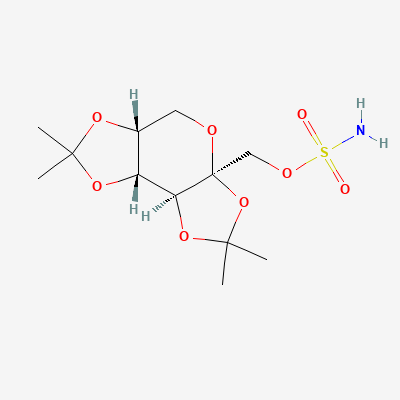
Topiramate
| Nombre del producto | Topiramate |
|---|---|
| Número CAS | 97240-79-4 |
| Fórmula molecular | C12H21NO8S |
| Peso molecular | 339.36 g/mol |
| Apariencia | Polvo cristalino de color blanco a blanquecino |
| Ensayo (HPLC) | 98.0% – 102.0% (on dried basis) |
| Punto de fusión | 125°C – 127°C |
| Solubilidad | Sparingly soluble in water; freely soluble in acetone, chloroform, and ethanol |
| Paquete | 25 kg fiber drum with double polyethylene liners |
¿Necesitas ayuda? Póngase en contacto con nuestro equipo
Sinónimos: Topiramate, 2,3:4,5-Bis-O-(1-methylethylidene)-beta-D-fructopyranose sulfamate, McN-4853, RWJ-17021, TPM
Topiramate is a sulfamate-substituted monosaccharide that has become a staple in the antiepileptic and migraine-prophylaxis markets. Unlike many older anticonvulsants, it was designed from the ground up—born from a deliberate search for compounds that could block seizure spread through multiple mechanisms. First approved in the mid-1990s, it has since earned a place in formularies worldwide, both as monotherapy and as an adjunct for partial-onset seizures, and later for preventing migraines in adults.
Its chemical structure is built on a fructose scaffold, with a sulfamate group that sets it apart from other anticonvulsants. This unique architecture allows topiramate to act on several targets: voltage-gated sodium channels, GABA-A receptors, and AMPA/kainate glutamate receptors. That multi-pronged action is rare among neurological APIs and explains why it remains a focus for researchers exploring broader neurological applications.
For formulators, topiramate is a well-behaved crystalline solid, readily processed into tablets and sprinkle capsules. Its stability profile and compatibility with common excipients make it a reliable choice for both generic and branded products. While it is not a first-line treatment for every patient, its broad efficacy keeps demand steady across North America, Europe, and Asia.
| Parámetro | Especificaciones |
|---|---|
| Ensayo (HPLC) | 98.0% – 102.0% |
| Identificación | IR, HPLC retention time conforms to standard |
| Pérdida por secado | ≤ 0,51 TP3T |
| Residuo tras la combustión | ≤ 0,11 TP3T |
| Metales pesados | ≤ 20 ppm |
| Límites microbianos | Total aerobic count ≤ 1000 CFU/g; yeast & mold ≤ 100 CFU/g; E. coli absent |
Room,5-0203, Unit 5, Beiyuanmen Street,Xi'an,Shaanxi,China
 English English
  Russian
 French
 Korean
 German
 Polish
 Japanese
 Spanish
 Italian
 Vietnamese