
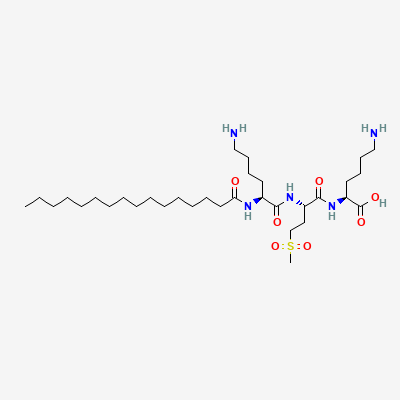
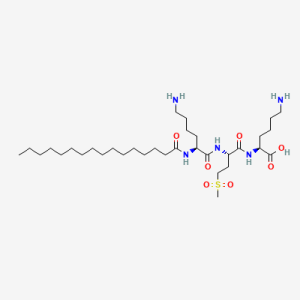

| Nombre del producto | Palmitoil tripéptido-38 |
|---|---|
| Otros nombres | Palmitoyl tripeptide-38, N-palmitoyl tripeptide-38 |
| Número CAS | 1101448-24-1 |
| Apariencia | Polvo de color blanco a blanquecino |
| Especificaciones | Assay (HPLC) ≥ 98% |
| Solubilidad | Soluble en agua y en etanol |
| Paquete | 1g, 5g, 10g, 100g, 1kg |
¿Necesitas ayuda? Póngase en contacto con nuestro equipo
Sinónimos: Palmitoyl tripeptide-38, N-palmitoyl tripeptide-38, Palmitoyl tripeptide-38 (PT-38), Palmitoyl tripeptide-38 peptide, Palmitoyl tripeptide-38 cosmetic peptide
Palmitoyl Tripeptide-38 is a synthetic peptide designed for cosmetic applications, particularly in anti-aging skincare. It belongs to a family of palmitoylated peptides that are engineered to mimic natural collagen fragments, stimulating the skin’s own repair mechanisms. The addition of a palmitoyl group enhances lipophilicity, improving skin penetration and bioavailability.
This peptide is known for its ability to promote collagen synthesis and support the extracellular matrix, leading to reduced fine lines and improved skin firmness. It is often used in serums, creams, and lotions targeting wrinkles and loss of elasticity. Palmitoyl Tripeptide-38 is considered a gentle yet effective alternative to more aggressive anti-aging ingredients like retinol, making it suitable for sensitive skin.
As a highly pure compound (≥98% by HPLC), Palmitoyl Tripeptide-38 is supplied as a white to off-white powder. It is readily soluble in water and ethanol, facilitating formulation in both aqueous and oil-in-water emulsions. Its stability and compatibility with a wide range of cosmetic ingredients make it a versatile choice for formulators seeking reliable, science-backed actives.
| Parámetro | Especificaciones |
|---|---|
| Ensayo (HPLC) | ≥ 98% |
| Apariencia | Polvo de color blanco a blanquecino |
| Solubilidad | Soluble en agua y en etanol |
| Pérdida por secado | ≤ 5% |
| Metales pesados | ≤ 20 ppm |
| Límites microbianos | Total viable count ≤ 1000 CFU/g, Yeast & mold ≤ 100 CFU/g |
 English English
  Russian
 French
 Korean
 German
 Polish
 Japanese
 Spanish
 Italian
 Vietnamese