
© 2026 LyvBio Co., Ltd. | 280 Main Street, Xian, Shaanxi, China |
Correo electrónico: info@lyvbio.com | Website: https://www.lyvbio.com


| Nombre del producto | Celangulin |
|---|---|
| Número CAS | 116159-73-0 |
| Fórmula molecular | C₃₀H₄₂O₈ (approximate, for Celangulin I) |
| Peso molecular | 530.65 g/mol (approximate) |
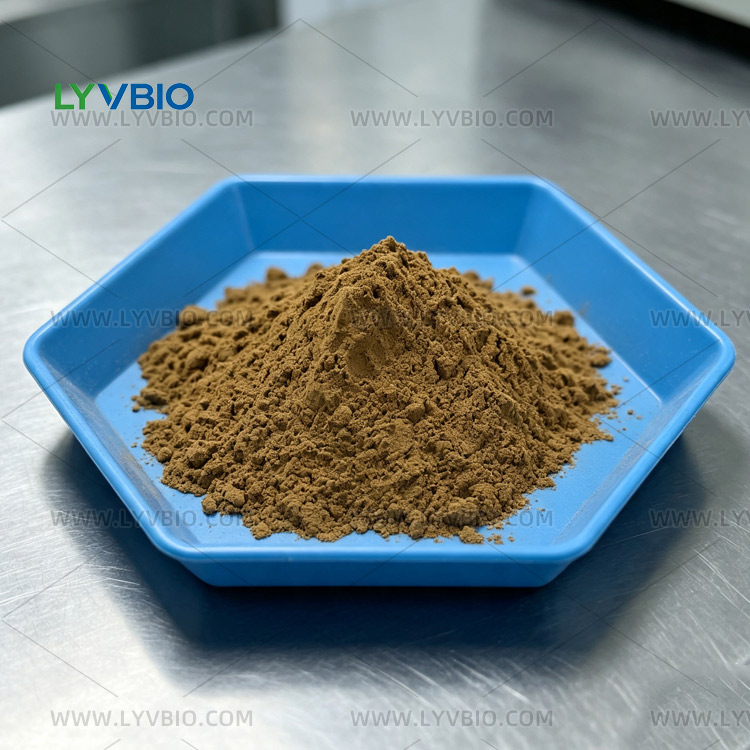
| Apariencia | Polvo fino de color marrón a marrón oscuro |
| Ensayo (HPLC) | ≥ 6.0% |
| Pérdida por secado | ≤ 5,01 TP3T |
| Residuo tras la combustión | ≤ 8,01 TP3T |
| Metales pesados | ≤ 10 ppm |
| Tamaño de las partículas | De 100% a malla 80 |
¿Necesitas ayuda? Póngase en contacto con nuestro equipo
Sinónimos: Celangulin, Celastrus angulatus Extract, Angled Bittersweet Extract, Celangulin I, Celangulin II, Celangulin III, Insecticidal Sesquiterpenoid, Beta-dihydroagarofuran Sesquiterpenoid
Celangulin is a naturally occurring beta-dihydroagarofuran sesquiterpenoid compound derived from the root bark of Celastrus angulatus (also known as the angled bittersweet or Chinese bittersweet), a climbing shrub native to East Asia. It is one of the principal bioactive components responsible for the plant’s traditional use as a natural insecticide and its more recent applications in agricultural and research settings.
The molecular structure of celangulin features a complex polycyclic sesquiterpenoid skeleton with multiple ester groups, which contribute to its potent insecticidal and antifeedant activities.
The mechanism of action involves disruption of the insect midgut epithelium and interference with the peritrophic membrane, leading to mortality.
Celangulin is available as a 6% standardized extract from Celastrus angulatus root bark. It is primarily used in agricultural research, botanical pesticide development, and as a reference standard for analytical studies.
Insecticidal activity: Disrupts insect midgut epithelium and peritrophic membrane.
Antifeedant properties: Deters insect feeding through gustatory effects.
Botanical pesticide: Active ingredient in natural pest control formulations.
Herramienta de investigación: Used in entomological and agricultural research.
Analytical standard: Used in HPLC method development and quality control.
Fuente: Root bark of Celastrus angulatus
Extracción: Hydroalcoholic or solvent extraction, followed by concentration and drying
Normalización: ≥6.0% total celangulins (HPLC)
Formularios: Brown to dark brown fine powder
Q: What is the mechanism of action of celangulin?
A: Celangulin disrupts the midgut epithelium and peritrophic membrane of insects, leading to digestive dysfunction and mortality. It has both insecticidal and antifeedant activities.
Q: What insects are susceptible to celangulin?
A: Research has shown activity against a range of pests, including lepidopteran larvae, beetles, and aphids.
Q: Is celangulin toxic to mammals?
A: Celastrus angulatus extracts have low mammalian toxicity, making them suitable for botanical pesticide applications. However, pure celangulin should be handled with appropriate laboratory safety precautions.
Q: Is celangulin used in organic farming?
A: Yes, botanical pesticides containing celangulin are permitted in certain organic certification schemes as a natural insecticide.
Q: What is the purity grade available?
A: We supply Celangulin standardized to ≥6.0% total celangulins (HPLC).
 English English
  Russian
 French
 Korean
 German
 Polish
 Japanese
 Spanish
 Italian
 Vietnamese