
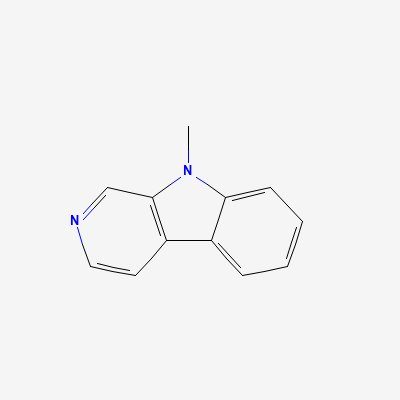
9-Me-BC
| Nombre del producto | 9-Me-BC |
|---|---|
| Número CAS | 2521-07-5 |
| Fórmula molecular | C10H12N2 |
| Peso molecular | 160,22 g/mol |
| Apariencia | Off-white to pale yellow crystalline powder |
| Ensayo (HPLC) | ≥98,01 TP3T |
| Punto de fusión | 118–122 °C |
| Solubilidad | Soluble in DMSO, ethanol; slightly soluble in water |
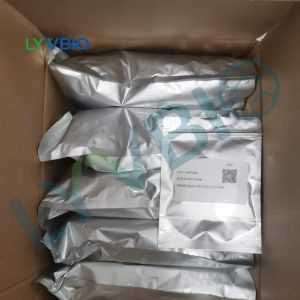
| Paquete | 1 kg, 5 kg, 25 kg fiber drums |
¿Necesitas ayuda? Póngase en contacto con nuestro equipo
Synonyms: 9-Methyl-β-carboline, 9-Me-BC, 9-Methyl-9H-pyrido[3,4-b]indole, 9-Methylnorharman, 9-Methyl-β-carboline
9-Me-BC is a synthetic methylated β-carboline derivative that has become a molecule of interest in neuropharmacology and medicinal chemistry research. Unlike many β-carbolines isolated from natural sources, 9-Me-BC is produced through controlled chemical synthesis, allowing for high purity and consistent supply. Its structure features a methyl group at the indole nitrogen, a modification that significantly influences its interaction with monoamine systems and its metabolic stability compared to norharman and harman.
In the research community, 9-Me-BC is primarily investigated for its potential effects on dopaminergic neurons and neurotrophic signaling. Preclinical studies suggest it may upregulate tyrosine hydroxylase and promote neurite outgrowth, making it a valuable tool for studying Parkinson’s disease models and dopamine-related pathways. Its ability to cross the blood-brain barrier and its relatively favorable pharmacokinetic profile in animal models have further fueled interest.
While not approved for human use, 9-Me-BC is supplied as a reference standard and research chemical for in vitro and in vivo studies. It is available at high purity, typically ≥98% by HPLC, and is characterized by NMR and mass spectrometry to ensure structural integrity. Researchers value it for its selectivity and the reproducibility it brings to neurobiological experiments.
| Parámetro | Especificaciones |
|---|---|
| Ensayo (HPLC) | ≥98,01 TP3T |
| Identificación | Conforms to structure |
| Pérdida por secado | ≤0,51 TP3T |
| Residuo tras la combustión | ≤0,11 TP3T |
| Metales pesados | ≤10 ppm |
| Límites microbianos | Total aerobic count ≤1000 CFU/g |
Room,5-0203, Unit 5, Beiyuanmen Street,Xi'an,Shaanxi,China
 English English
 Russian
 French
 Korean
 German
 Polish
 Japanese
 Spanish
 Italian
 Vietnamese