
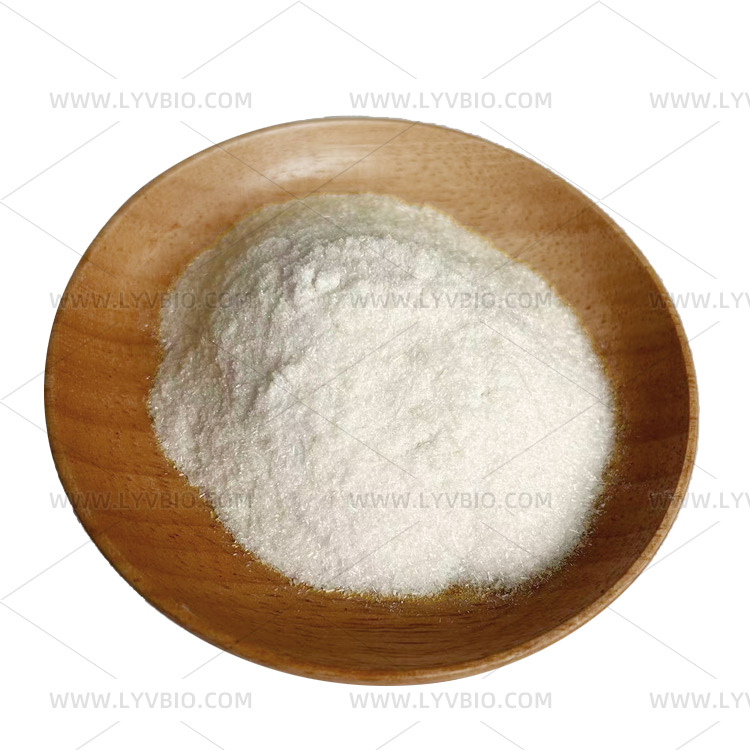


| Nazwa produktu | Kojic Acid Dipalmitate |
| Numer CAS | 79725-98-7 |
| Wzór cząsteczkowy | C₃₈H₆₆O₆ |
| Masa cząsteczkowa | 618.93 g/mol |
| Wygląd | Biały lub prawie biały krystaliczny proszek |
| Czystość (HPLC) | ≥ 98,01 TP3T |
| Temperatura topnienia | 92–96°C |
| Liczba kwasowa | ≤ 5.0 mg KOH/g |
| Przechowywanie | W chłodnym, suchym miejscu, w zamkniętym opakowaniu, chronione przed światłem |
| Okres przydatności do spożycia | 36 miesięcy |
| Opakowanie | 100g, 500g, 1kg, 5kg, 25kg |
Potrzebujesz pomocy? Skontaktuj się z naszym zespołem
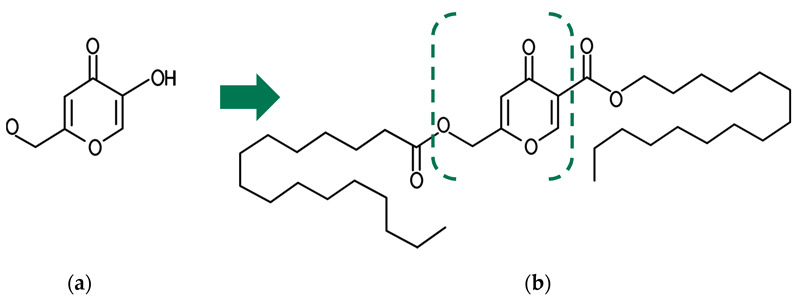
Kojic Acid Dipalmitate is a lipid-soluble derivative of kojic acid, created by esterifying kojic acid with palmitic acid. This structural modification addresses the two major limitations of free kojic acid: poor stability (oxidation, discoloration) oraz poor skin penetration (hydrophilic) .
Key differentiator: Kojic Acid Dipalmitate is the most stable and skin-bioavailable form of kojic acid, delivering superior brightening efficacy with no formulation discoloration (unlike free kojic acid which turns yellow/brown over time).
Why the market has shifted:
| Parametr | Kojic Acid | Kojic Acid Dipalmitate |
|---|---|---|
| Rozpuszczalność | Water-soluble | Oil-soluble |
| Stability (color) | Unstable (oxidizes yellow→brown) | Stable (no discoloration) |
| Stability (heat) | Degrades >50°C | Stable >80°C |
| Skin penetration | Poor (hydrophilic) | Excellent (lipophilic) |
| Tyrosinase inhibition | Potent (direct) | Potent (after enzymatic hydrolysis) |
| Sustained release | No (rapid) | Yes (gradual release of active kojic acid) |
| Formulation pH | Narrow (4–6) | Broad (4–8) |
| Shelf life | 12–18 months | 36 miesięcy |
| Discoloration risk | High (browning) | None |
| Irritation potential | Moderate (high dose) | Low (gradual release) |
| Wniosek | Typical Usage | Główne tezy |
|---|---|---|
| Melasma treatment creams | 1–2% | Reduces dark patches, even skin tone |
| Dark spot correctors | 1–2% | Fades age spots, sun spots, post-acne marks |
| Brightening serums | 0.5–1.5% | Illuminates, evens complexion |
| All-over body lotions | 0.5–1% | Even skin tone on arms, legs, décolletage |
| Wniosek | Typical Usage | Positioning |
|---|---|---|
| Luminous anti-aging creams | 0.5–1.5% | Brightening + wrinkle reduction |
| Night renewal treatments | 1–2% | Overnight brightening + cell turnover |
| Vitamin C combination serums | 0.5–1% | Multi-pathway brightening + antioxidant |
| Wniosek | Typical Usage | Grupa docelowa |
|---|---|---|
| Post-acne spot treatment | 1–2% | Acne-prone skin with residual marks |
| Post-procedure brightening | 0.5–1% | After laser, chemical peel (clinical use) |
| Pregnancy-safe brightening | 0.5–1% | Melasma / dark spots (safe alternative to hydroquinone) |
LyvBio Sp. z o.o. is supplier of high-purity Kojic Acid Dipalmitate for the cosmetic and personal care industry.
Możliwości dostawcze:
Czystość: ≥98,01 TP3T (HPLC)
Miesięczna wydajność: ponad 500 kg
Duże ilości: 100 g – 5 000 kg
Czas realizacji: 3–5 dni (próbki), 10–15 dni (towar luzem)
Dokumentacja: COA, MSDS, TDS, chromatogram HPLC, dane dotyczące stabilności
Opakowanie: 100g, 500g, 1kg, 5kg, 25kg (foil bag or HDPE drum)
| Parametr | Kojic Acid Dipalmitate | Kojic Acid | Hydroquinone | Alpha-Arbutin | Kwas traneksamowy |
|---|---|---|---|---|---|
| Rozpuszczalność | Oil | Water | Water | Water | Water |
| Stabilność | Excellent | Poor | Good | Good | Excellent |
| Discoloration risk | None | Wysoki | Low | None | None |
| Skin penetration | Wysoki | Low | Wysoki | Umiarkowane | Low-Moderate |
| Tyrosinase inhibition | Potent (after hydrolysis) | Potent | Potent | Umiarkowane | None (different pathway) |
| Melasma efficacy | Wysoki | Umiarkowane | Very High | Umiarkowane | Wysoki |
| Cytotoxicity | None | Low | Yes (at high conc.) | None | None |
| Regulatory (EU/US) | Allowed | Allowed | Restricted (US), Banned (EU) | Allowed | Allowed |
| Czyste kosmetyki | Good | Umiarkowane | Poor | Good | Good |
| Pregnancy safe | Yes | Yes | No | Yes | Yes |
Q: What is the difference between Kojic Acid and Kojic Acid Dipalmitate?
A: Kojic Acid Dipalmitate is the oil-soluble, stabilized ester of kojic acid. It is more stable (no discoloration), better penetrating, and easier to formulate than free kojic acid. It hydrolyzes on skin to release active kojic acid.
Q: Is Kojic Acid Dipalmitate more effective than Kojic Acid?
A: Yes, in finished formulations. Although free kojic acid has higher in vitro tyrosinase inhibition, its poor stability and penetration limit real-world efficacy. Kojic Acid Dipalmitate delivers more active kojic acid to melanocytes due to better penetration and stability.
Q: Does Kojic Acid Dipalmitate cause skin irritation?
A: No. It is non-irritating at recommended concentrations (0.5–2.0%). The gradual release of kojic acid reduces irritation potential compared to free kojic acid.
Q: Can Kojic Acid Dipalmitate be used during pregnancy?
A: Yes. Unlike hydroquinone, kojic acid derivatives have no known teratogenic risk. However, consult a physician before use.
Q: How should Kojic Acid Dipalmitate be stored?
A: Cool, dry, sealed, protected from light. Shelf life: 36 months.
Q: Is Kojic Acid Dipalmitate soluble in water?
A: No. It is oil-soluble. For water-based serums, use solubilizers or emulsify.
Pytanie: Jakie jest minimalne zamówienie?
A: Sample orders: 100g–500g. Trial production: 1–5 kg. Commercial: Negotiable (25kg+ receives volume pricing). Lead time: 3–5 days (samples); 10–15 days (bulk).
📧 E-mail: info@lyvbio.com
🌐 Strona internetowa: https://www.lyvbio.com
 English English
  Russian
 French
 Korean
 German
 Polish
 Japanese
 Spanish
 Italian
 Vietnamese