
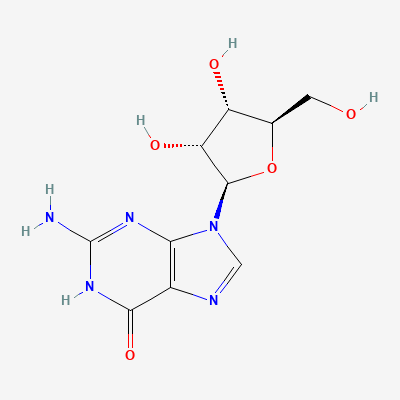
Guanosine
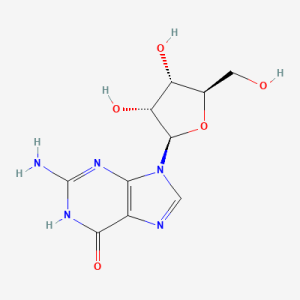
| Nazwa produktu | Guanosine |
|---|---|
| Numer CAS | 118-00-3 |
| Synonyms | Guanine riboside; 9-β-D-Ribofuranosylguanine; Guanine-9-β-D-ribofuranoside; Vernine; 2-Amino-9-β-D-ribofuranosyl-9H-purine-6(1H)-one |
| Wzór cząsteczkowy | C10H13N5O5 |
| Masa cząsteczkowa | 283.24 g/mol |
| Wygląd | Biały lub prawie biały krystaliczny proszek |
| Oznaczenie (HPLC) | ≥98,01 TP3T |
| Temperatura topnienia | 250 °C (dec.) |
| Rozpuszczalność | Sparingly soluble in water (0.75 g/L at 25 °C); practically insoluble in ethanol, acetone |
| Strata przy suszeniu | ≤0.5% |
| Popiół po spaleniu | ≤0,11 TP3T |
| Metale ciężkie | ≤10 ppm |
| Przechowywanie | Store in a cool, dry place, protected from light and moisture |
Potrzebujesz pomocy? Skontaktuj się z naszym zespołem
Synonimy: Guanine riboside, 9-β-D-Ribofuranosylguanine, Guanine-9-β-D-ribofuranoside, Vernine, 2-Amino-9-β-D-ribofuranosyl-9H-purine-6(1H)-one
Guanosine is a purine nucleoside composed of a guanine base linked to a ribose sugar via a β-N9-glycosidic bond. It occurs naturally in RNA and is produced industrially through fermentation or chemical synthesis, typically offered at ≥98% purity for pharmaceutical and biotech applications.
As a key intermediate in nucleotide metabolism, guanosine serves as a precursor to guanylic acid (GMP) and its derivatives, which are widely used as flavor enhancers and pharmaceutical actives. Its role in cellular signaling and energy transfer makes it a valuable building block for antiviral, anticancer, and cardiovascular research, as well as a standard in analytical laboratories.
| Parametr | Specyfikacja |
|---|---|
| Oznaczenie (HPLC) | ≥98,01 TP3T |
| Wygląd | Biały lub prawie biały krystaliczny proszek |
| Identyfikacja | Widmo IR jest zgodne z widmem referencyjnym |
| Strata przy suszeniu | ≤0.5% |
| Popiół po spaleniu | ≤0,11 TP3T |
| Metale ciężkie | ≤10 ppm |
| Rozpuszczalność | Sparingly soluble in water |
Room,5-0203, Unit 5, Beiyuanmen Street,Xi'an,Shaanxi,China
 English English
 Russian
 French
 Korean
 German
 Polish
 Japanese
 Spanish
 Italian
 Vietnamese