
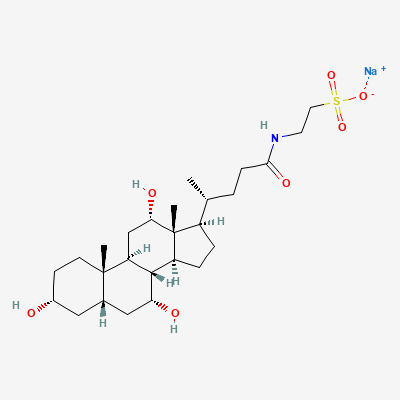
Sodium Taurocholate

| 제품명 | Sodium Taurocholate |
|---|---|
| CAS 번호 | 145-42-6 |
| 분자식 | C26H44NNaO7S |
| 분자량 | 537.68 g/mol |
| 외관 | 흰색에서 미백색의 결정성 분말 |
| Assay | ≥98.0% (HPLC) |
| 용해도 | Freely soluble in water and ethanol; practically insoluble in non-polar solvents |
| 건조 손실 | ≤5.0% |
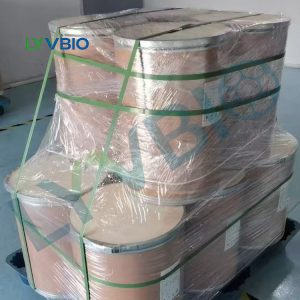
| 패키지 | 25 kg fiber drum with double polyethylene liner; 1 kg and 5 kg options available |
도움이 필요하신가요? 저희 팀에 문의해 주세요
Synonyms: Taurocholic acid sodium salt, Sodium cholyltaurine, Sodium taurocholate hydrate, TCA sodium salt, Cholyltaurine sodium, N-Choloyltaurine sodium salt
Sodium taurocholate is the sodium salt of taurocholic acid, a primary bile acid conjugated with the amino sulfonic acid taurine. In the human body it is synthesized in the liver from cholesterol via the classical and alternative bile acid pathways, then secreted into bile to facilitate the absorption of dietary fats and fat-soluble vitamins. It is one of the most abundant bile salts in human and bovine bile, which is why it has been isolated and used in biochemical research and pharmaceutical formulation for well over a century.
Structurally, sodium taurocholate belongs to the family of taurine-conjugated bile acids, distinguished by a sulfonate head group that remains ionized across a wide pH range. This gives the molecule a strong anionic character and exceptional water solubility compared with unconjugated bile acids such as cholic acid or chenodeoxycholic acid. The steroid nucleus carries three hydroxyl groups (3α, 7α, 12α), and the side chain terminates in a taurine amide, a combination that underpins its powerful detergent properties and its physiological role in micelle formation.
Commercial sodium taurocholate is typically produced by conjugation or extraction, then purified to a well-defined assay and supplied as a white crystalline powder. It is widely used as a solubilizing agent for lipophilic compounds, as a component of cell culture media, in bile acid metabolism studies, and as a reference standard for analytical method development. Because it is a natural, biodegradable surfactant, it also attracts interest in drug delivery and formulation work where synthetic surfactants are undesirable.
| 매개변수 | 사양 |
|---|---|
| 분석법 (HPLC) | ≥98.0% |
| 식별 | IR spectrum conforms to reference standard |
| 외관 | 흰색에서 미백색의 결정성 분말 |
| 건조 손실 | ≤5.0% |
| 소각 잔류물 | ≤0.5% |
| 중금속 | ≤10 ppm |
| Microbial Limits | Total aerobic count ≤1000 CFU/g; yeast and mold ≤100 CFU/g; absence of E. coli 그리고 Salmonella |
 English English
 Russian
 French
 Korean
 German
 Polish
 Japanese
 Spanish
 Italian
 Vietnamese