
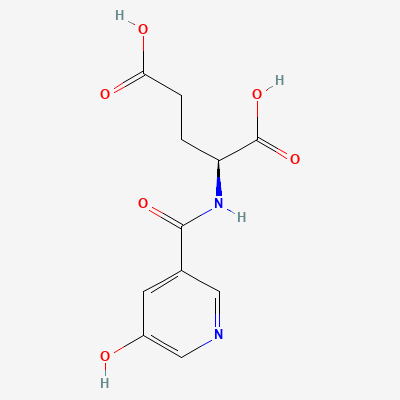
Nooglutyl
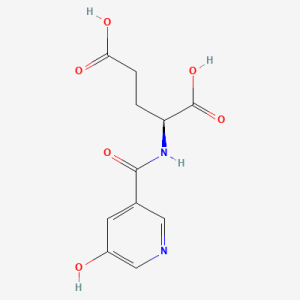
| 製品名 | Nooglutyl |
|---|---|
| CAS番号 | 112193-35-8 |
| 別名 | N-(4-Hydroxyphenylacetyl)-L-prolyl-L-tyrosine; Nooglutil; Nooglutilum |
| 分子式 | C22H24N2O6 |
| 分子量 | 412.44 g/mol |
| 外観 | 白色からオフホワイトの結晶性粉末 |
| 分析(HPLC) | ≥98.0% |
| 溶解度 | Soluble in DMSO, dimethylformamide; sparingly soluble in ethanol; practically insoluble in water |
| 乾燥減量 | ≤1.0% |
| 焼失残渣 | ≤0.11 TP3T |
| 重金属 | 10 ppm以下 |
| ストレージ | Store in a cool, dry place, protected from light |
お困りですか? 弊社チームまでお問い合わせください
同義語: Nooglutyl, Nooglutil, N-(4-Hydroxyphenylacetyl)-L-prolyl-L-tyrosine, CAS 112193-35-8, Nooglutilum
Nooglutyl is a synthetic dipeptide-like compound that belongs to the nootropic class of agents. It was developed in Russia during the 1990s as part of a research program focused on peptide-based cognitive enhancers. Structurally, it combines a proline residue with a tyrosine moiety and a 4-hydroxyphenylacetyl group, giving it a unique pharmacological profile that distinguishes it from other nootropics.
Nooglutyl is not a natural extract but a fully synthetic molecule. Its chemical structure incorporates a proline ring and a tyrosine-derived phenolic group, which contribute to its ability to cross the blood-brain barrier. This structural design allows it to interact with glutamatergic and GABAergic systems, making it a subject of interest in neurological research.
The compound is typically produced via multi-step organic synthesis, starting from protected amino acids. The final product is purified using recrystallization or chromatography to achieve high purity, usually ≥98% as determined by HPLC. Nooglutyl is primarily used in research settings, particularly in studies investigating cognitive function, neuroprotection, and memory enhancement.
As a research chemical, Nooglutyl is supplied to pharmaceutical companies, academic institutions, and contract research organizations. Its potential applications include the development of treatments for cognitive disorders, neurodegenerative diseases, and age-related memory decline. The compound is also explored as a reference standard in analytical laboratories.
| パラメータ | 仕様 |
|---|---|
| 分析(HPLC) | ≥98.0% |
| 識別 | NMR, MS conform to structure |
| 乾燥減量 | ≤1.0% |
| 焼失残渣 | ≤0.11 TP3T |
| 重金属 | 10 ppm以下 |
| Microbial Limits | Total aerobic count ≤1000 CFU/g; Yeast & Mold ≤100 CFU/g; E. coli absent |
 English English
 Russian
 French
 Korean
 German
 Polish
 Japanese
 Spanish
 Italian
 Vietnamese