
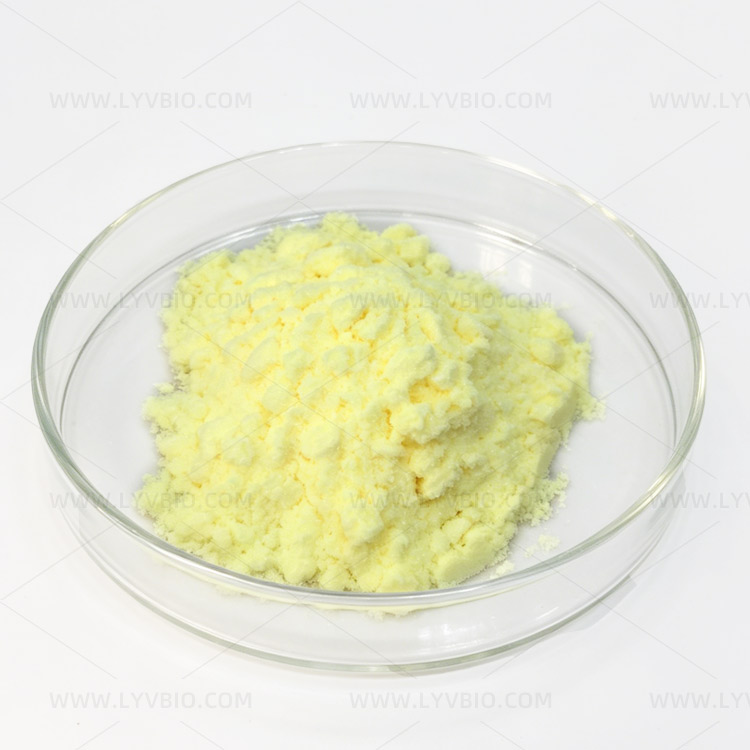
| 製品名 | NMNH (Reduced Nicotinamide Mononucleotide) |
| 別名 | NMNH; Reduced NMN; Dihydronicotinamide mononucleotide |
| CAS番号 | 108347-85-9 |
| 分子式 | C₁₁H₁₇N₂O₈P |
| 分子量 | 336.23 g/mol |
| 外観 | Yellow to light yellow crystalline powder |
| 分析(HPLC) | ≥ 98.0% (high purity) |
| Purity (NAD⁺/NMN related) | ≤ 5.0% oxidized forms |
お困りですか? 弊社チームまでお問い合わせください
NMNH (Reduced Nicotinamide Mononucleotide) is the reduced form of nicotinamide mononucleotide (NMN). While NMN contains a nicotinamide ring in its oxidized state, NMNH features a dihydropyridine ring, making it chemically similar to NADH but at the mononucleotide level.
NMNH represents an emerging area of NAD⁺ precursor research. Unlike NMN (which must be converted to NAD⁺ via NMNAT enzymes), NMNH is believed to be more readily converted to NADH and may elevate cellular NAD⁺ levels through distinct metabolic pathways. Early research suggests potentially higher bioavailability and different tissue distribution compared to NMN.
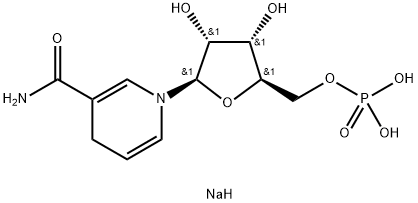
C11H18N2NaO8P
| 複合 | CAS番号. | 分子量 | Oxidation State | Ring Structure |
|---|---|---|---|---|
| NMN (β-Nicotinamide Mononucleotide) | 1094-61-7 | 334.22 g/mol | Oxidized | Pyridine ring |
| NMNH (Reduced NMN) | 108347-85-9 | 336.23 g/mol | 値下げ | Dihydropyridine ring |
| NAD⁺ | 53-84-9 | 663.43 g/mol | Oxidized | Pyridine ring |
| NADH | 606-68-8 | 665.44 g/mol | 値下げ | Dihydropyridine ring |
| 用途 | 説明 | エンドユーザー |
|---|---|---|
| NAD⁺ metabolism research | Studying alternative NAD⁺ biosynthesis pathways | 学術研究、大学 |
| Aging & longevity research | Comparative studies with NMN, NR, NADH | Aging research institutes |
| Metabolic disease models | In vitro and animal studies of energy metabolism | Pharmaceutical R&D, CROs |
| Enzymology studies | Substrate specificity of NMNAT, NRK, CD38 enzymes | Biochemistry research |
| Research Focus | NMNH vs. NMN vs. NR vs. NADH |
|---|---|
| Bioavailability | Which precursor elevates NAD⁺/NADH most efficiently? |
| Tissue distribution | Does NMNH target different organs (liver, brain, muscle)? |
| Kinetics | How quickly does each precursor elevate NAD⁺/NADH? |
| 安定性 | Comparative stability under physiological conditions |
| Toxicity profile | Safety assessment in animal models |
| 用途 | 説明 |
|---|---|
| Stabilization technology | Developing stabilized NMNH for potential oral delivery |
| Liposomal encapsulation | Enhancing stability and bioavailability |
| Analytical method development | HPLC, LC-MS methods for NMNH quantification |
リブバイオ株式会社. is a GMP-certified supplier of high-purity NMNH (Reduced NMN) for research and development applications.
供給能力:
分析法(HPLC): ≥95.0% (standard), ≥98.0% (high purity)
外観: Yellow to light yellow crystalline powder
フォーム: Lyophilized crystalline powder
月間処理能力: 500g~1kg
大量注文: 100mg – 500g
リードタイム: 3~5日(サンプル)、10~15日(大量注文)
ドキュメント: COA、MSDS、TDS、HPLCクロマトグラム、安定性データ、NMR(ご要望に応じて)
品質保証:
HPLC purity with UV detection (260 nm for oxidized forms, 340 nm for reduced forms)
Controlled storage and handling (-20°C freezer, inert atmosphere)
Stability-tested batches
📧 お問い合わせ: info@lyvbio.com
| パラメータ | NMNH | NMN | NR Chloride | NADH |
|---|---|---|---|---|
| CAS番号. | 108347-85-9 | 1094-61-7 | 23111-00-4 | 606-68-8 |
| 分子量 | 336.23 | 334.22 | 290.70 | 665.44 |
| Oxidation state | 値下げ | Oxidized | Oxidized (precursor) | 値下げ |
| 外観 | Yellow crystalline | White powder | White powder | White powder |
| Primary role | NADH precursor | NAD⁺ precursor | NAD⁺ precursor | Electron donor (ATP) |
| 安定性 | Very poor (requires -20°C, inert) | 貧しい | 中程度 | Very poor |
| Human clinical data | None (research only) | Limited | Extensive (20+ trials) | Limited |
| Regulatory status (USA) | Not GRAS (research only) | Not lawful as supplement* | GRAS | Not GRAS |
| Typical research dose | Not applicable (preclinical) | 250–500 mg | 250–500 mg | 5–50 mg |
| Primary market | R&D / preclinical | Research (limited supplement) | Dietary supplements | Dietary supplements |
Q: What is the difference between NMNH and NMN?
A: NMNH is the reduced form of NMN (dihydropyridine ring vs. pyridine ring). NMN is oxidized; NMNH is reduced. This structural difference gives NMNH distinct chemical properties (yellow color, different UV absorption, greater instability).
Q: Is NMNH a dietary supplement?
A: いいえ。. NMNH is a research compound. It is not GRAS, not approved as a dietary supplement in any major market, and has no human safety or efficacy data. LyvBio supplies NMNH for research and development purposes only.
Q: Why is NMNH yellow while NMN is white?
A: The yellow color is characteristic of the reduced dihydropyridine ring. NADH (reduced) is also pale yellow; NAD⁺ (oxidized) is white. This color difference is a quick visual indicator of oxidation state.
Q: Is NMNH more effective than NMN?
A: Unknown. Current research is limited to in vitro and early animal studies. No human data exist. NMNH is an emerging research area, not a proven NAD⁺ booster.
Q: How should NMNH be stored?
A: -20°C freezer, sealed, desiccated, under inert atmosphere (argon/nitrogen), protected from light. Failure to store properly results in rapid oxidation to NMN and other degradation products.
Q: What is the recommended dosage for research?
A: For in vitro studies: 10–100 µM. For animal studies: dosage varies by model. No human dosage exists. LyvBio does not provide dosing recommendations; researchers must determine appropriate concentrations.
Q: 最小注文数量(MOQ)はどれくらいですか?
A: Research samples: 100mg–1g. Bulk research: 5g–100g. Lead time: 3–5 days (samples); 10–15 days (bulk). All NMNH shipments are temperature-controlled (dry ice or gel packs) with inert atmosphere packaging.
📧 メールアドレス: info@lyvbio.com
🌐 ウェブサイト: https://www.lyvbio.com
Room,5-0203, Courtyard 205, Lianhu District,Xi'an,Shaanxi,China
 English English
  Russian
 French
 Korean
 German
 Polish
 Japanese
 Spanish
 Italian
 Vietnamese