
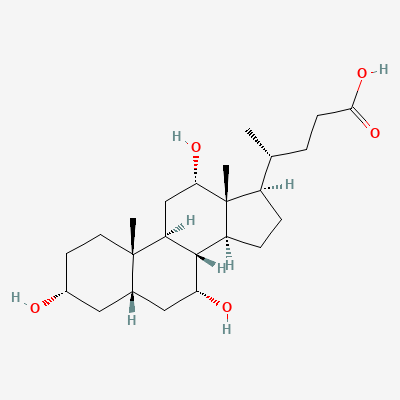
Cholic Acid

| Nome del prodotto | Cholic Acid |
|---|---|
| Numero CAS | 81-25-4 |
| Aspetto | Polvere cristallina di colore da bianco a bianco sporco |
| Analisi (HPLC) | ≥98.0% |
| Formula molecolare | C24H40O5 |
| Peso molecolare | 408.57 g/mol |
| Punto di fusione | 197–201 °C |
| Rotazione specifica | [α]D20 +37° (c=1, ethanol) |
| Solubilità | Soluble in ethanol, acetone; slightly soluble in water |
| Perdita per essiccazione | ≤0.5% |
| Residuo di combustione | ≤0.1% |
| Metalli pesanti | ≤10 ppm |
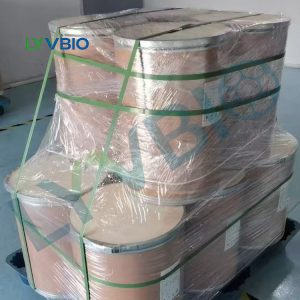
| Confezione | 25 kg fiber drum with inner polyethylene bag |
Hai bisogno di aiuto? Contatta il nostro team
Sinonimi: 3α,7α,12α-Trihydroxy-5β-cholan-24-oic acid; Cholan-24-oic acid, 3,7,12-trihydroxy-, (3α,5β,7α,12α)-; Cholic acid; Cholalic acid; 17β-(1-Methyl-3-carboxypropyl)etiocholane-3α,7α,12α-triol
Cholic acid is a primary bile acid biosynthesized in the liver from cholesterol via the classical pathway involving CYP7A1, CYP8B1, and CYP27A1. It is the most abundant bile acid in human bile, typically conjugated with glycine or taurine to form glycocholic and taurocholic acids, which are essential for emulsifying dietary fats and facilitating their absorption in the small intestine. As a pharmaceutical-grade raw material, it serves as a critical starting material for the synthesis of ursodeoxycholic acid (UDCA) and other bile acid derivatives.
Beyond its role in bile acid metabolism, cholic acid has gained significant attention in drug delivery and formulation science. Its amphiphilic nature enables the formation of mixed micelles and liposomes, enhancing the solubility and permeability of poorly water-soluble drugs. In the pharmaceutical industry, it is also used as a choleretic agent and in the treatment of bile acid synthesis disorders. Our cholic acid is manufactured under cGMP conditions, ensuring consistent quality and regulatory compliance for demanding applications.
| Parametro | Specifiche |
|---|---|
| Aspetto | Polvere cristallina di colore da bianco a bianco sporco |
| Analisi (HPLC) | ≥98.0% |
| Punto di fusione | 197–201 °C |
| Rotazione specifica | +36° to +38° (c=1, ethanol) |
| Perdita per essiccazione | ≤0.5% |
| Metalli pesanti | ≤10 ppm |
| Residuo di combustione | ≤0.1% |
Room,5-0203, Unit 5, Beiyuanmen Street,Xi'an,Shaanxi,China
 English English
 Russian
 French
 Korean
 German
 Polish
 Japanese
 Spanish
 Italian
 Vietnamese