
Tea Tree Oil
| Paramètre | Spécifications |
|---|---|
| Nom du produit | Tea Tree Oil |
| Autres noms | Melaleuca alternifolia oil, Melaleuca oil |
| Numéro CAS | 68647-73-4 |
| Botanical Name | Melaleuca alternifolia |
| Apparence | Clear, colorless to pale yellow liquid |
| Active Component | Terpinen-4-ol |
| Assay (GC) | Terpinen-4-ol ≥ 35% |
| Solubilité | Miscible with ethanol, ether, and fixed oils; practically insoluble in water |
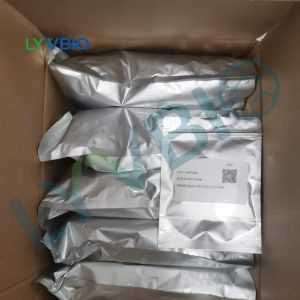
| Colis | 25 kg / 180 kg drums |
Besoin d'aide ? Contacter notre équipe
Synonymes : Melaleuca alternifolia oil, Melaleuca oil, Australian tea tree oil, Narrow-leaved paperbark oil, Terpinen-4-ol oil
Tea Tree Oil is a volatile essential oil obtained by steam distillation of the leaves and terminal branches of Melaleuca alternifolia, a narrow-leaved tree of the Myrtaceae family native to the coastal wetlands of northern New South Wales, Australia. Its commercial value rests on a well-defined terpene profile, with terpinen-4-ol as the principal bioactive monoterpene alcohol, supported by γ-terpinene, α-terpinene, 1,8-cineole, and α-terpineol. The oil is standardised to a minimum terpinen-4-ol content of 35% and a 1,8-cineole ceiling of 15%, the two parameters that most reliably predict antimicrobial performance.
Two grades dominate the market: a pharmaceutical/BP grade for topical antiseptic and personal care formulations, and a technical grade for industrial and veterinary use. The BP monograph, together with ISO 4730, defines the chromatographic fingerprint and sets limits on each key constituent, which is why buyers should always request a GC trace rather than rely on a single assay figure. Tea Tree Oil is a pale yellow to nearly colorless mobile liquid with a fresh, camphoraceous, slightly spicy odour.
Demand is driven by its broad-spectrum activity against bacteria, fungi, and enveloped viruses, which makes it a workhorse in dermatological creams, anti-dandruff shampoos, oral care rinses, surface sanitisers, and animal health products. Formulators value it because it performs at low use levels, blends readily with other essential oils, and carries a long-established safety record when properly diluted.
Tea Tree Oil is not a single compound but a complex mixture of roughly 100 terpenoids. The molecule responsible for most of the antimicrobial effect, terpinen-4-ol (C10H18O), is a monocyclic monoterpene alcohol carrying a hydroxyl group on the cyclohexene ring. This lipophilic structure allows it to partition into microbial membranes while the hydroxyl group disrupts membrane-bound enzyme function. The oil is lighter than water, has a refractive index around 1.475–1.485, and typically shows a specific gravity of 0.885–0.906 at 20 °C.
| Test Item | Spécifications |
|---|---|
| Identification (GC) | Conforms to ISO 4730 / BP monograph |
| Relative Density (20 °C) | 0.885 – 0.906 |
| Refractive Index (20 °C) | 1.475 – 1.485 |
| 1,8-cinéole | ≤ 15% |
| Métaux lourds | ≤ 10 ppm |
| Limites microbiologiques | Total aerobic count ≤ 100 CFU/g; absence of E. coli et Salmonella |
Our standard MOQ is 25 kg, which corresponds to one drum. Smaller sample quantities can be arranged for evaluation purposes.
Stock items ship within 3-5 business days of order confirmation. We hold regular inventory of BP-grade Tea Tree Oil, so most orders are dispatched immediately.
Yes. A batch-specific COA and GC chromatogram are issued with every quotation, and a 100 g sample can be sent for laboratory evaluation.
send us your specification for a quotation.
Room,5-0203, Unit 5, Beiyuanmen Street,Xi'an,Shaanxi,China
 English English
 Russian
 French
 Korean
 German
 Polish
 Japanese
 Spanish
 Italian
 Vietnamese