
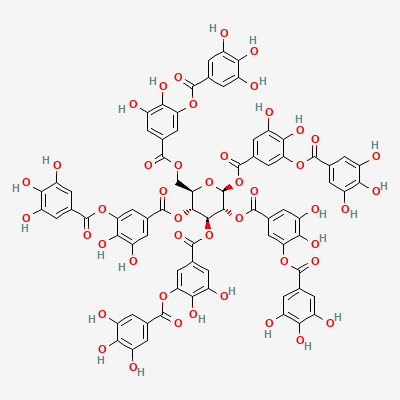
Tannic Acid
| Paramètre | Spécifications |
|---|---|
| Nom du produit | Tannic Acid |
| Numéro CAS | 1401-55-4 |
| Formule moléculaire | C76H52O46 |
| Poids moléculaire | 1701.2 g/mol |
| Apparence | Light yellow to tan amorphous powder |
| Essai (HPLC) | ≥ 95% |
| Solubilité | Soluble in water, ethanol, acetone; practically insoluble in chloroform, ether |
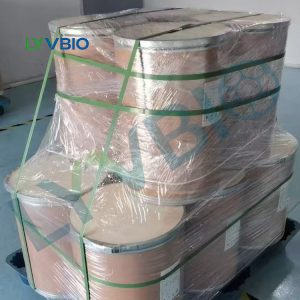
| Colis | 25 kg fiber drum with double PE liner |
Besoin d'aide ? Contacter notre équipe
Synonymes : Gallotannic acid, Tanninum, Acidum tannicum, Quebracho extract, Gallotannin, Chinese gallotannin, Tannic acid (USP).
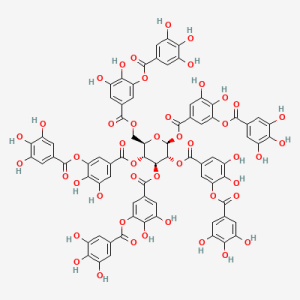
Tannic acid is a naturally occurring polyphenol composed of a glucose core esterified with multiple gallic acid units, forming a high-molecular-weight gallotannin. Its dense array of phenolic hydroxyl groups enables strong hydrogen bonding and metal chelation, underpinning its astringent, antioxidant, and protein-precipitating properties.
Commercially, tannic acid is produced from gallnuts (quercus infectoria), sumac, or tara pods, then purified to meet pharmacopeial standards. It is supplied in technical, food, and pharmaceutical grades, with the latter conforming to USP/EP monographs. The compound is widely used in leather processing, wine clarification, pharmaceutical formulations (e.g., as an astringent or antidote), and as a reagent in analytical chemistry.
In B2B contexts, tannic acid serves as a versatile intermediate for gallic acid and pyrogallol production, a flocculant in water treatment, and a key component in corrosion inhibitors. Its ability to form insoluble complexes with proteins and alkaloids makes it valuable in detoxification and in the stabilization of beverages.
Tannic acid is a mixture of polygalloyl glucoses, typically containing 8–10 galloyl groups per molecule. The structure is characterized by a central glucose unit linked via ester bonds to gallic acid moieties. This configuration imparts strong reducing properties, the ability to precipitate proteins, and a characteristic astringent taste. It is stable under acidic conditions but hydrolyzes in the presence of strong acids or enzymes (tannase), releasing gallic acid.
| Test Item | Spécifications |
|---|---|
| Identification | IR spectrum conforms to reference |
| Perte au séchage | ≤ 10.0% |
| Résidu au feu | ≤ 1,01 TP3T |
| Métaux lourds | ≤ 20 ppm |
| Limites microbiologiques | Nombre total de bactéries aérobies ≤ 1 000 UFC/g ; levures et moisissures ≤ 100 UFC/g ; absence d'E. coli |
| Substances apparentées | Conforms to USP monograph |
Our minimum order quantity is 25 kg, but we can accommodate smaller trial orders upon request.
For stock items, delivery is 3-5 business days after order confirmation.
Yes, we provide a COA for each batch and can send samples for evaluation. Sample dispatch typically takes 1-2 days.
send us your specification for a quotation.
Room,5-0203, Unit 5, Beiyuanmen Street,Xi'an,Shaanxi,China
 English English
 Russian
 French
 Korean
 German
 Polish
 Japanese
 Spanish
 Italian
 Vietnamese