

Sodium Cholate

| Nom du produit | Sodium Cholate |
|---|---|
| Numéro CAS | 361-09-1 |
| Autres noms | Sodium cholate hydrate; Cholic acid sodium salt; 3α,7α,12α-Trihydroxy-5β-cholan-24-oic acid sodium salt |
| Formule moléculaire | C24H39NaO5 |
| Poids moléculaire | 430.56 g/mol (anhydrous) |
| Apparence | Poudre cristalline blanche à blanc cassé |
| Assay (Titration) | ≥ 99.0% (on dried basis) |
| Perte au séchage | ≤ 6.0% (hydrated form) |
| Solubilité | Soluble in water (up to 50 mg/mL), ethanol; slightly soluble in acetone |
| pH (1% in water) | 6.5 – 8.5 |
| Métaux lourds | ≤ 20 ppm |
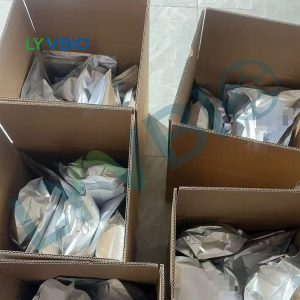
| Colis | Fût en fibre de 25 kg avec double revêtement en polyéthylène |
Besoin d'aide ? Contacter notre équipe
Synonymes : Sodium cholate; Cholic acid sodium salt; 3α,7α,12α-Trihydroxy-5β-cholan-24-oic acid sodium salt; Sodium cholalate; Cholan-24-oic acid, 3,7,12-trihydroxy-, sodium salt, (3α,5β,7α,12α)-
Sodium cholate is the sodium salt of cholic acid, a primary bile acid that occurs naturally in mammals. Its molecular architecture—a rigid steroid nucleus with three hydroxyl groups (3α,7α,12α) and a carboxylate side chain—confers exceptional detergent properties and makes it a cornerstone in membrane protein research and pharmaceutical formulation. Unlike synthetic surfactants, sodium cholate retains a natural bile acid scaffold that is both biodegradable and biocompatible, a key advantage for sensitive biological applications.
Industrially, sodium cholate is produced by saponification of cholic acid obtained from bovine or ovine bile, followed by neutralization with sodium hydroxide. The resulting product is typically isolated as a hydrate, with a characteristic white to off-white appearance. It is offered in several grades, including research-grade (≥99%) and technical-grade, to suit applications ranging from cell culture to bulk pharmaceutical processing. The compound is freely soluble in water, forming clear micellar solutions that are stable over a wide pH range.
In the pharmaceutical and biotech sectors, sodium cholate serves as a critical excipient for solubilizing lipophilic drugs, a detergent for membrane protein extraction, and a component of lipid-based drug delivery systems. Its ability to form mixed micelles enhances the oral bioavailability of poorly soluble compounds. Additionally, it is used in diagnostic kits, as a chiral selector in chromatography, and in the synthesis of steroidal derivatives. This combination of natural origin, well-characterized safety profile, and multifunctional performance keeps sodium cholate in steady demand across global markets.
Sodium cholate belongs to the family of bile salts, characterized by a cis-fused A/B ring junction and a concave hydrophilic face due to the α-oriented hydroxyl groups at C3, C7, and C12. The carboxylate group at the side chain terminus provides an anionic charge at physiological pH, enhancing water solubility. The molecule exhibits typical amphiphilic behavior, with a critical micelle concentration (CMC) around 9–14 mM in water (depending on temperature and ionic strength). Its aggregation number is relatively small, forming primary micelles of 2–10 monomers, which grow into larger secondary aggregates at higher concentrations. These properties are essential for its role in emulsification and membrane solubilization.
| Paramètre | Spécifications |
|---|---|
| Assay (titration, dried basis) | ≥ 99,01 TP3T |
| Apparence | Poudre cristalline blanche à blanc cassé |
| Loss on drying | ≤ 6.0% |
| pH (solution 1%) | 6.5 – 8.5 |
| Heavy metals | ≤ 20 ppm |
| Solubilité | Clear to slightly opalescent solution in water |
Room,5-0203, Unit 5, Beiyuanmen Street,Xi'an,Shaanxi,China
 English English
 Russian
 French
 Korean
 German
 Polish
 Japanese
 Spanish
 Italian
 Vietnamese