
Lithocholic Acid
| Nom du produit | Lithocholic Acid |
|---|---|
| Numéro CAS | 434-13-9 |
| Formule moléculaire | C24H40O3 |
| Poids moléculaire | 376.57 g/mol |
| Apparence | Poudre cristalline blanche à blanc cassé |
| Essai (HPLC) | ≥98,01 TP3T |
| Point de fusion | 183-188°C |
| Specific Rotation | [α]D20 +33° to +38° (c=1, ethanol) |
| Perte au séchage | ≤ 0,51 TP3T |
| Résidu au feu | ≤ 0,11 TP3T |
| Métaux lourds | ≤ 10 ppm |
| Solubilité | Soluble in ethanol, acetone; practically insoluble in water |
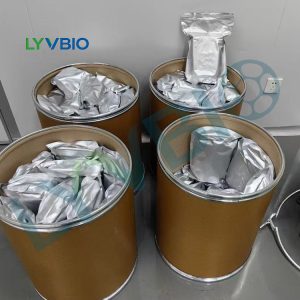
| Colis | Fût en fibre de 25 kg avec double revêtement en polyéthylène |
Besoin d'aide ? Contacter notre équipe
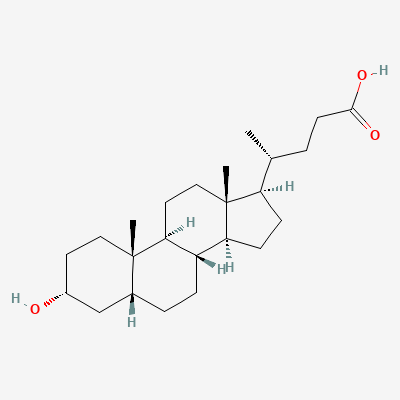
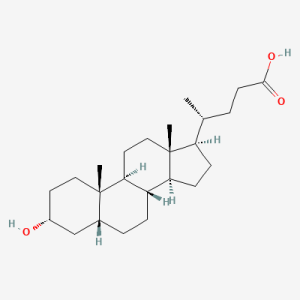
Synonymes : 3α-Hydroxy-5β-cholan-24-oic acid; 5β-Cholan-24-oic acid, 3α-hydroxy-; Lithocholic acid; LCA; 17β-(1-Methyl-3-carboxypropyl)etiocholane-3α-ol
Lithocholic acid (LCA) is a secondary bile acid formed in the colon by bacterial 7α-dehydroxylation of chenodeoxycholic acid. Its structure features a 5β-cholane skeleton with a single hydroxyl group at C-3 in the α orientation and a carboxyl side chain at C-24. This monohydroxy bile acid is notable for its hydrophobicity, which drives its interactions with nuclear receptors and membrane transporters, positioning it as a key signaling molecule in gastrointestinal and metabolic research.
While often regarded as a toxic bile acid at elevated concentrations, LCA has emerged as a potent endogenous ligand for the vitamin D receptor (VDR) and the G protein-coupled bile acid receptor TGR5. These interactions link LCA to the regulation of bile acid homeostasis, lipid metabolism, and immune responses. In pharmaceutical development, LCA serves as a critical starting material for the synthesis of ursodeoxycholic acid (UDCA) and other bile acid derivatives, and as a reference standard for analytical methods.
Beyond its role as an intermediate, LCA is employed in studies of cholestasis, colon cancer, and liver disease. Its ability to modulate signaling pathways makes it a valuable tool compound for probing bile acid biology. LyvBio supplies high-purity lithocholic acid to meet the rigorous demands of research and production, ensuring consistent quality for our global clientele.
Lithocholic acid is a white crystalline solid with a molecular weight of 376.57 g/mol. It is practically insoluble in water but soluble in organic solvents such as ethanol and acetone. The compound exhibits a specific rotation of +33° to +38° in ethanol, reflecting its chiral nature. Its hydrophobic character is due to the single hydroxyl group and the planar steroid nucleus, which influence its aggregation behavior and biological activity.
| Paramètre | Spécifications |
|---|---|
| Apparence | Poudre cristalline blanche à blanc cassé |
| Essai (HPLC) | ≥98,01 TP3T |
| Point de fusion | 183-188°C |
| Specific Rotation | +33° to +38° (c=1, ethanol) |
| Perte au séchage | ≤ 0,51 TP3T |
| Métaux lourds | ≤ 10 ppm |
| Résidu au feu | ≤ 0,11 TP3T |
Room,5-0203, Unit 5, Beiyuanmen Street,Xi'an,Shaanxi,China
 English English
 Russian
 French
 Korean
 German
 Polish
 Japanese
 Spanish
 Italian
 Vietnamese