
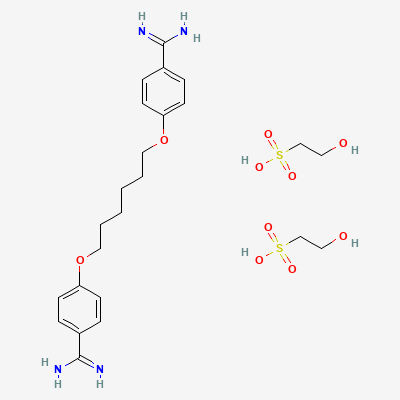
Hexamidine Diisethionate
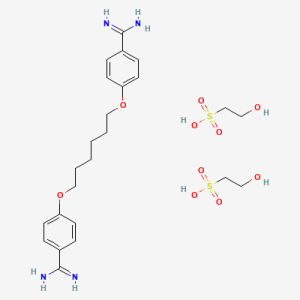
| Nom du produit | Hexamidine Diisethionate |
|---|---|
| Numéro CAS | 659-40-5 |
| Synonymes | Hexamidine diisethionate, 4,4'-(hexane-1,6-diylbis(oxy))dibenzamidine diisethionate, hexamidine di(2-hydroxyethanesulfonate), hexamidine diisethionate salt |
| Formule moléculaire | C20H26N4O2·2C2H6O4S |
| Poids moléculaire | 606.7 g/mol (free base: 354.45 g/mol) |
| Apparence | Poudre cristalline blanche à blanc cassé |
| Essai (HPLC) | ≥ 98.0% (on dried basis) |
| Perte au séchage | ≤ 1,01 TP3T |
| Résidu au feu | ≤ 0,11 TP3T |
| Métaux lourds | ≤ 10 ppm |
| Solubilité | Soluble in water (up to 50 mg/mL), slightly soluble in ethanol, practically insoluble in chloroform |
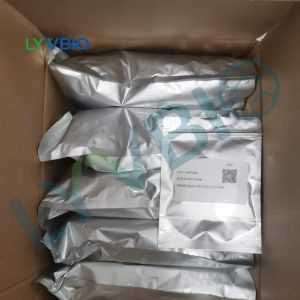
| Colis | 25 kg net in fiber drum with double polyethylene liners |
Besoin d'aide ? Contacter notre équipe
Synonymes : Hexamidine diisethionate, 4,4′-(hexane-1,6-diylbis(oxy))dibenzamidine diisethionate, hexamidine di(2-hydroxyethanesulfonate), hexamidine diisethionate salt
Hexamidine diisethionate is a synthetic antimicrobial agent belonging to the diamidine class, characterized by two benzamidine moieties linked via a flexible hexamethylene chain. This structure, reminiscent of propamidine and pentamidine, confers a high affinity for the minor groove of DNA, where it disrupts essential microbial processes. Its diisethionate salt form enhances water solubility, making it suitable for aqueous formulations across pharmaceutical and personal care applications.
First synthesized in the mid-20th century, hexamidine diisethionate has established itself as a well-tolerated preservative and antiseptic, particularly in ophthalmic solutions and cosmetic products. It is effective against a broad spectrum of microorganisms, including bacteria, fungi, and protozoa, and is often used in concentrations ranging from 0.05% to 0.1%. Its compatibility with other ingredients and stability over a wide pH range contribute to its popularity in multi-component formulations.
In the pharmaceutical industry, hexamidine diisethionate is employed as a preservative in eye drops and contact lens solutions, where its broad-spectrum activity ensures product sterility. In cosmetics, it serves as an antimicrobial agent in creams, lotions, and wet wipes, often in combination with other preservatives to achieve broad protection. Ongoing research explores its potential in treating protozoal infections, such as Acanthamoeba keratitis, further expanding its therapeutic relevance.
Hexamidine diisethionate features a symmetrical molecular architecture with two 4-amidinophenoxy groups connected by a hexamethylene spacer. The amidine groups are protonated under physiological conditions, facilitating electrostatic interactions with negatively charged microbial membranes and nucleic acids. The diisethionate counterions (2-hydroxyethanesulfonate) improve aqueous solubility without compromising antimicrobial activity. The compound is stable under normal storage conditions, though it should be protected from excessive heat and moisture to prevent degradation.
| Paramètre | Spécifications |
|---|---|
| Essai (HPLC) | ≥ 98.0% |
| Apparence | Poudre cristalline blanche à blanc cassé |
| Identification | IR and UV spectra conform to reference |
| Perte au séchage | ≤ 1,01 TP3T |
| Résidu au feu | ≤ 0,11 TP3T |
| Métaux lourds | ≤ 10 ppm |
| Limites microbiologiques | Total aerobic count ≤ 1000 CFU/g; absence of specified pathogens |
Room,5-0203, Unit 5, Beiyuanmen Street,Xi'an,Shaanxi,China
 English English
 Russian
 French
 Korean
 German
 Polish
 Japanese
 Spanish
 Italian
 Vietnamese