
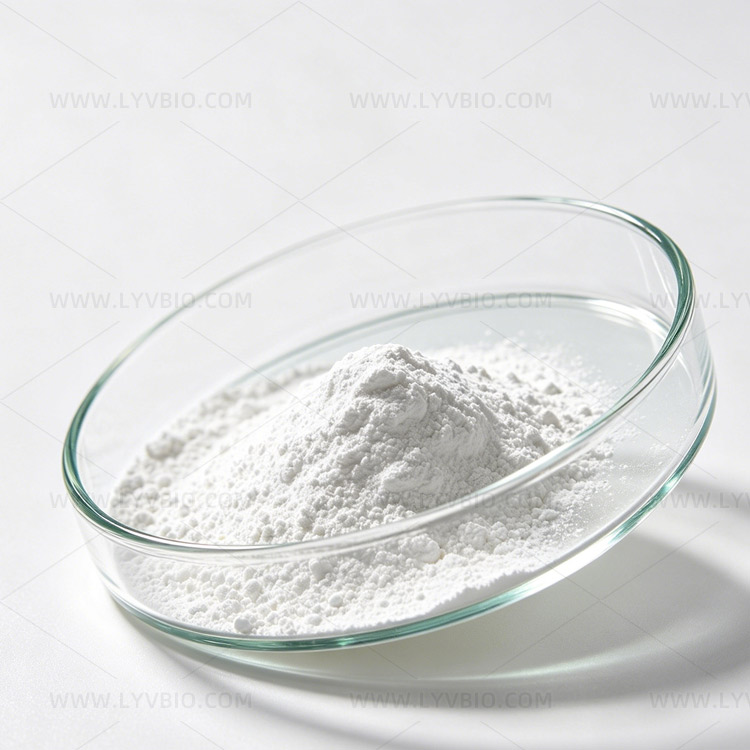
3-O-Ethyl Ascorbic Acid

| Nom du produit | 3-O-Ethyl Ascorbic Acid |
|---|---|
| Numéro CAS | 86404-04-8 |
| Apparence | Poudre cristalline blanche à blanc cassé |
| Caractéristiques techniques | ≥98.0% (HPLC) |
| Formule moléculaire | C8H12O6 |
| Poids moléculaire | 204.18 g/mol |
| Solubilité | Soluble in water, ethanol, propylene glycol |
| Perte au séchage | ≤ 0,51 TP3T |
| Métaux lourds | ≤ 10 ppm |
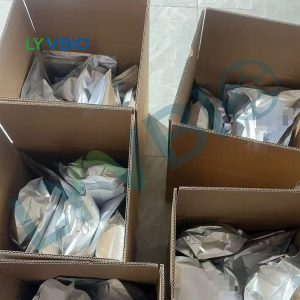
| Colis | 25 kg fiber drum with inner polyethylene bag |
Besoin d'aide ? Contacter notre équipe
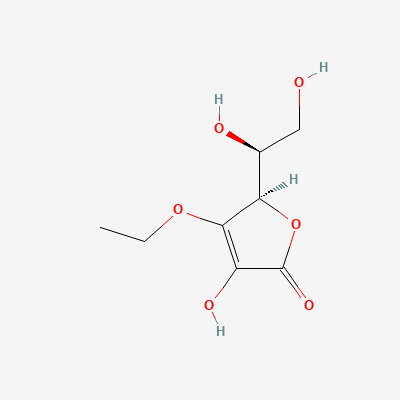
Synonymes : 3-O-Ethyl Ascorbic Acid, 3-O-Ethyl-L-ascorbic acid, Ethyl Ascorbic Acid, EAC, Vitamin C Ethyl Ether, 3-O-Ethylascorbate
3-O-Ethyl Ascorbic Acid is a stable, lipophilic derivative of L-ascorbic acid (Vitamin C) where the hydroxyl group at the C-3 position is etherified with an ethyl group. This structural modification protects the enediol moiety—the key antioxidant pharmacophore—from rapid oxidation, while preserving the ability to release ascorbate upon enzymatic or chemical hydrolysis in vivo. The ethyl ether enhances lipophilicity, facilitating penetration through the stratum corneum and enabling delivery into deeper skin layers, where it acts as a reservoir for sustained Vitamin C activity.
Commercially, 3-O-Ethyl Ascorbic Acid is produced via a multi-step synthesis starting from L-ascorbic acid, involving selective protection and ethylation. It is supplied as a high-purity crystalline powder (≥98% HPLC) that remains stable under normal storage conditions, unlike ascorbic acid which degrades rapidly in aqueous formulations. This stability profile makes it a preferred active in anhydrous and emulsion-based cosmetic systems, as well as in topical pharmaceuticals where consistent dosing is critical.
In the B2B arena, 3-O-Ethyl Ascorbic Acid is utilized by formulators for skin-brightening, anti-aging, and antioxidant products. Its ability to inhibit tyrosinase and modulate collagen synthesis has been documented in peer-reviewed studies, driving demand in the personal care and dermatology sectors. Our material is manufactured under cGMP and is available with full regulatory documentation to support global product registrations.
The molecule retains the γ-lactone ring of ascorbic acid but carries an ethyl group at the C-3 hydroxyl, which blocks the primary site of oxidative degradation. The free C-2 hydroxyl still allows for antioxidant activity, though the ethyl group must be removed for full Vitamin C function. The compound is a white to off-white powder with a molecular weight of 204.18 g/mol. It is freely soluble in water (up to 10% w/v) and common glycols, and exhibits excellent stability in formulations with a pH below 6.0.
| Paramètre | Spécifications |
|---|---|
| Assay (HPLC, dry basis) | 98.0% – 102.0% |
| Apparence | Poudre cristalline blanche à blanc cassé |
| Identification (IR) | Conforms to reference spectrum |
| Perte au séchage | ≤ 0,51 TP3T |
| Métaux lourds | ≤ 10 ppm |
| Arsenic | ≤2 ppm |
| Solvants résiduels | ≤0.5% (ethanol) |
Room,5-0203, Unit 5, Beiyuanmen Street,Xi'an,Shaanxi,China
 English English
 Russian
 French
 Korean
 German
 Polish
 Japanese
 Spanish
 Italian
 Vietnamese