

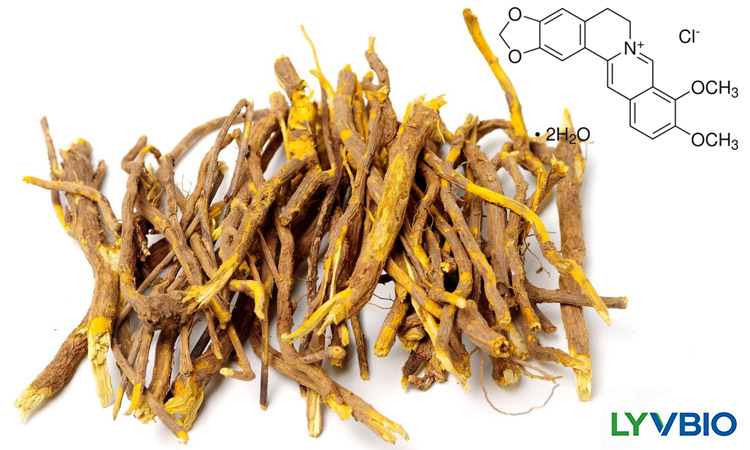
Explore the science behind Berberine HCL. As a premium raw material supplier, we analyze its bioavailability, mechanisms for glucose & lipid metabolism, and quality benchmarks for bulk orders.
Introduction: The Golden Molecule from Nature
In the realm of natural health ingredients, few compounds have garnered as much clinical validation as Berberine. Often dubbed “Nature’s Ozempic” by the wellness community, this bioactive alkaloid is actually a time-tested molecule with a history rooted in traditional medicine.
For manufacturers and formulators, Berberine Hydrochloride (Berberine HCL) represents one of the most potent, research-backed ingredients for metabolic health on the market today. If you are sourcing raw materials for capsules, functional foods, or combo supplements, understanding the nuances of this ingredient is critical.
À LyvBio Co. , we specialize in supplying high-purity Berberine HCL powder. This article breaks down the chemistry, the mechanism of action (MOA), and what quality indicators you should look for in your supply chain.
What is Berberine?
Chemically speaking, Berberine is a quaternary ammonium salt belonging to the isoquinoline alkaloid group. It is typically extracted from the roots, rhizomes, and stem bark of plants such as:
-
Coptis chinensis (Chinese Goldthread)
-
Berberis aristata (Tree Turmeric)
-
Hydrastis canadensis (Goldenseal)
Unlike many botanical extracts that require conversion in the gut, Berberine is bioactive upon entry, though its classic challenge has always been bioavailability.
Berberine HCl vs. Other Forms
The standard form in the nutraceutical industry is Chlorhydrate de berbérine (Hydrochloride).
-
Why HCL? The hydrochloride salt form enhances the stability of the molecule and improves its solubility in the gastrointestinal tract.
-
Standard Purity: Commercial grades typically range from 97% to 98% min. For pharmaceutical applications, a HPLC purity of 98%+ is non-negotiable.
Mechanism of Action (MOA): How it Works
To sell Berberine to your B2B clients, you must understand the science. Berberine works primarily by activating an enzyme called Protéine kinase activée par l'AMP (AMPK) .
Why does AMPK matter?
Often referred to as the “metabolic master switch,” AMPK regulates energy homeostasis.
-
Glucose Transport: It stimulates glycolysis (sugar breakdown) and increases insulin sensitivity.
-
Lipid Metabolism: It inhibits the synthesis of fatty acids and cholesterol in the liver.
-
Mitochondrial Health: It promotes the formation of new mitochondria (mitochondrial biogenesis).
Clinical Applications
-
Glycemic Control: Studies suggest Berberine HCL can lower fasting blood glucose and HbA1c levels comparable to first-line pharmaceutical drugs like Metformin, albeit via a slightly different pathway.
-
Cholesterol Management: Clinical trials demonstrate that 500mg taken 2-3 times daily can significantly reduce LDL (bad cholesterol) and triglycerides while boosting HDL.
-
Gut Microbiota Modulation: Recent research indicates Berberine interacts with gut bacteria, which may partially explain its metabolic benefits despite low systemic absorption.
The Bioavailability Challenge & Solutions
As a supplier, you must be ready to address the “Elephant in the room”: Berberine has very poor natural absorption. In its raw powder form, the gut barrier recognizes it as a foreign substance (P-glycoprotein substrate) and pumps it back into the intestines.
How premium manufacturers solve this:
If you are offering value-added services, consider these delivery systems:
-
Liposomal Encapsulation: Wrapping the molecule in lipid bilayers to bypass gut efflux.
-
Phytosome Technology: Binding Berberine to phospholipids.
-
Dihydroberberine (DHB): A reduced form that is absorbed 5x faster than standard HCL.
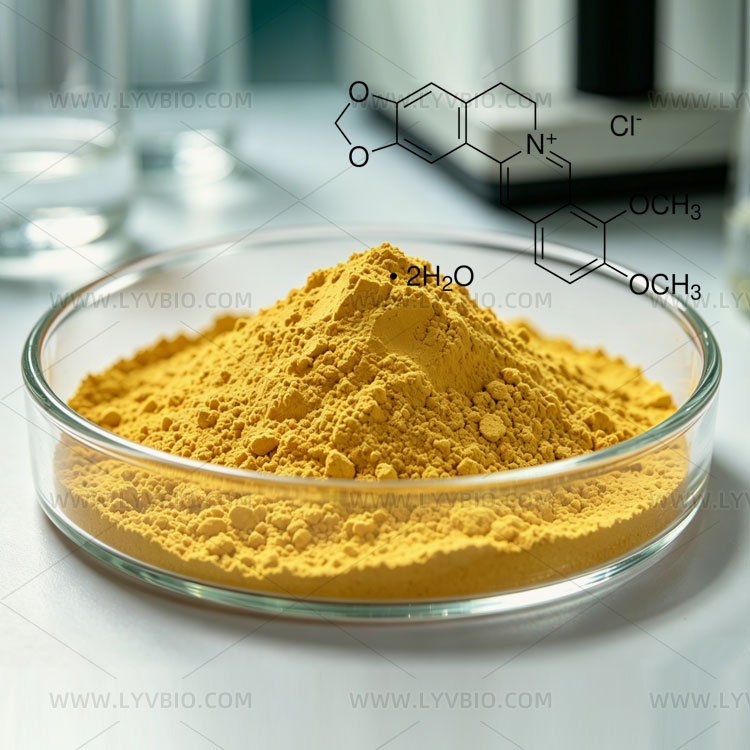
For standard raw material suppliers like LyvBio, providing a consistent crystalline powder with uniform particle size is the baseline for good encapsulation.
Quality Specifications for B2B Buyers
When you are quoting Berberine HCL to a client, they will ask for a Certificate of Analysis (COA) . Ensure your product meets these standards:
| Paramètre | Spécifications standard |
|---|---|
| Essai (HPLC) | 97% – 98% min |
| Apparence | Yellow fine powder |
| Granulométrie | 95% jusqu'au tamis de 80 mesh |
| Perte au séchage | ≤ 5,01 TP3T |
| Métaux lourds | ≤ 10 ppm (Lead, Arsenic, Mercury) |
| Résidus de solvant | Découvrez la norme USP |
Why Source Berberine HCl from LyvBio Co., Ltd.?
À LyvBio Co. , we don’t just sell chemicals; we provide supply chain security and technical expertise.
-
Rigorous Testing: Every batch undergoes third-party testing for potency, heavy metals, microbials, and residual solvents.
-
Global Compliance: We provide COA, MSDS and flow charts upon request.
-
Fast Lead Time: 3-5 days for samples; 15-20 days for bulk orders (1kg to 1MT).
-
Customer Support: Your inquiry regarding pricing, specifications, or documentation will be answered within 12 hours.
Final Thoughts
Berberine HCl is not a passing trend. The global market for metabolic health ingredients is projected to grow at a CAGR of 6.5% through 2030. Whether you are creating a diabetes support supplement or a weight management stack, Berberine offers the clinical weight required for a premium label claim.
Looking for a reliable partner?
Contact the LyvBio Co. technical sales team today for a free Berberine HCl sample or to request our detailed specification package (COA/MSDS/TDS).
📧 Courriel : info@lyvbio.com
🌐 Site web : https://www.lyvbio.com
Technical FAQs for Your Clients
Q: What is the recommended dosage in finished products?
A: Most clinical studies use 500mg taken three times daily (1500mg total). However, we recommend your R&D team conducts stability testing as Berberine can be gritty in texture.
Q: Does LyvBio supply Kosher/Halal certificates?
A: Yes. Our Berberine HCL is derived from plant sources (vegetarian), and we can supply relevant certification upon request for bulk orders.
Q: What is the shelf life?
A: 24 months from the date of manufacture when stored in a cool, dry place away from direct sunlight.
Q: What is your minimum order quantity (MOQ)?
A: Our standard MOQ is 1kg for trial orders. For commercial production, we offer competitive pricing at 25kg drums and pallet quantities.
Avertissement : *This information is for business-to-business (B2B) communication and ingredient education purposes only. It is not intended for medical advice or final product labeling. Formulators must comply with local FDA/EFSA regulations.*
 English
  Russian
  French
  Korean
  German
  Polish
  Japanese
  Spanish
  Italian
  Vietnamese
Laisser un commentaire