
Acétyl tétrapeptide-2
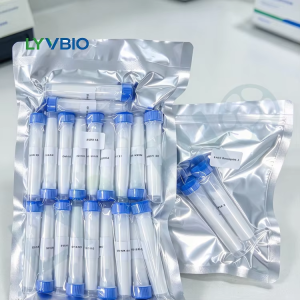
| Nom du produit | Acétyl tétrapeptide-2 |
|---|---|
| Numéro CAS | 1239011-60-9 |
| Synonymes | Acetyl Tetrapeptide-2, Acetyl-lysyl-valyl-lysyl-arginine, Acetyl-KVKR, Acetyl Tetrapeptide-2 (INCI) |
| Formule moléculaire | C25H46N8O7 |
| Poids moléculaire | ~558.7 g/mol |
| Apparence | Poudre blanche à blanc cassé |
| Essai (HPLC) | ≥98,01 TP3T |
| Solubilité | Soluble in water and polar solvents |
| Perte au séchage | ≤5,01 TP3T |
| Métaux lourds | ≤ 10 ppm |
| Stockage | Store at -20°C, protect from light and moisture |
| Colis | 1 g, 10 g, 100 g, or bulk quantities |
Besoin d'aide ? Contacter notre équipe
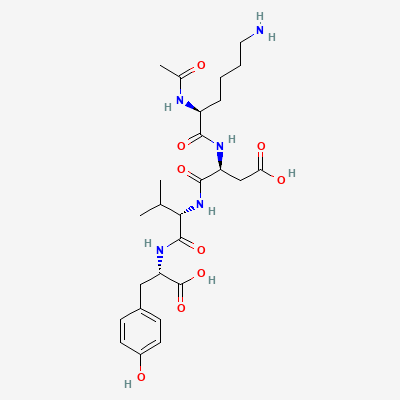
Synonymes : Acétyl tétrapeptide-2, Acetyl-lysyl-valyl-lysyl-arginine, Acetyl-KVKR, Acetyl Tetrapeptide-2 (INCI)
Acetyl Tetrapeptide-2 is a synthetic tetrapeptide featuring the sequence acetyl-lysyl-valyl-lysyl-arginine. The N-terminal acetyl group enhances stability against enzymatic degradation, while the C-terminal arginine contributes a net positive charge that facilitates interaction with cellular membranes. This structural design allows the peptide to remain active in topical formulations and cell culture media, making it a valuable tool for research on skin aging and extracellular matrix regulation.
First introduced in the early 2000s, Acetyl Tetrapeptide-2 is produced through solid-phase peptide synthesis and subsequent acetylation. It is commercially available as a high-purity powder, typically ≥98% as determined by HPLC. The peptide is supplied in research-grade and cosmetic-grade qualities, with the latter conforming to INCI nomenclature and meeting the requirements of the personal care industry.
In the realm of dermatological research, Acetyl Tetrapeptide-2 has been investigated for its potential to modulate collagen synthesis and improve skin firmness. Its mechanism involves the upregulation of key extracellular matrix components, such as collagen I and III, and the inhibition of matrix metalloproteinases. These properties make it a subject of interest for formulators developing anti-aging and skin-repair products. Additionally, its compatibility with a range of cosmetic ingredients supports its use in serums, creams, and emulsions.
Acetyl Tetrapeptide-2 is a linear tetrapeptide with the sequence Lys-Val-Lys-Arg, where the N-terminus is acetylated. The molecular formula is C25H46N8O7, and the molecular weight is approximately 558.7 g/mol. The presence of multiple basic amino acids (lysine and arginine) gives the peptide a high isoelectric point and a net positive charge at physiological pH, which can influence its solubility and interaction with negatively charged surfaces. The acetyl group at the N-terminus protects against exopeptidase cleavage, enhancing stability in formulation. The peptide is freely soluble in water and polar organic solvents, and it is typically supplied as a white to off-white powder. It should be stored desiccated at -20°C to maintain long-term stability.
| Paramètre | Spécifications |
|---|---|
| Apparence | Poudre blanche à blanc cassé |
| Essai (HPLC) | ≥98,01 TP3T |
| Water Content (Karl Fischer) | ≤5,01 TP3T |
| Métaux lourds | ≤ 10 ppm |
| Limites microbiologiques | Total aerobic count ≤100 CFU/g; Yeast & Mold ≤10 CFU/g |
| Endotoxin | ≤5 EU/mg (for research grade) |
Room,5-0203, Unit 5, Beiyuanmen Street,Xi'an,Shaanxi,China
 English English
 Russian
 French
 Korean
 German
 Polish
 Japanese
 Spanish
 Italian
 Vietnamese