
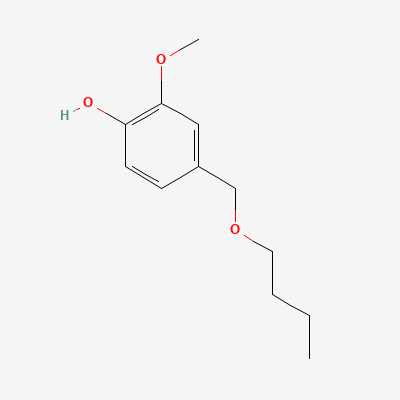
Vanillyl Butyl Ether
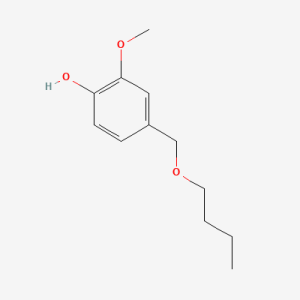
| Nombre del producto | Vanillyl Butyl Ether |
|---|---|
| Número CAS | 82654-98-6 |
| Sinónimos | Vanillyl butyl ether; 4-(Butoxymethyl)-2-methoxyphenol; Butyl vanillyl ether; 2-Methoxy-4-(butoxymethyl)phenol |
| Fórmula molecular | C12H18O3 |
| Peso molecular | 210.27 g/mol |
| Apariencia | Colorless to pale yellow liquid |
| Assay (GC) | ≥98,01 TP3T |
| Specific Gravity (25°C) | 1.05-1.07 |
| Refractive Index (20°C) | 1.515-1.525 |
| Solubilidad | Soluble in alcohol, oils, glycols; insoluble in water |
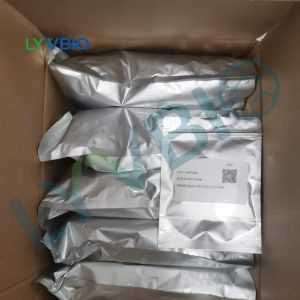
| Paquete | 25 kg net in plastic drums, or 200 kg net in steel drums |
¿Necesitas ayuda? Póngase en contacto con nuestro equipo
Sinónimos: Vanillyl butyl ether, 4-(Butoxymethyl)-2-methoxyphenol, Butyl vanillyl ether, 2-Methoxy-4-(butoxymethyl)phenol, VBE
Vanillyl butyl ether (VBE) is a synthetic derivative of vanillyl alcohol, where the hydroxyl group is etherified with butanol. It belongs to the family of alkyl vanillyl ethers, which are known for their ability to interact with transient receptor potential channels. Unlike capsaicin, VBE does not occur naturally but is produced through a straightforward etherification reaction, yielding a stable, lipophilic compound. This molecule has gained attention as a mild heating agent in cosmetic and pharmaceutical formulations, offering a warming sensation without the pungency or irritation associated with capsaicinoids.
Chemically, VBE is characterized by a methoxy and a butoxy substituent on a benzene ring, which confers solubility in both polar and non-polar media. Its molecular structure allows it to activate TRPV1 receptors at a lower threshold than capsaicin, resulting in a gentle, prolonged warming effect. This property makes it particularly suitable for products designed to stimulate blood circulation, soothe muscles, or enhance skin penetration of active ingredients. The compound is often compared to vanillyl nonylamide (VNA) and other vanilloids, but VBE stands out for its lower odor and better stability in formulations.
In the personal care industry, VBE is incorporated into slimming gels, muscle rubs, and warming massage oils, typically at concentrations ranging from 0.1% to 1.0%. It is also used in transdermal patches and topical analgesics to improve patient compliance by providing a pleasant sensory experience. Beyond cosmetics, VBE serves as a flavoring agent in some food products, although its primary market remains in topical applications. Its compatibility with a wide range of emollients and surfactants simplifies formulation development, and its resistance to oxidation ensures a long shelf life.
| Parámetro | Especificaciones |
|---|---|
| Assay (GC) | ≥98,01 TP3T |
| Identificación | IR and GC retention time match reference |
| Specific Gravity (25°C) | 1.05-1.07 |
| Refractive Index (20°C) | 1.515-1.525 |
| Metales pesados | ≤10 ppm |
| Límites microbianos | Total plate count ≤100 CFU/g; Yeast & Mold ≤10 CFU/g |
Room,5-0203, Unit 5, Beiyuanmen Street,Xi'an,Shaanxi,China
 English English
 Russian
 French
 Korean
 German
 Polish
 Japanese
 Spanish
 Italian
 Vietnamese