
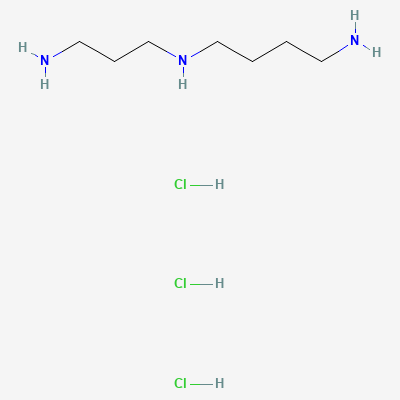
Spermidine Trihydrochloride
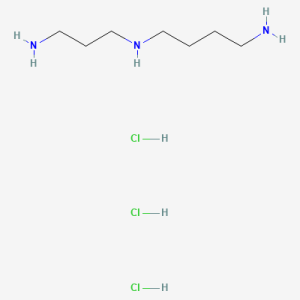
| Nombre del producto | Spermidine Trihydrochloride |
|---|---|
| Número CAS | 334-50-9 |
| Fórmula molecular | C7H19N3·3HCl |
| Peso molecular | 254.63 g/mol |
| Apariencia | Polvo cristalino de color blanco a blanquecino |
| Ensayo (HPLC) | ≥98,01 TP3T |
| Solubilidad | Soluble in water, slightly soluble in ethanol |
| Pérdida por secado | ≤0,51 TP3T |
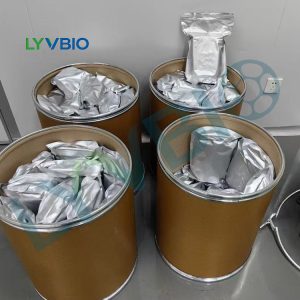
| Paquete | 1 kg, 5 kg, 25 kg fiber drums |
¿Necesitas ayuda? Póngase en contacto con nuestro equipo
Sinónimos: Spermidine trihydrochloride, N-(3-Aminopropyl)-1,4-butanediamine trihydrochloride, 1,5,10-Triazadecane trihydrochloride, Spermidine hydrochloride, 4-Azaoctamethylenediamine trihydrochloride
Spermidine trihydrochloride is the trihydrochloride salt of spermidine, a naturally occurring polyamine found in all living organisms. It plays a critical role in cellular processes such as DNA stabilization, RNA transcription, and protein synthesis. First isolated from semen in 1678 by Antonie van Leeuwenhoek, spermidine has since been recognized as a key regulator of autophagy and longevity pathways.
As a polycation at physiological pH, spermidine binds to nucleic acids and phospholipids, influencing chromatin structure and membrane integrity. Its trihydrochloride form offers superior stability and water solubility compared to the free base, making it ideal for biochemical assays and cell culture applications. The compound is a white crystalline powder, highly soluble in water, and stable under recommended storage conditions.
In the pharmaceutical and nutraceutical industries, spermidine trihydrochloride is standardized to ≥98% purity (HPLC) and is widely used in anti-aging supplements, autophagy research, and as a reference standard. Its ability to induce autophagy has sparked interest in neurodegenerative disease and cardioprotection studies, driving demand for high-quality material.
| Parámetro | Especificaciones |
|---|---|
| Ensayo (HPLC) | ≥98,01 TP3T |
| Identificación | IR, NMR conforms to structure |
| Pérdida por secado | ≤0,51 TP3T |
| Residuo tras la combustión | ≤0,11 TP3T |
| Metales pesados | ≤10 ppm |
| Límites microbianos | Total aerobic count ≤1000 CFU/g; Yeast & Mold ≤100 CFU/g; E. coli absent |
Room,5-0203, Unit 5, Beiyuanmen Street,Xi'an,Shaanxi,China
 English English
 Russian
 French
 Korean
 German
 Polish
 Japanese
 Spanish
 Italian
 Vietnamese