
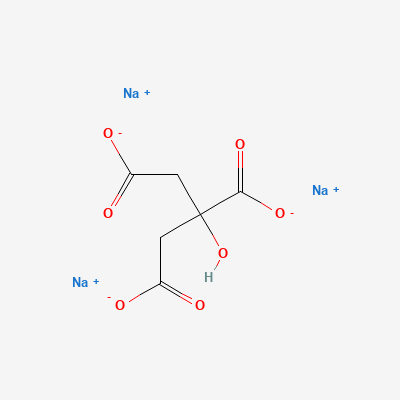
Sodium Citrate
| Nombre del producto | Sodium Citrate |
|---|---|
| Número CAS | 68-04-2 |
| Apariencia | Polvo cristalino blanco |
| Especificaciones | 99.0% - 100.5% (on dried basis) |
| Fórmula molecular | C6H5Na3O7 |
| Peso molecular | 258.07 g/mol |
| Solubilidad | Freely soluble in water; practically insoluble in ethanol |
| Pérdida por secado | ≤ 0,51 TP3T |
| Metales pesados | ≤ 10 ppm |
| Paquete | 25 kg net paper bags with PE inner liner |
¿Necesitas ayuda? Póngase en contacto con nuestro equipo
Sinónimos: Trisodium citrate, Citric acid trisodium salt, Sodium citrate tribasic, E331, Citrosodine, Trisodium 2-hydroxypropane-1,2,3-tricarboxylate
Sodium citrate is the trisodium salt of citric acid, formed by the complete neutralization of the three carboxylic acid groups. This small molecule plays an outsized role in pharmaceutical and food formulations, where its buffering capacity, chelating ability, and excellent safety profile make it a workhorse excipient and active ingredient alike.
Commercially, sodium citrate is produced by reacting citric acid—typically obtained through fermentation of carbohydrates by Aspergillus niger—with sodium hydroxide or sodium carbonate. The resulting product is available in anhydrous and dihydrate forms, with the anhydrous grade preferred for solid dosage forms where moisture content must be tightly controlled.
In the pharmaceutical industry, sodium citrate serves as an alkalizing agent, buffer, and anticoagulant. It is a key component in anticoagulant citrate dextrose (ACD) and citrate phosphate dextrose (CPD) solutions used for blood collection and storage. In oral care, it helps reduce enamel erosion, while in dialysis it prevents clotting in extracorporeal circuits. The food and beverage sector relies on it as an acidity regulator and flavor enhancer, and it also finds use in detergents and cleaning products as a builder.
Sodium citrate features a central citrate backbone with three sodium ions associated with the carboxylate groups. This structure confers high water solubility, a mildly alkaline pH in solution (approximately 8.5 for a 5% solution), and the ability to form complexes with metal ions such as calcium and magnesium. The anhydrous form is a white crystalline powder that is stable under normal storage conditions, though it is hygroscopic and should be kept in a dry environment.
| Parámetro | Especificaciones |
|---|---|
| Assay (on dried basis) | 99.0% – 100.5% |
| Apariencia | Polvo cristalino blanco |
| Identificación | Passes test |
| Pérdida por secado | ≤ 0,51 TP3T |
| Metales pesados | ≤ 10 ppm |
| Arsenic | ≤ 3 ppm |
| Chloride | ≤ 50 ppm |
Room,5-0203, Unit 5, Beiyuanmen Street,Xi'an,Shaanxi,China
 English English
 Russian
 French
 Korean
 German
 Polish
 Japanese
 Spanish
 Italian
 Vietnamese