
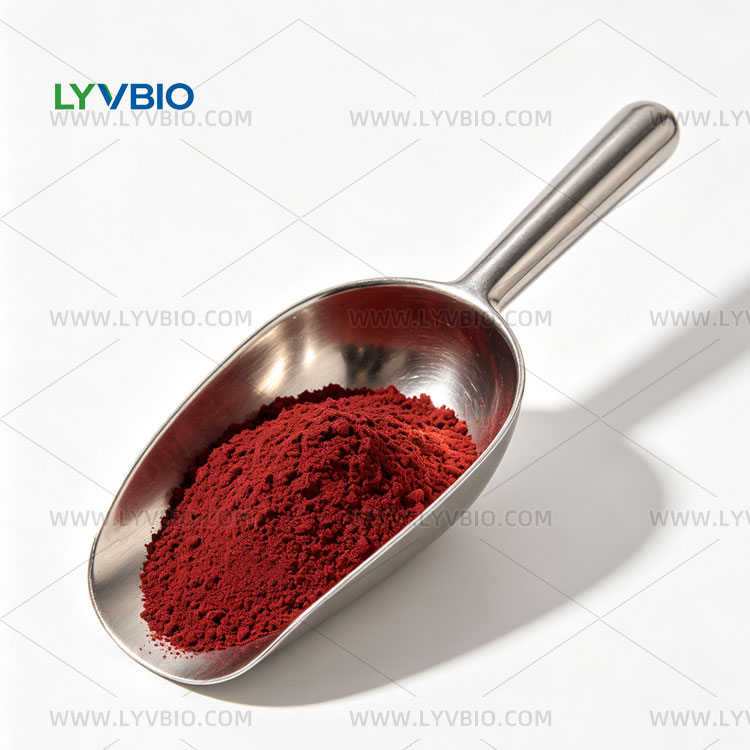
PQQ Disodium Salt
| Nombre del producto | PQQ Disodium Salt |
|---|---|
| Número CAS | 122628-50-6 |
| Apariencia | Dark red to reddish-brown crystalline powder |
| Especificaciones | ≥98,01 % TP3T (HPLC) |
| Fórmula molecular | C14H4N2Na2O8 |
| Peso molecular | 374.17 g/mol |
| Solubilidad | Soluble in water (clear to slightly hazy, dark red solution) |
| Pérdida por secado | ≤ 5,01 TP3T |
| Metales pesados | ≤ 10 ppm |
| Ensayo (HPLC) | 98.0% - 102.0% (on dried basis) |
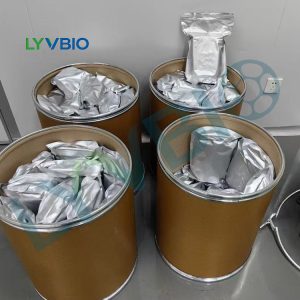
| Paquete | 1 kg/Aluminum foil bag, 5 kg/Carton, 25 kg/Drum |
¿Necesitas ayuda? Póngase en contacto con nuestro equipo
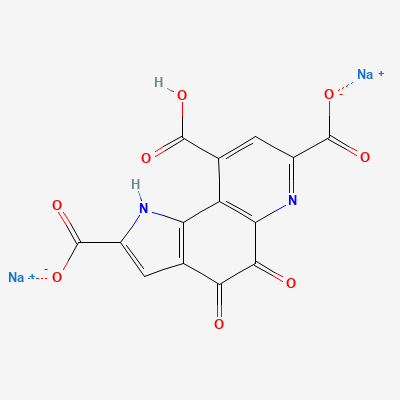
Sinónimos: PQQ disodium salt, Pyrroloquinoline quinone disodium salt, Methoxatin disodium salt, 4,5-Dihydro-4,5-dioxo-1H-pyrrolo[2,3-f]quinoline-2,7,9-tricarboxylic acid disodium salt, PQQ-2Na
PQQ disodium salt is the disodium form of pyrroloquinoline quinone (PQQ), a tricyclic ortho-quinone that serves as a redox-active cofactor in certain bacterial dehydrogenases. Its structure features a planar, electron-deficient quinone core fused to a pyrrole ring, with three carboxylate groups that are deprotonated in the disodium salt. This anionic character confers high water solubility and facilitates interaction with mitochondrial membranes, where PQQ participates in electron transfer chains and acts as a potent scavenger of reactive oxygen species. Unlike many antioxidants that rely on phenolic groups, PQQ’s quinone moiety can undergo reversible redox cycling, enabling it to catalyze continuous redox reactions at low concentrations.
PQQ is found in trace amounts in various foods—fermented soy, parsley, green peppers, and kiwi—but is produced commercially via microbial fermentation, typically using Hyphomicrobium or Methylobacterium species, followed by purification and conversion to the disodium salt for stability. The disodium form is the preferred grade for supplement and pharmaceutical applications due to its superior solubility and shelf life compared to the free acid. It is standardized to ≥98% purity (HPLC) and is available as a dark red to reddish-brown crystalline powder. As a bioactive compound, PQQ has attracted attention for its role in mitochondrial biogenesis, cognitive support, and cellular energy metabolism, making it a key ingredient in advanced nootropic and anti-aging formulations.
In the B2B space, PQQ disodium salt is supplied primarily to nutraceutical manufacturers, sports nutrition brands, and research institutions. Its applications span dietary supplements (capsules, tablets, powders), functional beverages, and cell culture media. The growing body of clinical research on PQQ’s effects on mitochondrial function and neuroprotection continues to drive demand, particularly in markets focused on healthy aging and cognitive performance.
PQQ disodium salt is a water-soluble, low-molecular-weight compound with a characteristic UV-Vis absorption spectrum (λmax ~ 250 nm and 330 nm). It is stable under normal storage conditions when protected from light and moisture. The disodium salt form has a pH of approximately 6.5-7.5 in aqueous solution (1% w/v). Its redox potential allows it to cycle between quinone and hydroquinone forms, a property central to its biological activity. The compound is hygroscopic and should be stored in a cool, dry place.
| Parámetro | Especificaciones |
|---|---|
| Apariencia | Dark red to reddish-brown crystalline powder |
| Ensayo (HPLC) | ≥98,01 TP3T |
| Pérdida por secado | ≤5.0% |
| Metales pesados | ≤10 ppm |
| Arsenic | ≤2 ppm |
| Lead | ≤2 ppm |
| Límites microbianos | Total aerobic count ≤1000 cfu/g; Yeast & Mold ≤100 cfu/g; E. coli absent |
Room,5-0203, Unit 5, Beiyuanmen Street,Xi'an,Shaanxi,China
 English English
 Russian
 French
 Korean
 German
 Polish
 Japanese
 Spanish
 Italian
 Vietnamese