
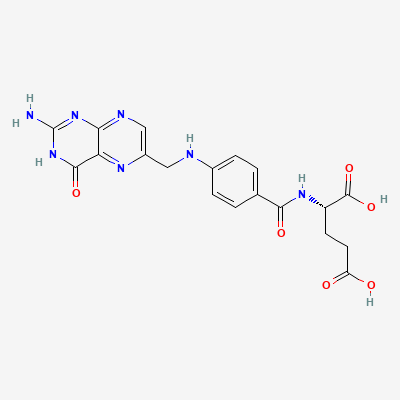
Folic acid
| Nombre del producto | Folic Acid |
|---|---|
| Otros nombres | Vitamin B9, Pteroylglutamic Acid, Folacin, PGA |
| Número CAS | 59-30-3 |
| Fórmula molecular | C19H19N7O6 |
| Peso molecular | 441.40 g/mol |
| Apariencia | Yellow to orange-yellow crystalline powder, odorless |
| Ensayo (HPLC) | 97.0% – 102.0% (on dried basis) |
| Pérdida por secado | ≤ 8.5% |
| Residuo tras la combustión | ≤ 0,21 TP3T |
| Metales pesados | ≤ 10 ppm |
| Solubilidad | Slightly soluble in water, practically insoluble in ethanol and acetone; soluble in dilute alkali solutions |
| Tamaño de las partículas | 98% through 80 mesh |
| Paquete | 25 kg fiber drum with double PE inner liners |
¿Necesitas ayuda? Póngase en contacto con nuestro equipo
Synonyms: Vitamin B9, Pteroylglutamic Acid, Folacin, PGA, N-[4-[[(2-Amino-1,4-dihydro-4-oxo-6-pteridinyl)methyl]amino]benzoyl]-L-glutamic acid
Folic acid is a synthetic, water-soluble form of vitamin B9 that serves as the parent compound of the folate family. It is produced commercially through a multi-step chemical synthesis starting from 2,4,5-triamino-6-hydroxypyrimidine, yielding a stable, crystalline powder that is standardized to pharmacopoeial grades such as USP, EP, and BP. Unlike natural food folates, this synthetic form is oxidatively stable, highly pure, and readily available for accurate dosing in pharmaceutical and nutritional applications.
Folic acid is one of the most widely used micronutrients in the pharmaceutical and nutraceutical industries, primarily due to its well-established role in preventing neural tube defects and supporting red blood cell formation. It is a key ingredient in prenatal supplements, multivitamin formulations, and fortified foods, and it also serves as a critical raw material for the production of methotrexate and other antifolate drugs. Its compatibility with common excipients and excellent stability profile make it a preferred choice for solid dosage forms and liquid concentrates alike.
| Parámetro | Especificaciones |
|---|---|
| Ensayo (HPLC) | 97.0% – 102.0% |
| Pérdida por secado | ≤ 8.5% |
| Residuo tras la combustión | ≤ 0,21 TP3T |
| Metales pesados | ≤ 10 ppm |
| Organic Volatile Impurities | Meets USP <467> requirements |
| Tamaño de las partículas | 98% through 80 mesh |
Room,5-0203, Unit 5, Beiyuanmen Street,Xi'an,Shaanxi,China
 English English
 Russian
 French
 Korean
 German
 Polish
 Japanese
 Spanish
 Italian
 Vietnamese