
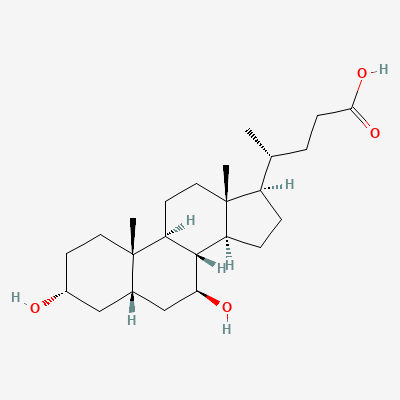
Ursodeoxycholic Acid (UDCA)
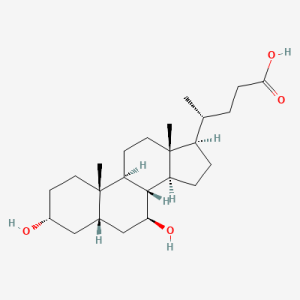
| Product Name | Ursodeoxycholic Acid (UDCA) |
|---|---|
| CAS Number | 128-13-2 |
| Other Names | 3α,7β-Dihydroxy-5β-cholan-24-oic acid; Ursodiol; Actigall; Urso; Ursofalk |
| Molecular Formula | C24H40O4 |
| Molecular Weight | 392.57 g/mol |
| Appearance | White to off-white crystalline powder |
| Assay (HPLC) | ≥99.0% |
| Melting Point | 200-204°C |
| Specific Rotation | [α]D20 +58° to +62° (c=2, ethanol) |
| Loss on Drying | ≤0.5% |
| Residue on Ignition | ≤0.1% |
| Heavy Metals | ≤10 ppm |
| Solubility | Sparingly soluble in ethanol, practically insoluble in water |
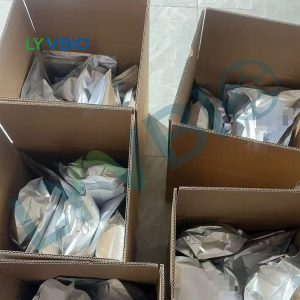
| Package | 25 kg fiber drum with double polyethylene liner |
Need help? Contact our team
Synonyms: 3α,7β-Dihydroxy-5β-cholan-24-oic acid, Ursodiol, Actigall, Urso, Ursofalk, UDCA
Ursodeoxycholic acid (UDCA) has steadily climbed the ranks of essential bile acid ingredients, driven by its well-documented therapeutic profile and expanding applications in both pharmaceutical and nutraceutical sectors. As the global demand for liver-support formulations and gallstone management therapies rises, UDCA stands out for its dual role as an active pharmaceutical ingredient (API) and a functional excipient in drug delivery systems. Its unique hydrophilic character among bile acids makes it a preferred choice for formulators seeking efficacy and tolerability.
UDCA is a secondary bile acid originally isolated from bear bile, but today it is predominantly produced through multi-step chemical synthesis from cholic acid or chenodeoxycholic acid. This synthetic route ensures consistent supply, high purity, and freedom from animal-derived contaminants, aligning with modern regulatory expectations for pharmaceutical-grade materials. The compound occurs naturally in small quantities in human bile, where it helps maintain cholesterol homeostasis and protects hepatocytes from toxic bile acid accumulation.
Commercially available UDCA is standardized to ≥99.0% purity (HPLC), with strict control over related substances, residual solvents, and heavy metals. Its crystalline form offers excellent stability and flow properties, making it suitable for direct compression, wet granulation, and encapsulation. For B2B buyers, the key selling points are reliable large-scale supply, full regulatory documentation, and a proven track record in approved drug products worldwide.
Chemically, UDCA is a dihydroxy bile acid with a 5β-cholane skeleton, featuring hydroxyl groups at the 3α and 7β positions. This epimerization at C-7 distinguishes it from chenodeoxycholic acid (CDCA) and deoxycholic acid (DCA), conferring greater hydrophilicity and reduced cytotoxicity. The molecule’s amphiphilic nature allows it to interact with cell membranes and modulate signaling pathways without disrupting membrane integrity at therapeutic doses.
In pharmaceutical formulations, UDCA is often used as the active ingredient in tablets and capsules for hepatobiliary disorders. It also serves as a key starting material for the synthesis of other bile acid derivatives, such as tauroursodeoxycholic acid (TUDCA) and glycoursodeoxycholic acid (GUDCA), which are gaining traction in research and supplement markets. Its compatibility with common excipients and ability to form stable salts further broaden its utility.
| Parameter | Specification |
|---|---|
| Assay (HPLC) | ≥99.0% |
| Loss on Drying | ≤0.5% |
| Heavy Metals | ≤10 ppm |
| Residue on Ignition | ≤0.1% |
| Microbial Limits | Total aerobic count ≤1000 CFU/g; Yeast & Mold ≤100 CFU/g; E. coli absent |
| Residual Solvents | Meets ICH Q3C requirements |
Room,5-0203, Unit 5, Beiyuanmen Street,Xi'an,Shaanxi,China
 English English
 Russian
 French
 Korean
 German
 Polish
 Japanese
 Spanish
 Italian
 Vietnamese