
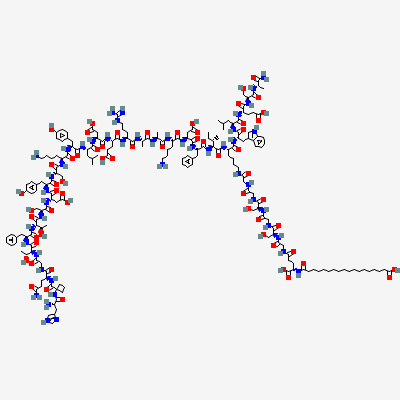
Survodutide
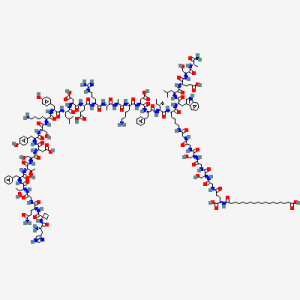
| Product Name | Survodutide |
|---|---|
| CAS Number | 2805997-46-8 |
| Molecular Formula | C192H296N48O57 |
| Molecular Weight | 4267.7 g/mol |
| Appearance | White to off-white lyophilized powder |
| Purity (HPLC) | ≥98.0% |
| Solubility | Soluble in water and aqueous buffers |
| Storage | Store at -20°C, protected from light |
| Package | 1 mg, 5 mg, 10 mg, 50 mg, 100 mg, 500 mg, 1 g |
Need help? Contact our team
Synonyms: Survodutide, BI 456906, Glucagon/GLP-1 receptor dual agonist, GCGR/GLP-1R co-agonist
Survodutide is a synthetic peptide engineered as a dual agonist of the glucagon receptor (GCGR) and glucagon-like peptide-1 receptor (GLP-1R). It belongs to a new generation of incretin-based therapeutics designed to address metabolic disorders through simultaneous activation of two complementary pathways. Originally developed by Boehringer Ingelheim, survodutide has drawn significant interest for its potential in obesity and non-alcoholic steatohepatitis (NASH).
Structurally, survodutide is a 29-amino acid peptide with a C-terminal extension and a fatty acid side chain that promotes albumin binding and extends its half-life. This modification allows for once-weekly subcutaneous dosing. The dual agonism leverages GLP-1 receptor activation to suppress appetite and improve glycemic control, while glucagon receptor activation increases energy expenditure and promotes hepatic lipid oxidation, offering a multi-pronged approach to weight management and liver health.
In clinical trials, survodutide has demonstrated robust reductions in body weight and improvements in liver fibrosis markers, positioning it as a promising candidate for the treatment of metabolic dysfunction-associated steatohepatitis (MASH). As the demand for effective therapies grows, survodutide represents a critical tool for researchers and pharmaceutical companies focused on metabolic diseases.
| Parameter | Specification |
|---|---|
| Assay (HPLC) | ≥98.0% |
| Identification | Mass spectrometry conforms |
| Peptide Content | ≥80.0% |
| Water Content | ≤8.0% |
| Heavy Metals | ≤10 ppm |
| Microbial Limits | Total aerobic count ≤100 CFU/mg |
Room,5-0203, Unit 5, Beiyuanmen Street,Xi'an,Shaanxi,China
 English English
 Russian
 French
 Korean
 German
 Polish
 Japanese
 Spanish
 Italian
 Vietnamese