
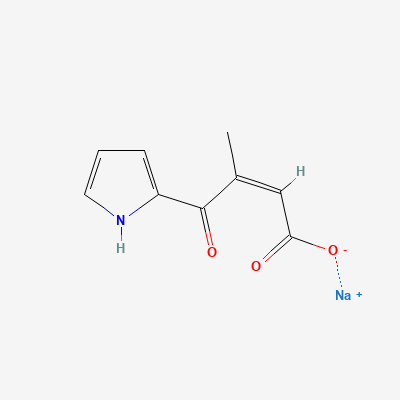
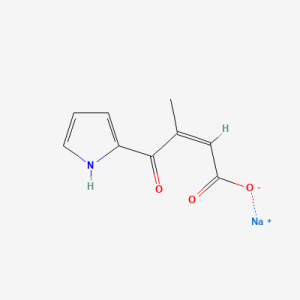
Sodium Deoxynorvalinate / Sodium Nocardinate
| Parameter | Specification |
|---|---|
| Product Name | Sodium Deoxynorvalinate / Sodium Nocardinate |
| CAS Number | 418541-41-0 |
| Molecular Formula | C5H8NNaO2 |
| Molecular Weight | 137.11 g/mol |
| Appearance | White to off-white crystalline powder |
| Assay (HPLC) | ≥98.0% |
| Solubility | Soluble in water, slightly soluble in ethanol |
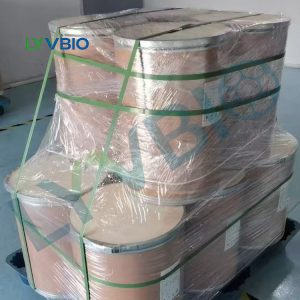
| Package | 1 kg, 5 kg, 25 kg |
Need help? Contact our team
Synonyms: Sodium 2-amino-4-pentenoate, Sodium 2-aminopent-4-enoate, Sodium deoxynorvalinate, Sodium nocardinate, 418541-41-0
Pharmaceutical and biotech companies sourcing non-natural amino acid building blocks for peptide synthesis and API development keep sodium deoxynorvalinate on their shortlists. It serves as a key intermediate in the preparation of complex molecules, particularly in projects where a vinyl glycine equivalent is needed. Buyers turn to this material when they require a water-soluble sodium salt that integrates smoothly into aqueous reaction systems and downstream purification steps.
Sodium deoxynorvalinate, also known as sodium nocardinate, is the sodium salt of 2-amino-4-pentenoic acid. It is produced through synthetic routes and supplied as a white to off-white crystalline powder, typically with a purity of 98% or higher as determined by HPLC. This grade supports both laboratory-scale feasibility studies and commercial production campaigns.
When ordering, confirm the assay specification and packaging format that align with your process requirements. The material is available in 1 kg, 5 kg, and 25 kg quantities to accommodate different production scales. Each lot is accompanied by a certificate of analysis, ensuring traceability and consistency for your quality records.
The standard supply is a research-grade powder with a minimum assay of 98% by HPLC. It is offered as a free-flowing crystalline solid that dissolves readily in water, making it suitable for aqueous formulations and reactions. For projects requiring larger quantities, we can discuss custom packaging and documentation to match your internal protocols.
This compound is primarily used as a building block in peptide synthesis, where it introduces a dehydroamino acid residue that can be further functionalized. It also finds use in the preparation of enzyme inhibitors and other bioactive molecules. Formulators incorporate it into aqueous reaction media, leveraging its solubility to achieve homogeneous conditions. Typical terminal applications include custom peptides for research and pharmaceutical intermediates for drug discovery.
send us your specification for a quotation.
Room,5-0203, Unit 5, Beiyuanmen Street,Xi'an,Shaanxi,China
 English English
 Russian
 French
 Korean
 German
 Polish
 Japanese
 Spanish
 Italian
 Vietnamese