
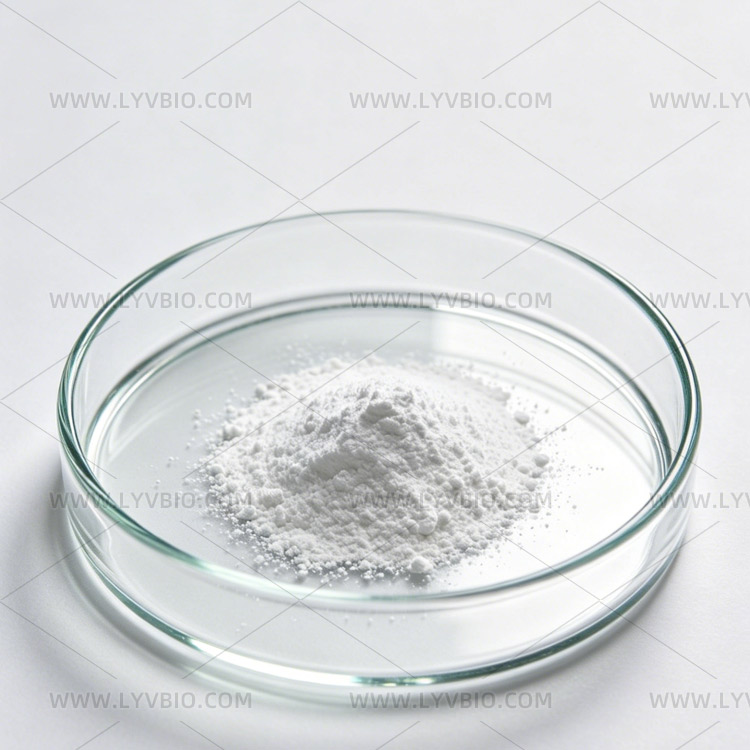

| Product Name | Resveratrol |
|---|---|
| CAS Number | 501-36-0 |
| Molecular Formula | C₁₄H₁₂O₃ |
| Molecular Weight | 228.25 g/mol |
| Appearance | White to off-white fine powder |
| Assay (HPLC) | ≥ 98.0% |
| Loss on Drying | ≤ 1.0% |
| Residue on Ignition | ≤ 0.2% |
Need help? Contact our team
Resveratrol (3,5,4′-trihydroxy-trans-stilbene) is a naturally occurring polyphenolic phytoalexin produced by various plant species in response to environmental stress, include fungal infection, UV irradiation, and mechanical injury. It is found in a variety of dietary sources, most notably in the skins of red grapes, red wine, berries, and the roots of Polygonum cuspidatum (Japanese knotweed,Polygonum cuspidatum,giant knot weed), which serves as the primary commercial source.
Resveratrol exists as two geometric isomers: trans-resveratrol and cis-resveratrol, with the trans form being the predominant biologically active isomer and the primary constituent of standardized extracts. The compound has been extensively studied for its ability to activate sirtuin 1 (SIRT1), a NAD⁺-dependent deacetylase involved in cellular stress resistance, mitochondrial biogenesis, and metabolic regulation.
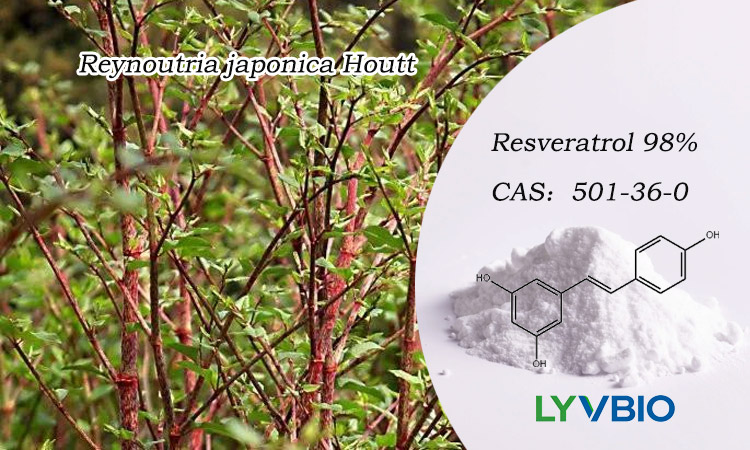
Reynoutria japonica Houtt
Primary Source: Polygonum cuspidatum (Japanese knotweed) root extract
Isomeric Composition: ≥98% trans-resveratrol (all-trans isomer)
cis-Resveratrol: May be present as minor component (≤2%)
| Parameter | Specification |
|---|---|
| trans-Resveratrol Content (HPLC) | ≥ 98.0% |
| Identification | UV-Vis / IR spectrum conforms to reference |
| Loss on Drying | ≤ 1.0% |
| Residue on Ignition | ≤ 0.2% |
| Melting Point | 253 – 255°C |
| Heavy Metals (as Pb) | ≤ 10 ppm |
| Arsenic (As) | ≤ 1 ppm |
Monthly capacity: 500+ kg
Lead time: 3–5 days (samples), 10–15 days (bulk)
Documentation: COA, HPLC
Packaging: 1 kg, 5 kg, 10 kg, 25 kg
280 Main Street, Xian, Shaanxi, China
LyvBio Co., Ltd.
Email: info@lyvbio.com
Website: https://www.lyvbio.com
Room,5-0203, Courtyard 205, Lianhu District,Xi'an,Shaanxi,China
 English English
  Russian
 French
 Korean
 German
 Polish
 Japanese
 Spanish
 Italian
 Vietnamese