


Need help? Contact our team
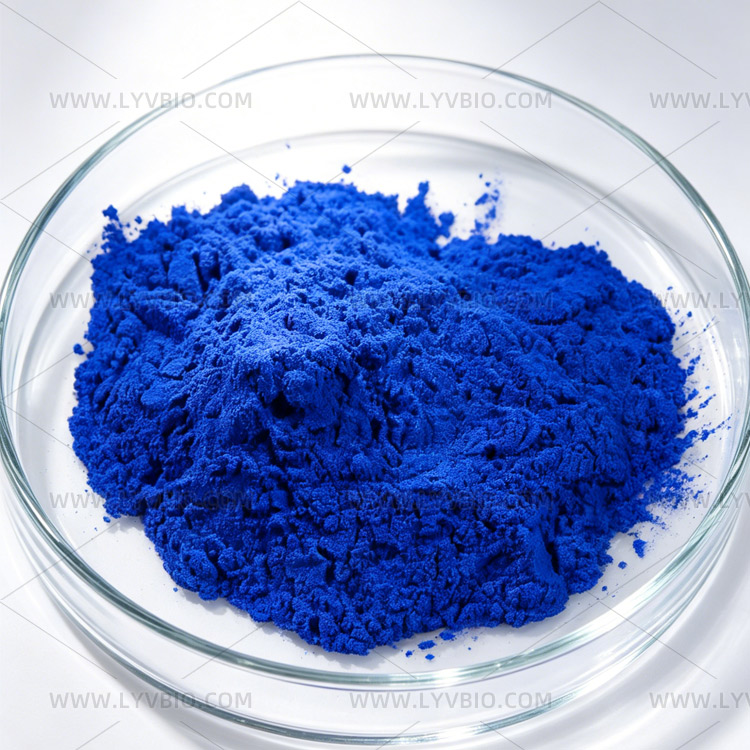
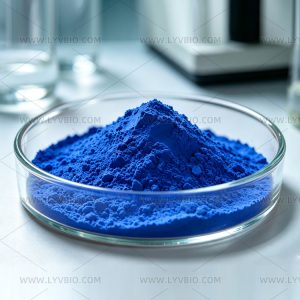
Phycocyanin is a natural blue pigment-protein complex found in cyanobacteria (blue-green algae), particularly Arthrospira platensis (Spirulina).
It belongs to the phycobiliprotein family and serves as the primary light-harvesting pigment in photosynthesis.
Commercial relevance: Spirulina is the dominant commercial source, producing 10–20% phycocyanin by dry weight.
Unlike synthetic blue dyes (FD&C Blue No. 1/Brilliant Blue FCF), phycocyanin offers functional health benefits beyond coloration.
Natural alternative to synthetic blue: With growing consumer demand for clean label ingredients, phycocyanin has emerged as the only natural water-soluble blue pigment approved for food use in most major markets. Competing natural blues (gardenia blue, indigo) are either insoluble or require chemical modification.
| Method | Yield | Purity | Cost | Best for |
|---|---|---|---|---|
| Water extraction | Moderate | Food grade (E10 ≥40) | Low | Food/beverage coloring |
| Buffer extraction (phosphate) | High | Food/pharma grade | Moderate | Nutraceuticals |
| Chromatography (ion exchange/AX) | Low | Analytical grade (E10 ≥80) | High | Research/diagnostics |
| Membrane filtration | Moderate-High | Food/pharma grade | Moderate | Clean label production |
| Parameter | Phycocyanin | Gardenia Blue | Indigo (from indigofera) |
|---|---|---|---|
| Source | Spirulina (algae) | Gardenia fruit (enzymatic) | Indigofera plant |
| Water solubility | Yes (complete) | Yes (limited) | No (requires chemical reduction) |
| pH stability | Stable 5–7 | Stable 3–8 | N/A (insoluble) |
| Heat stability | Moderate (denatures >60°C) | Good (stable to 100°C) | N/A |
| Functional benefits | Antioxidant, anti-inflammatory | Minimal | None |
| Clean label | Yes (physical extraction) | Yes (enzymatic) | No (requires chemical processing) |
| Application | Typical Usage | pH Considerations | Heat Considerations |
|---|---|---|---|
| Confectionery (gummies, hard candy, marshmallows) | 0.05–0.2% | 5–7 (stable) | ≤60°C (depends on process) |
| Beverages (sports drinks, flavored water, sodas) | 0.01–0.05% | 3–7 (avoid acidic colas) | Cold fill recommended |
| Dairy (yogurt, ice cream, smoothies) | 0.02–0.1% | 5–7 (stable) | Pasteurization possible (HTST) |
| Bakery fillings & frostings | 0.05–0.2% | 5–7 | No baking (post-bake addition) |
| Alcoholic beverages (ready-to-drink cocktails) | 0.01–0.03% | 5–7 | N/A |
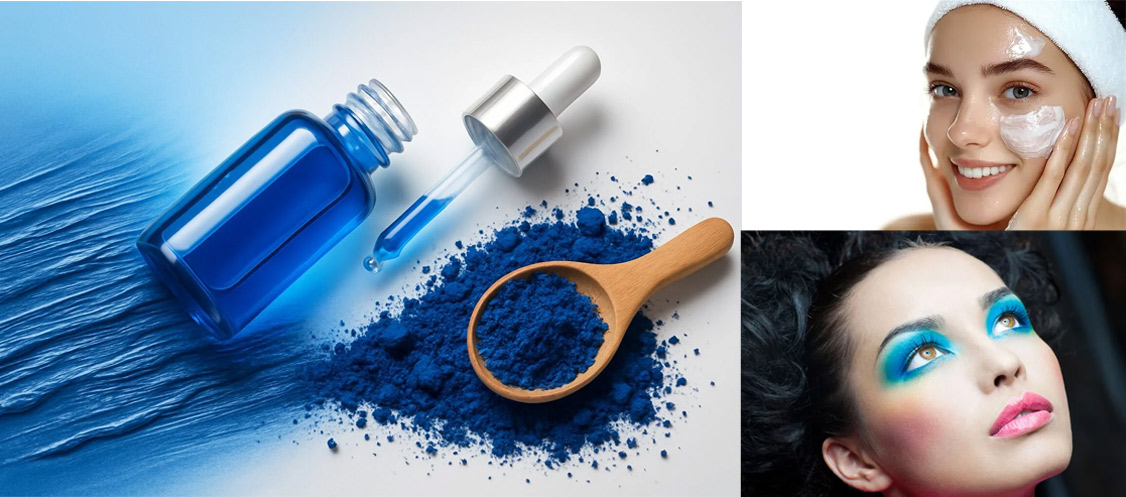
Application of natural blue phycocyanin cosmetics
| Application | Dosage (mg/day) | Key Claims |
|---|---|---|
| Antioxidant support | 100–300 mg | Free radical protection; cellular health |
| Liver protection | 200–400 mg | Reduces hepatic oxidative stress (alcohol/toxin exposure) |
| Immune modulation | 150–300 mg | NK cell activation; cytokine balance |
| Exercise recovery | 200–500 mg | Reduces muscle damage (creatine kinase) and soreness |
| Neuroprotection | 100–200 mg (chronic) | Cognitive support (aging populations) |
Popular formats:
Capsules (100–500 mg)
Tablets (200–400 mg)
Liquid drops (5–20 mg/drop)
Gummies (25–100 mg/piece)
Powdered drink mixes (50–200 mg/serving)
| Application | Concentration | Function |
|---|---|---|
| Serums & ampoules | 0.1–0.5% | Antioxidant protection; anti-inflammatory |
| Face masks (sheet/clay) | 0.2–1.0% | Soothing; brightening (blue tint) |
| Eye creams | 0.05–0.2% | Reduces puffiness; dark circle improvement |
| Hair care (blue/purple shampoos) | 0.1–0.5% | Color correction (brassiness reduction) |
| Natural makeup (eyeshadow, eyeliner) | 1–5% | Vibrant blue pigment |
Clean beauty positioning: Phycocyanin aligns perfectly with “blue beauty” trend (ocean-inspired, sustainable, vegan, cruelty-free).
| Application | Dosage (mg/day) | Clinical Evidence |
|---|---|---|
| Chemotherapy support | 300–500 mg | Reduces mucositis; protects normal tissues |
| Ischemia/reperfusion injury | 200–400 mg (perioperative) | Reduces infarct size (animal models, human trials ongoing) |
| Inflammatory bowel disease | 200–500 mg | Reduces colonic inflammation (UC/Crohn’s supportive) |
| Radiation protection | 100–300 mg (chronic) | Reduces radiation-induced oxidative damage |
| Application | Purity Required | Market Size |
|---|---|---|
| Fluorescent probes | Analytical grade (E10 ≥80) | Small but high-value |
| Flow cytometry | Analytical grade | Niche |
| ELISA development | Analytical grade | Niche |
| Fluorescence microscopy | Analytical grade | Niche |
Price premium: Analytical grade phycocyanin commands $500–2,000/kg (10–20x food grade pricing).
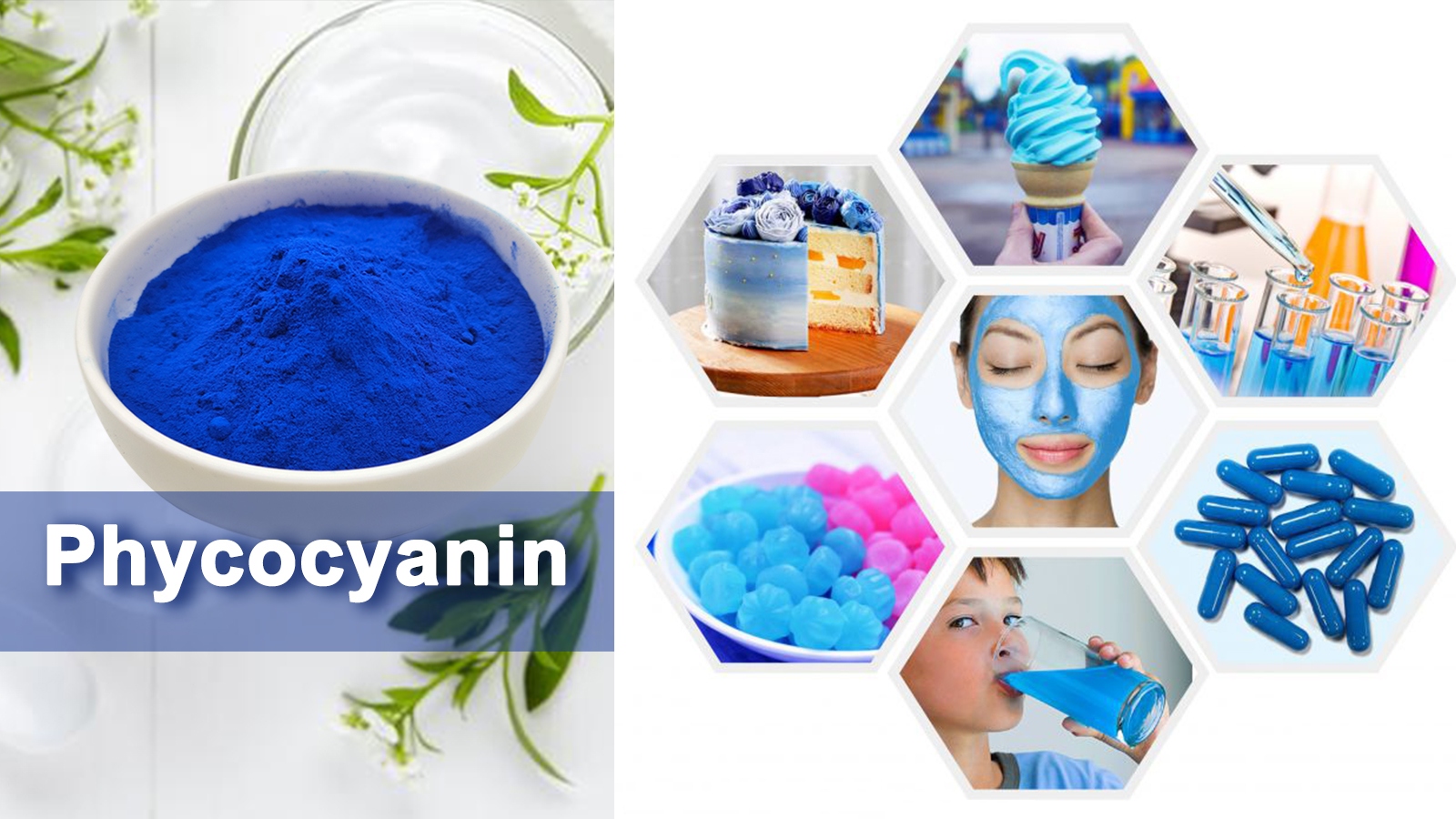
The so-called phycocyanin in commercial products, as a food ingredient grade, includes a mixture of phycocyanin and allophycocyanin. Pure phycocyanin is usually developed as a fluorescent reagent.
If we take the birth of blue-green algae as a benchmark, phycocyanin, as an indispensable member of photosynthesis in blue-green algae, has appeared for about 3.5 billion years, covering the vast majority of life evolution processes. Phycocyanin is the basis for efficient photosynthesis in blue-green algae, especially reflected in the efficient utilization of solar photons with wavelengths of 450-650nm. It has played the role of an energy harvester since the primitive Earth, and is therefore known as the most important substance for the origin of life.
In nature, blue-green algae are the largest source of phycocyanin, which accounts for a large proportion of phycocyanin (including allophycocyanin) in blue-green algae cells.
Taking spirulina as an example, it can account for up to 20% of the cell dry weight, and correspondingly, it accounts for almost one-third of the total protein in the algae. If under specific cultivation conditions (such as low light), the content of phycocyanin can be further increased.
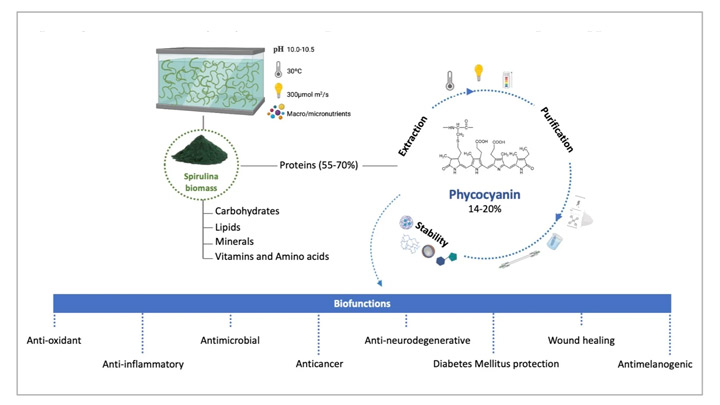
https://www.mdpi.com/1424-8247/16/4/592
| Parameter | Specification | Test Method |
|---|---|---|
| Purity (E10 1% 620nm) | ≥ 40.0 (food grade) | Spectrophotometry |
| E10 ratio (620nm/280nm) | ≥ 1.8 (indicates purity) | Spectrophotometry |
| Appearance | Bright blue to dark blue powder | Visual |
| Moisture content | ≤ 8.0% | Loss on Drying |
| Ash | ≤ 10.0% | Gravimetric |
| Protein content | ≥ 30% (food grade); ≥ 85% (high purity) | Kjeldahl |
| pH (1% solution) | 5.5–7.5 | pH Meter |
| Heavy Metals | Pb ≤ 0.5 ppm; As ≤ 0.5 ppm; Cd ≤ 0.2 ppm; Hg ≤ 0.05 ppm | ICP-MS |
| Arsenic (inorganic) | ≤ 0.2 ppm | HPLC-ICP-MS |
| Microcystins (toxins) | ≤ 1.0 ppm (WHO guideline) | ELISA/LC-MS |
| Product Name | Source |
|---|---|
| Spirulina Powder | Arthrospira platensis |
| Spirulina Tablets | Arthrospira platensis |
| Chlorella Powder | Chlorella vulgaris |
| Chlorella Tablets | Chlorella vulgaris |
| Broken Cell Wall Chlorella Powder | Chlorella vulgaris |
| Astaxanthin Powder | Haematococcus pluvialis |
| Astaxanthin Oleoresin | Haematococcus pluvialis |
| Natural β-Carotene | Dunaliella salina |
| Dunaliella Powder | Dunaliella salina |
| Phycocyanin Powder | Spirulina platensis |
| Phycocyanin Liquid | Spirulina platensis |
| Fucoxanthin Powder | Phaeodactylum tricornutum |
| Lutein Powder | Chlorella / Marigold |
| EPA Oil | Nannochloropsis / Schizochytrium |
| DHA Oil | Schizochytrium / Crypthecodinium cohnii |
| Algae Calcium Powder | Lithothamnion spp. |
| Seaweed Extract Powder | Ascophyllum nodosum |
| Kelp Powder | Laminaria japonica |
| Irish Moss Powder | Chondrus crispus |
| Algae Fiber Powder | Spirulina / Chlorella |
| Nannochloropsis | Nannochloropsis oceanica |
| Please contact us for MOQ1kg info@lyvbio.com |
|
 English English
  Russian
 French
 Korean
 German
 Polish
 Japanese
 Spanish
 Italian
 Vietnamese