
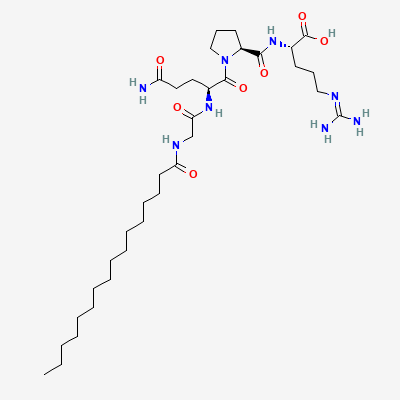
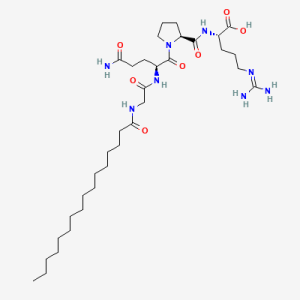
| Product Name | Palmitoyl Tetrapeptide-7 |
|---|---|
| CAS Number | 221227-05-0 |
| Molecular Formula | C38H67N7O7 |
| Molecular Weight | 733.98 |
| Appearance | White to off-white powder |
| Specifications | ≥98% (HPLC) |
| Solubility | Soluble in water and ethanol |
| Package | 5g, 10g, 25g (customizable) |
Need help? Contact our team
Synonyms: Palmitoyl Tetrapeptide-7, Palmitoyl Tetrapeptide-3 (former name), Matrixyl 3000 component, Pal-GQPR, N-Palmitoyl-Gly-Gln-Pro-Arg
Palmitoyl Tetrapeptide-7 is a synthetic peptide that has become a staple in anti-aging skincare, often paired with Palmitoyl Tripeptide-1 in the well-known Matrixyl 3000 complex. It is a tetrapeptide (Gly-Gln-Pro-Arg) attached to a palmitic acid chain, which enhances its lipophilicity and skin penetration. The peptide was first developed to mimic the natural processes that reduce inflammation and support skin repair, making it a valuable ingredient in formulations targeting visible aging and skin resilience.
Chemically, Palmitoyl Tetrapeptide-7 is a fatty acid-conjugated peptide with the sequence palmitoyl-glycyl-glutaminyl-prolyl-arginine. The palmitoyl group not only improves stability and bioavailability but also allows the peptide to anchor into the lipid layers of the skin. Its primary mechanism involves signaling to the skin to reduce the release of pro-inflammatory cytokines, such as IL-6, which are elevated during environmental stress and aging. By modulating these inflammatory responses, the peptide helps maintain a healthier extracellular matrix and supports the skin’s natural repair mechanisms.
In commercial skincare, Palmitoyl Tetrapeptide-7 is typically used at concentrations between 2-4% in finished products, often combined with other peptides like Palmitoyl Tripeptide-1 to synergistically boost collagen production and firmness. It appears in premium serums, eye creams, and moisturizers aimed at reducing puffiness, dark circles, and fine lines. Beyond cosmetics, it is also studied for its potential in wound healing and anti-inflammatory applications, though its primary market remains dermo-cosmetics.
| Parameter | Specification |
|---|---|
| Assay (HPLC) | ≥98% |
| Appearance | White to off-white powder |
| Solubility | Soluble in water and ethanol |
| Loss on Drying | ≤5% |
| Heavy Metals | ≤10 ppm |
| Microbial Limits | Total viable count ≤1000 CFU/g |
 English English
  Russian
 French
 Korean
 German
 Polish
 Japanese
 Spanish
 Italian
 Vietnamese