
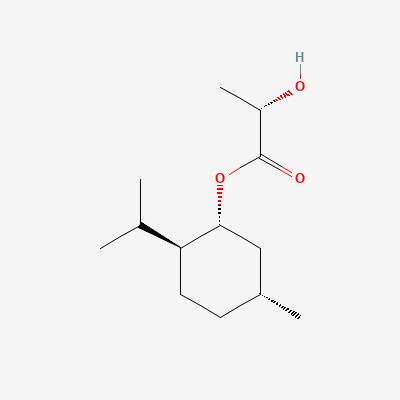
Menthyl Lactate
| Product Name | Menthyl Lactate |
|---|---|
| CAS Number | 17162-29-7 |
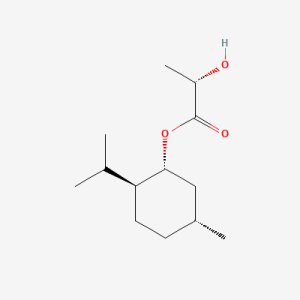
| Synonyms | L-Menthyl lactate; (1R,2S,5R)-2-Isopropyl-5-methylcyclohexyl lactate; Frescolat ML; Menthyl 2-hydroxypropanoate |
| Molecular Formula | C13H24O3 |
| Molecular Weight | 228.33 g/mol |
| Appearance | Colorless to pale yellow clear liquid |
| Assay (GC) | ≥98.0% |
| Specific Rotation | -70° to -76° (neat) |
| Refractive Index | 1.455-1.465 (20°C) |
| Solubility | Soluble in ethanol, propylene glycol, and most cosmetic oils; practically insoluble in water |
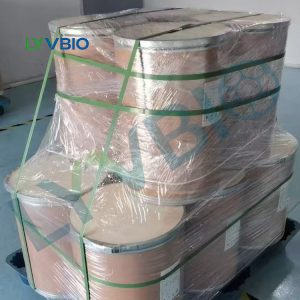
| Package | 25 kg net in HDPE drum, 200 kg net in steel drum |
Need help? Contact our team
Synonyms: L-Menthyl lactate, (1R,2S,5R)-2-Isopropyl-5-methylcyclohexyl lactate, Frescolat ML, Menthyl 2-hydroxypropanoate
Menthyl lactate has become a staple in the formulator’s toolkit for products that need a long-lasting, smooth cooling effect without the sharp burn of menthol. Unlike menthol, which volatilizes quickly and can irritate sensitive skin or mucous membranes, menthyl lactate delivers a gradual, sustained cooling sensation that is perceived as mild and pleasant. This makes it particularly valuable in leave-on personal care products, oral care formulations, and even in some pharmaceutical topicals where a cooling effect is desired without the pungency of traditional counterirritants.
Chemically, menthyl lactate is the ester of L-menthol and lactic acid. It is produced through a direct esterification process, yielding a high-purity liquid that is essentially odorless and tasteless in its pure form. The molecule is lipophilic, allowing it to blend seamlessly into oil-based systems, emulsions, and anhydrous formulations. Its compatibility with a wide range of cosmetic ingredients and its stability over a broad pH range make it a versatile choice for both rinse-off and leave-on applications.
Commercial menthyl lactate is typically supplied with an assay of 98% or higher, as determined by gas chromatography. The material is available in various grades, including cosmetic and pharmaceutical grades, to meet different regulatory and performance requirements. Key quality parameters such as specific rotation, refractive index, and heavy metal content are tightly controlled to ensure consistent sensory performance and safety in end products.
Menthyl lactate is a single, well-defined chemical entity rather than a mixture of isomers. The manufacturing process involves the esterification of L-menthol with lactic acid, followed by purification steps to remove unreacted starting materials and by-products. The resulting product is a clear, slightly viscous liquid with a very faint, characteristic odor. Its cooling effect is not due to actual temperature reduction but to the activation of TRPM8 receptors in the skin and mucous membranes, which trigger a perception of cold. This mechanism is similar to that of menthol, but menthyl lactate’s higher molecular weight and lower volatility mean the effect comes on more slowly and lasts significantly longer.
Because it is an ester, menthyl lactate is susceptible to hydrolysis under strongly alkaline conditions, but it remains stable in typical cosmetic formulations with pH values up to about 8. For applications requiring extreme pH or high water content, formulators may need to consider encapsulation or other stabilization strategies. The material is generally regarded as safe for use in cosmetics and personal care products, with a long history of use in Europe and Asia.
| Parameter | Specification |
|---|---|
| Assay (GC) | ≥98.0% |
| Specific Rotation | -70° to -76° (neat) |
| Refractive Index (20°C) | 1.455-1.465 |
| Heavy Metals | ≤10 ppm |
| Arsenic | ≤2 ppm |
| Lead | ≤1 ppm |
| Microbial Limits | Total aerobic count ≤100 CFU/g; Yeast & mold ≤10 CFU/g; Absence of E. coli, Salmonella, S. aureus |
Room,5-0203, Unit 5, Beiyuanmen Street,Xi'an,Shaanxi,China
 English English
 Russian
 French
 Korean
 German
 Polish
 Japanese
 Spanish
 Italian
 Vietnamese