
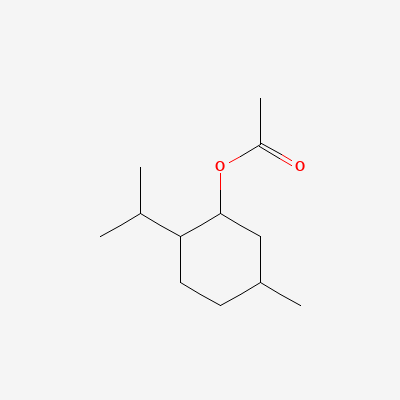
Menthyl Acetate
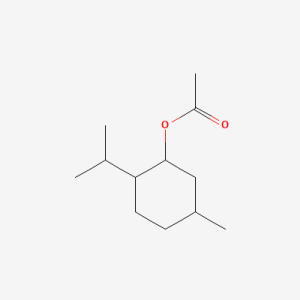
| Product Name | Menthyl Acetate |
|---|---|
| CAS Number | 89-48-5 |
| Synonyms | L-Menthyl acetate; (1R,2S,5R)-2-Isopropyl-5-methylcyclohexyl acetate; Acetic acid menthyl ester; p-Menth-3-yl acetate |
| Molecular Formula | C12H22O2 |
| Molecular Weight | 198.30 g/mol |
| Appearance | Colorless to pale yellow clear liquid |
| Assay (GC) | ≥98.0% |
| Specific Rotation | [α]D20 −72° to −78° (neat) |
| Refractive Index | n20/D 1.446–1.450 |
| Solubility | Soluble in ethanol, oils; insoluble in water |
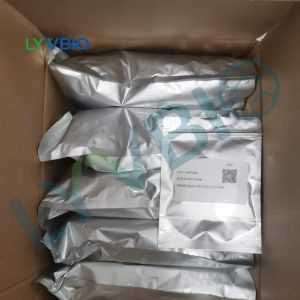
| Package | 25 kg net in HDPE drum, 200 kg net in steel drum |
Need help? Contact our team
Synonyms: L-Menthyl acetate; (1R,2S,5R)-2-Isopropyl-5-methylcyclohexyl acetate; Acetic acid menthyl ester; p-Menth-3-yl acetate; Menthyl ethanoate
Menthyl acetate is the acetic acid ester of L-menthol, carrying the classic p-menthane skeleton with an acetate group at C3. That ester linkage does more than just block the hydroxyl; it softens the sharp menthol blast and shifts the cooling curve, which is why formulators reach for it when they want a rounder, longer-lasting freshness. The molecule occurs naturally in Mentha piperita and Mentha arvensis, but commercial volumes are almost entirely synthetic, produced by acetylating menthol with acetic anhydride under acid catalysis.
From a handling standpoint, menthyl acetate is a mobile liquid at room temperature, which makes it far easier to incorporate into flavor and fragrance blends than solid menthol. It is lipophilic, ethanol-soluble, and essentially water-insoluble, so it performs best in oil-based systems, emulsions, and alcohol-based applications. The material is typically supplied at ≥98% purity by GC, with the L-isomer as the dominant component because the sensory profile is tied directly to that stereochemistry.
Buyers in the flavor and fragrance industry use menthyl acetate as a top-note modifier in mint compositions, oral care products, confectionery, and chewing gum. In pharma, it shows up in topical analgesics and cough drops where a milder cooling sensation is preferred. The ester also serves as a synthetic intermediate for other menthyl derivatives and as a reference standard in analytical work. Because the acetate group is relatively stable but can hydrolyze under strong acid or base, storage and processing conditions matter for keeping the profile consistent.
Menthyl acetate belongs to the monoterpene ester family. Its cyclohexane ring is substituted with an isopropyl group at C2 and a methyl group at C5, while the acetate sits at C3. The ester carbonyl introduces a mild polarity that improves compatibility with many fragrance bases without sacrificing volatility. With a molecular weight of 198.30 g/mol, it boils around 229–230°C at atmospheric pressure and has a refractive index typically between 1.446 and 1.450. The specific rotation for the L-isomer falls in the −72° to −78° range, a useful identity check for incoming lots.
| Parameter | Specification |
|---|---|
| Appearance | Colorless to pale yellow clear liquid |
| Assay (GC) | ≥98.0% |
| Specific Rotation | −72° to −78° (neat, 20°C) |
| Refractive Index | 1.446–1.450 (20°C) |
| Acid Value | ≤1.0 mg KOH/g |
| Heavy Metals | ≤10 ppm |
| Water Content | ≤0.5% (Karl Fischer) |
Room,5-0203, Unit 5, Beiyuanmen Street,Xi'an,Shaanxi,China
 English English
 Russian
 French
 Korean
 German
 Polish
 Japanese
 Spanish
 Italian
 Vietnamese