
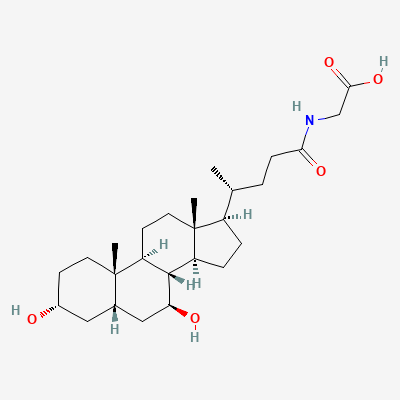
Glycoursodeoxycholic Acid
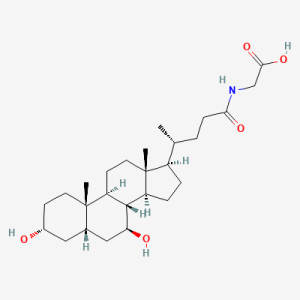
| Product Name | Glycoursodeoxycholic Acid |
|---|---|
| CAS Number | 64480-66-6 |
| Molecular Formula | C26H43NO5 |
| Molecular Weight | 449.62 g/mol |
| Appearance | White to off-white crystalline powder |
| Purity (HPLC) | ≥98.0% |
| Loss on Drying | ≤0.5% |
| Residue on Ignition | ≤0.1% |
| Heavy Metals | ≤10 ppm |
| Solubility | Soluble in methanol, ethanol; slightly soluble in water |
| Storage | Store at 2-8°C, protected from light and moisture |
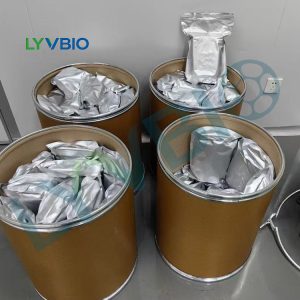
| Package | 1 kg, 5 kg, 25 kg fiber drums with double polyethylene liners |
Need help? Contact our team
Synonyms: Glycoursodeoxycholic acid, GUDCA, Ursodeoxycholylglycine, 3α,7β-Dihydroxy-5β-cholan-24-oylglycine, N-[(3α,5β,7β)-3,7-Dihydroxy-24-oxocholan-24-yl]glycine, Glycine ursodeoxycholate
Glycoursodeoxycholic acid (GUDCA) is a glycine-conjugated secondary bile acid, structurally derived from ursodeoxycholic acid (UDCA) through amidation of the carboxyl group with glycine. This conjugation significantly enhances its water solubility and alters its interaction with bile acid receptors, making GUDCA a compound of interest in both pharmaceutical and biochemical research. Its amphipathic nature—arising from the hydrophilic glycine moiety and the lipophilic steroid nucleus—underpins its role in modulating membrane dynamics and cellular signaling.
Endogenously, GUDCA is produced in the liver via the action of bile acid-CoA:amino acid N-acyltransferase (BAAT) and is excreted into bile. It is also formed in the colon by bacterial 7β-dehydroxylation of glycoursodeoxycholic acid. As a commercial product, GUDCA is synthesized through chemical conjugation of ursodeoxycholic acid with glycine, followed by purification to achieve high purity. It is available in research-grade and pharmaceutical-grade qualities, with the latter conforming to stringent regulatory standards.
In the pharmaceutical industry, GUDCA is primarily used as an impurity standard or reference standard for quality control of UDCA-based drugs, such as ursodiol. It also serves as a key intermediate in the synthesis of other bile acid derivatives. Beyond analytical applications, GUDCA has been investigated for its cytoprotective and anti-apoptotic properties, particularly in hepatology and neurobiology, where it may modulate bile acid-induced toxicity and inflammation.
GUDCA features a 5β-cholan-24-oic acid core with α-oriented hydroxyl groups at C3 and C7, and a glycine moiety linked via an amide bond at C24. The presence of the glycine conjugate increases its polarity, reducing passive membrane permeability but enabling active transport via bile acid transporters such as ASBT and NTCP. The compound is typically isolated as a white crystalline powder, stable under recommended storage conditions, and exhibits characteristic UV absorption at 200-210 nm due to the absence of a conjugated diene system.
| Parameter | Specification |
|---|---|
| Appearance | White to off-white crystalline powder |
| Purity (HPLC) | ≥98.0% |
| Loss on Drying | ≤0.5% |
| Residue on Ignition | ≤0.1% |
| Heavy Metals | ≤10 ppm |
| Specific Rotation | [α]D20 +25° to +30° (c=1, ethanol) |
| Assay (Titration) | 98.0-102.0% (on dried basis) |
Room,5-0203, Unit 5, Beiyuanmen Street,Xi'an,Shaanxi,China
 English English
 Russian
 French
 Korean
 German
 Polish
 Japanese
 Spanish
 Italian
 Vietnamese