
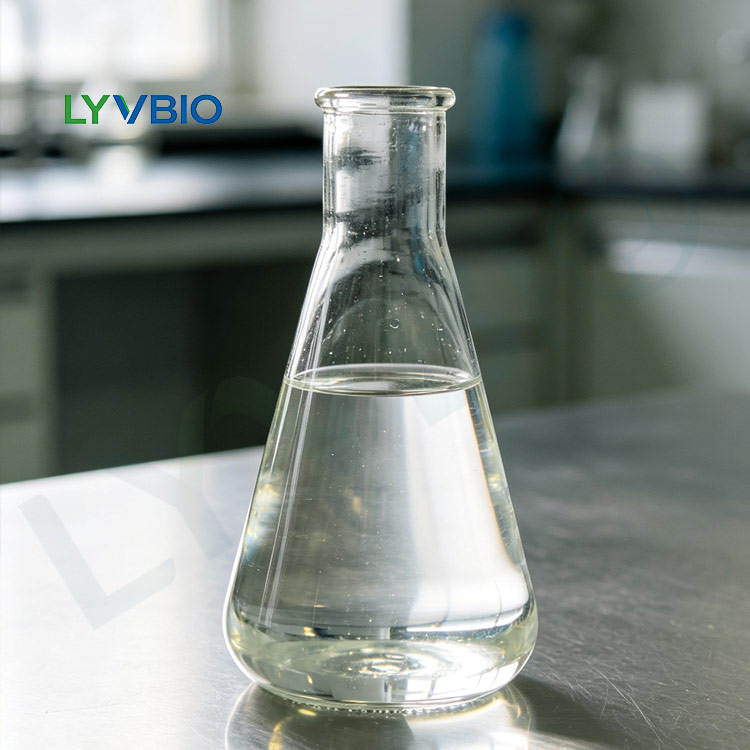
Dimethyl Isosorbide
| Product Name | Dimethyl Isosorbide |
|---|---|
| CAS Number | 5306-85-4 |
| Synonyms | DMI; Isosorbide dimethyl ether; 1,4:3,6-Dianhydro-2,5-di-O-methyl-D-glucitol |
| Molecular Formula | C8H14O4 |
| Molecular Weight | 174.19 g/mol |
| Appearance | Clear, colorless to pale yellow liquid |
| Assay (GC) | ≥ 99.0% |
| Water Content (Karl Fischer) | ≤ 0.1% |
| Refractive Index (20°C) | 1.4600 – 1.4650 |
| Specific Gravity (25°C) | 1.14 – 1.17 |
| Solubility | Miscible with water, ethanol, propylene glycol, and most organic solvents |
| Packaging | 25 kg HDPE drum; 200 kg steel drum; custom packaging available |
Need help? Contact our team
Synonyms: Dimethyl Isosorbide, DMI, Isosorbide dimethyl ether, 1,4:3,6-Dianhydro-2,5-di-O-methyl-D-glucitol, NSC 40725
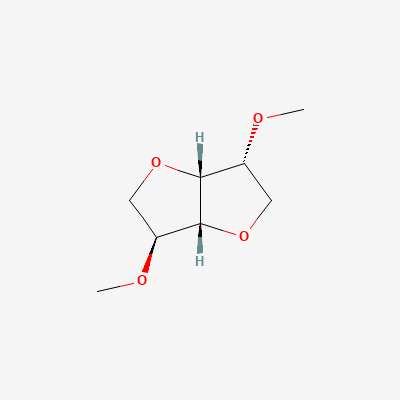
Dimethyl Isosorbide is a biobased, aprotic solvent derived from isosorbide, which itself is produced from glucose via hydrogenation and subsequent dehydration. The molecule consists of a bicyclic dianhydroglucitol framework in which the two hydroxyl groups have been converted to methyl ethers. This structural modification yields a low-molecular-weight, highly polar yet lipophilic liquid that exhibits exceptional solvency for a wide range of active pharmaceutical ingredients (APIs) and cosmetic actives. Unlike conventional solvents such as ethanol or propylene glycol, DMI is non-flammable, odorless, and practically non-irritating, making it a preferred choice for formulations targeting sensitive skin or mucosal tissues.
In the pharmaceutical and personal care industries, Dimethyl Isosorbide is primarily employed as a penetration enhancer and solvent. It enhances the percutaneous absorption of both hydrophilic and lipophilic drugs by disrupting the lipid bilayer of the stratum corneum and increasing the partitioning of actives into the skin. This property has been leveraged in transdermal delivery systems, topical gels, and dermatological creams to improve the bioavailability of compounds like ibuprofen, ketoprofen, and estradiol. Additionally, DMI serves as a co-solvent in injectable formulations and as a stabilizer for unstable actives, such as retinoids and vitamin C derivatives.
Beyond its use in drug delivery, Dimethyl Isosorbide finds application as a green solvent in chemical synthesis, where it replaces traditional solvents like dimethylformamide (DMF) and dimethyl sulfoxide (DMSO) in certain reactions. Its high boiling point (around 236°C), low toxicity, and biodegradability align with the principles of green chemistry. The compound is also used in the production of agrochemicals, coatings, and electronic materials, where its ability to dissolve a broad spectrum of substances without introducing reactive functional groups is highly valued.
Dimethyl Isosorbide belongs to the family of isosorbide ethers. Its structure comprises two fused tetrahydrofuran rings with methyl ether substituents at positions 2 and 5. The absence of free hydroxyl groups renders the molecule chemically inert under many conditions, while the ether linkages provide stability against hydrolysis and oxidation. The compound is a clear, colorless liquid with a faint, characteristic odor. It is miscible with water in all proportions and with a wide array of organic solvents, including alcohols, ketones, esters, and aromatic hydrocarbons. Its high polarity (dielectric constant ~ 12) and aprotic nature make it an excellent medium for polar reactions and formulations.
| Parameter | Specification |
|---|---|
| Appearance | Clear, colorless to pale yellow liquid |
| Assay (GC) | ≥ 99.0% |
| Water Content | ≤ 0.1% |
| Refractive Index (20°C) | 1.4600 – 1.4650 |
| Specific Gravity (25°C) | 1.14 – 1.17 |
| Heavy Metals | ≤ 10 ppm |
| Residual Solvents | Meets ICH Q3C requirements |
Room,5-0203, Unit 5, Beiyuanmen Street,Xi'an,Shaanxi,China
 English English
 Russian
 French
 Korean
 German
 Polish
 Japanese
 Spanish
 Italian
 Vietnamese